
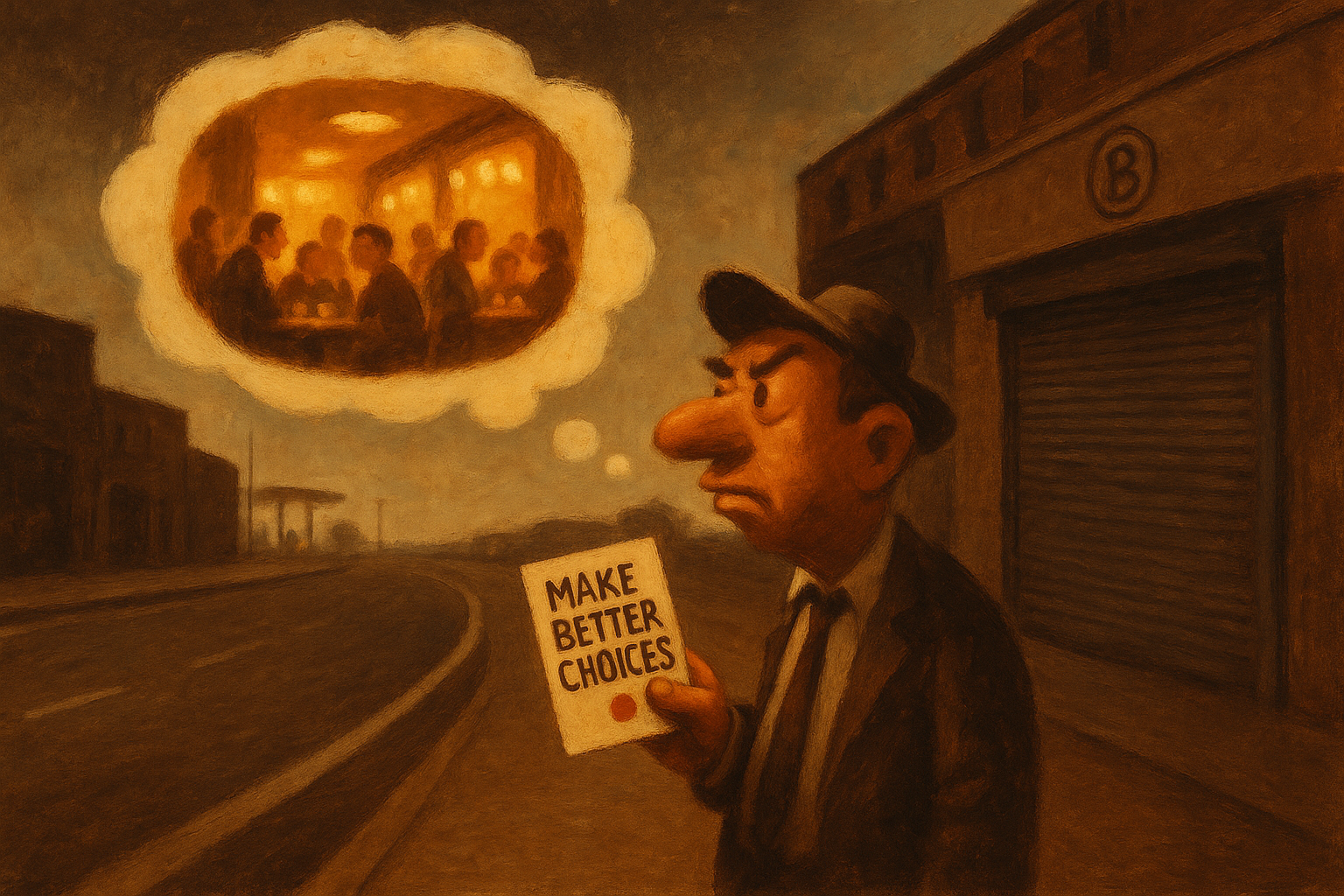
Researchers at Curtin University mapped sixty-one potentially modifiable dementia risk and protective factors and then asked a question nobody normally asks about a risk list: where do these sit. Around forty-nine of them, roughly eighty percent, sat at the level of the individual. Exercise more. Eat better. Stay socially connected. Manage your health.
The work is published in The Lancet Public Health and led by Dr Jennifer Dunne of Curtin’s Dementia Centre of Excellence, and the finding is not that those things do not matter. They do. The finding is about the shape of the field. Far less attention goes to education, housing, neighbourhood safety, healthcare access, clean air and social connection, despite mounting evidence that those conditions determine whether a person is able to act on the advice at all.
Dunne’s line is the one to keep. If prevention focuses predominantly on individual behaviour, we end up asking people to make healthier choices without addressing the conditions that make those choices possible.
The numbers underneath give it weight. Dementia affects an estimated 57 million people worldwide, projected to reach 139 million by 2050. In Australia around 446,500 people are living with it, expected to pass a million by 2065, and it is now the country’s leading cause of death. Professor Blossom Stephan, Chair in Dementia at Curtin’s enAble Institute, frames the next step as population-wide rather than individual.
Here is why this belongs in a business publication rather than a health one.
Stay socially connected is, in practice, an instruction to go somewhere. Somewhere with chairs, where you can sit for an hour without buying three things, where you will encounter people you did not arrange to meet. For most of human history that was a market, a church hall, a pub or a cafe. It is a physical location with an economic model, and whether it exists on your street is a commercial and planning outcome, not a personal one.
So consider the person receiving the advice. They live on a road with no pavement. The parade of shops has three shuttered units, a bookmaker and a takeaway. The nearest place with chairs is a supermarket cafe two bus rides away, and the bus service was cut in 2023. This person can want social connection with the full force of their character and the environment will simply not supply it. The leaflet is not wrong. The leaflet is unactionable, which is a different kind of wrong.
Every operator understands this instinctively from the supply side. A cafe is a public health asset that happens to be funded by coffee sales. The margin on a flat white is what pays for a room where an eighty-year-old can sit for ninety minutes and speak to four people. Nobody accounts for it that way, and when rents rise and the room closes, the loss is booked as a small business failure rather than as the removal of a piece of social infrastructure from a neighbourhood.
Which is the general pattern worth taking out of this, and it applies well beyond dementia. Individual-level interventions are attractive because they are cheap to recommend and easy to measure. Environment-level interventions are expensive, slow and land on somebody else’s budget. So the advice migrates, over decades, toward whatever can be printed. Eighty percent of a risk list ends up pointing at the person, not because the evidence says the person is eighty percent of the problem, but because the person is the only party the leaflet can address.
Mapping all sixty-one factors and counting where they landed is the useful thing this study did, and it makes the imbalance impossible to argue with.
The advice says go and see people. Somebody still has to own the room.
Source: Curtin University, “Dementia prevention can’t rely on individual choices alone, new study finds”
