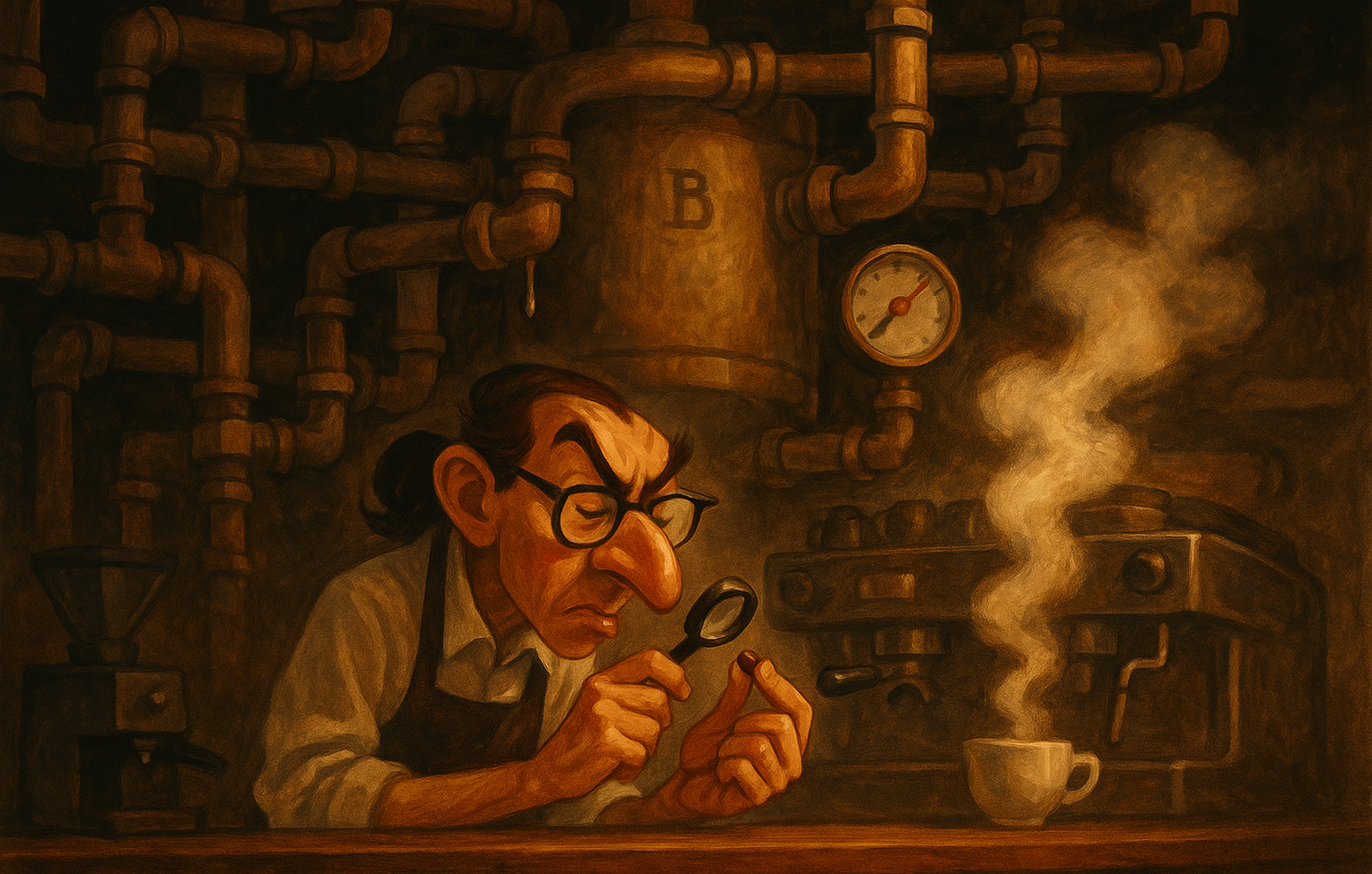
An espresso is more than ninety percent water. Every argument in the coffee world is about the other ten.
Origin, roast, grind, dose, the exact second of extraction. Meanwhile the thing doing almost all of the work arrives through a pipe from a municipal system nobody in the conversation has ever thought about, and it is the single most common reason a technically perfect cup tastes wrong.
DigitalPaani has built a company on that asymmetry. The Gurugram firm raised Rs 22 crore this week in a round led by Navam Capital, with Enzia Ventures, Chakra Growth Capital, 3one4 Capital, Momentum Capital, the Achieving Women Entrepreneurs Early Growth Fund and Echo River Capital joining. Founded in 2020 by Mansi Jain and her father Rajesh Jain, who brought decades in water and energy, it sells an operating system for water and wastewater plants: sensors and software that read what a plant is actually doing, compare it against what the plant was designed to do, and tell the people running it where the gap is. It works with more than 95 facilities treating over 150 million litres a day, for customers including Britannia, the Leela hotels, the Tata group and the Delhi Jal Board.
The founding observation is the part worth stealing. India has somewhere around 90,000 wastewater treatment plants. By the founders’ account, roughly three quarters of them were failing, and not because the engineering was wrong. They were failing because they were being run manually by people without the expertise, against parameters nobody was checking.
Sit with that for a second. The capital had been spent. The concrete was poured, the pumps installed, the compliance boxes ticked. Someone had already paid for the entire asset. And then the asset quietly did not work, because operating it well was nobody’s specific job.
This is the most underrated business opportunity there is, and it looks nothing like an opportunity from the outside. There is no new invention in it. Nobody gets to announce a breakthrough. You are simply pointing out that an enormous amount of installed capacity is running at a fraction of its design, and offering to close the gap for a fee that is smaller than the loss.
The cafe version is unglamorous in exactly the same way. A shop buys a four thousand dollar machine, a serious grinder, good beans on a standing order, then plumbs the whole thing into untreated hard water and wonders why the espresso is flat and the boiler dies in eighteen months. Nothing in that shop needs replacing. Something in it needs attending to. The filter costs a fraction of the machine and determines whether the machine was worth buying.
The catch for anyone tempted by this model is that the buyers are institutions, and institutions are slow. A municipal water authority does not sign in a week because your dashboard is elegant. The sales cycle is the moat and the obstacle at once: hard to get through, which is precisely why the fifteenth competitor cannot simply appear and undercut you.
So the question to carry out of this one is not about water. It is about what you or your customers have already bought and are not really using. The gym membership version of that question is a joke. The industrial version is a market.
Everyone is still arguing about the beans.
The water is doing ninety percent of the work, and almost nobody is watching it.
