Order a coffee and you get it in under a minute. Not because coffee is quick, but because somebody heated the machine an hour before you arrived and has been paying to keep it hot ever since.
That is the entire business ARC Ride just raised 33.3 million dollars to build. The Nairobi electric mobility company took the money in a mix of equity and asset-backed debt, roughly 23 million in a Series A led by Novastar Ventures and Norrsken22 and about 10 million in debt, with the International Finance Corporation, British International Investment and Proparco taking part alongside the Japanese automotive supplier Musashi Seimitsu, which has been working with the company since 2021. The plan is 5,000 more electric motorcycles, deeper battery infrastructure in Kenya, automated swapping, and entry into Ghana, South Africa, Tanzania and Uganda.
Read the plan closely and you notice what it is not. It is not mostly about motorcycles.
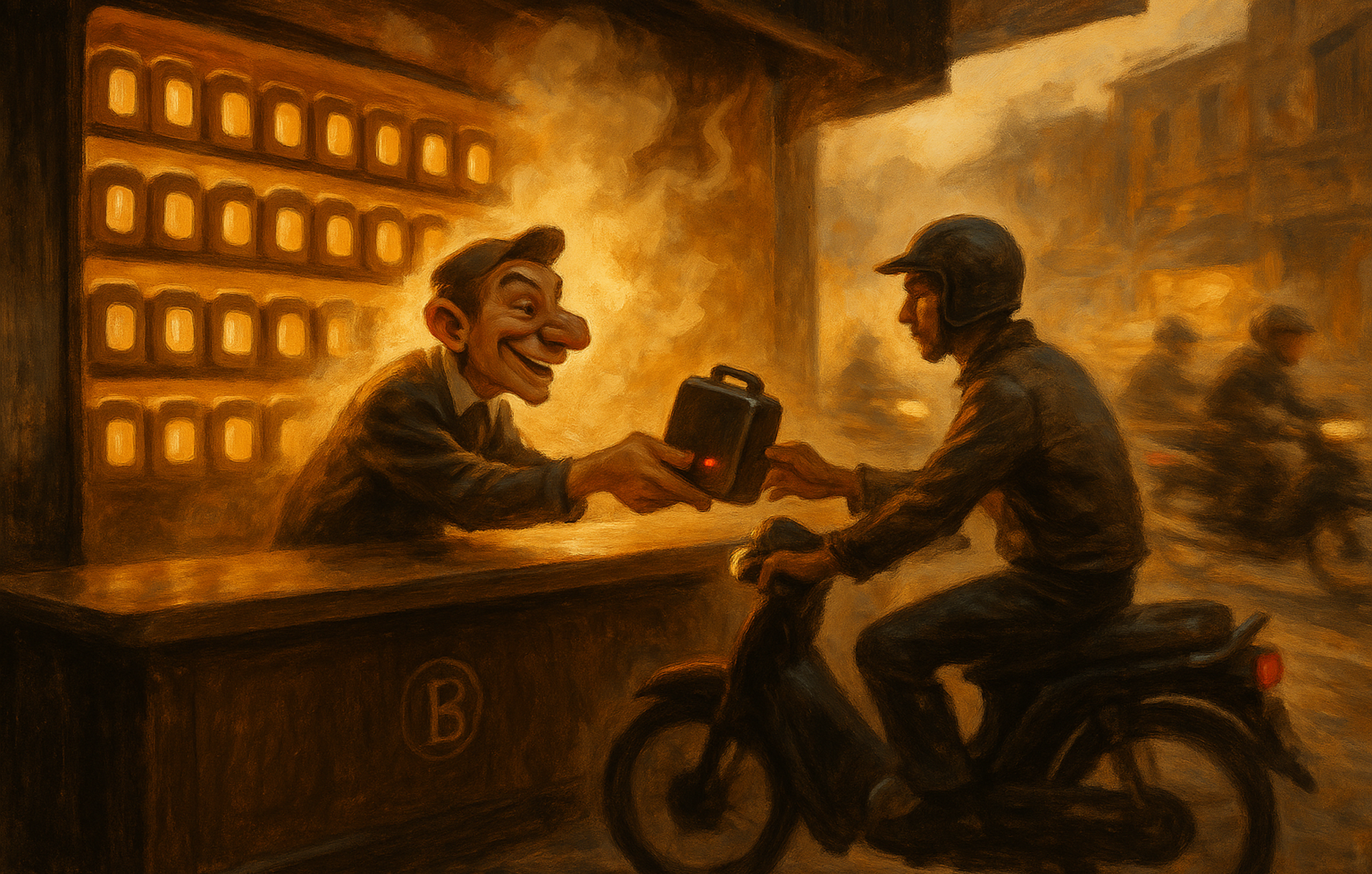
A commercial rider in Nairobi carrying passengers or parcels earns by the trip. A motorcycle parked at a charging point earns nothing, and charging is measured in hours. So the product being sold is not electricity and not the bike. It is the removal of the wait. The rider pulls into a station, hands over a flat battery, takes a charged one, and is back on the road in the time it takes to sign for it. Somebody else absorbed the hours of charging, the same way somebody else absorbed the hour of heating the group head before you walked in.
This is why the funding structure is worth reading. Asset-backed debt sits against batteries, which are things you can count and repossess, while the equity funds the network that makes the batteries useful. Founders raising for hardware usually try to fund the whole business with venture money and wonder why the terms are brutal. ARC Ride split it, matching the boring financeable assets to boring finance and reserving the expensive money for the part that is genuinely uncertain.
There is a second, quieter decision in there. The batteries are described as open architecture and interoperable, compatible with motorcycles from Yadea and other manufacturers. A company confident of winning the vehicle market would lock that down and sell you the bike that only takes its cells. Instead the bet is on the swap network being the thing worth owning, regardless of whose motorcycle rolls up to it. That is the cafe deciding it would rather supply the whole street than run the only good shop on it.
The demand side is not speculative either. Kenya’s registered electric vehicles rose close to thirtyfold between 2022 and 2025, and charging consumed 8.4 million kilowatt hours in 2025, a jump of 188 percent on the year before. Two and three wheelers carry a large share of urban movement in African cities, which makes them the obvious place for electrification to land first.
The risk is honest enough. Swap networks are worthless until dense, and density costs money before it earns any. A station in the wrong part of town is a warehouse of expensive batteries nobody visits. Four new countries at once is four separate versions of that problem running simultaneously.
But the underlying lesson survives the risk, and it applies well outside batteries. Find the wait your customer is currently absorbing. Work out what it would cost to absorb it for them. Then check whether they would pay more than that to have it gone.
Nobody has ever ordered a cup and been told to come back in three hours.
Somebody made sure of that, and charged for it.
