
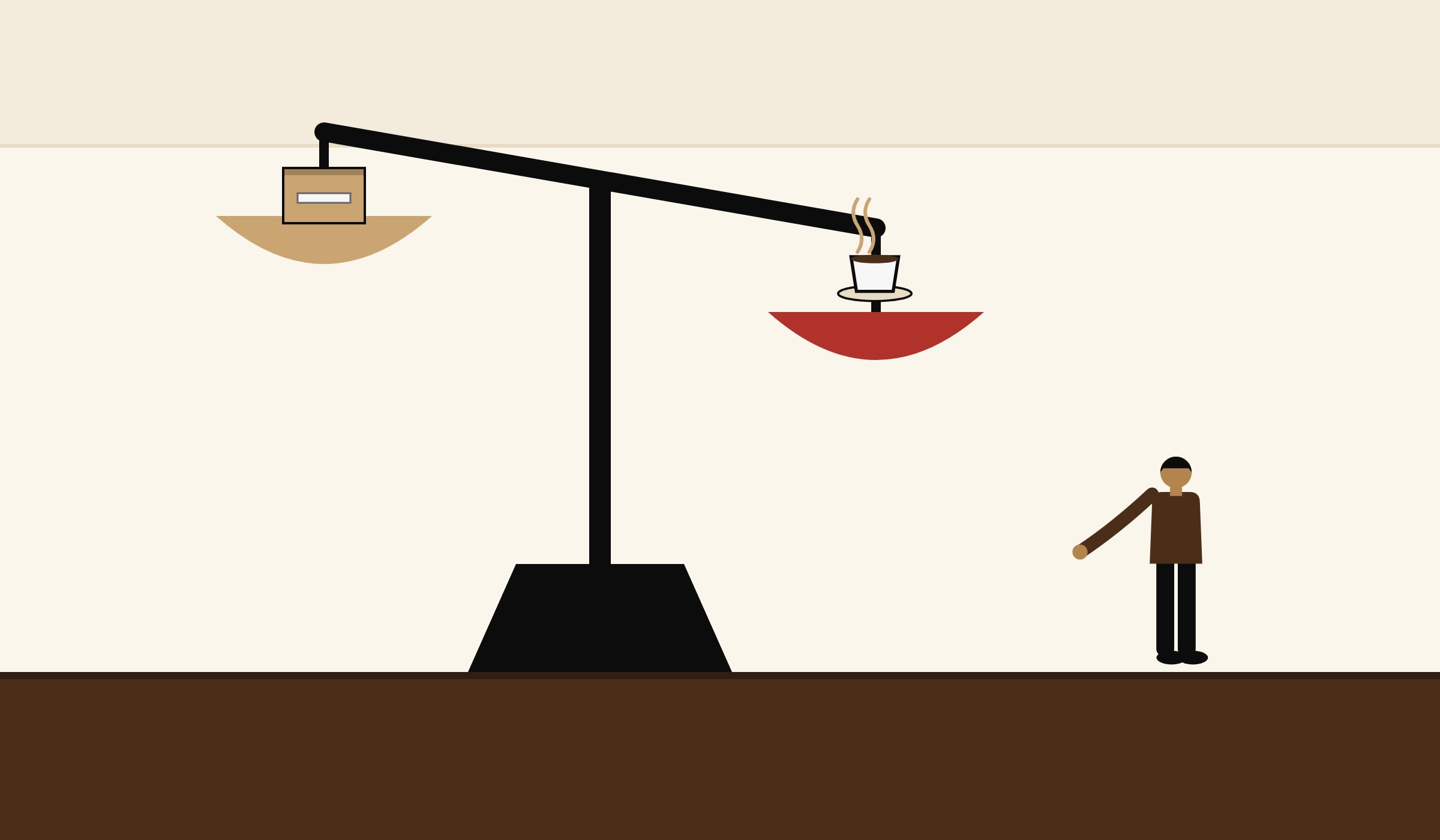
US crude settled up 3.6% at $91.49 after reaching almost $93 during the session, and Brent climbed 4.5% to $104.70. Nothing was extracted, refined, shipped or consumed differently that day. The physical world was identical at the close to what it had been at the open. What changed was the market’s estimate of how likely it is that a particular stretch of water remains passable, and that estimate is worth several dollars a barrel on its own.
This is the part of oil pricing that confuses people who think of commodities as straightforward. A barrel’s price is not a measurement of supply and demand in the present tense. Present supply and demand set a floor, and that floor moves slowly, in increments of rig counts and refinery turnarounds and quarterly consumption data. Everything above the floor is a probability calculation about the next ninety days: the odds of a strike, the odds of retaliation, the odds that retaliation touches a strait rather than a desert, the odds that a producer with spare capacity chooses to use it. Traders are not pricing oil. They are pricing the distribution of futures in which oil cannot get to where it is going.
The espresso bar runs on the same mathematics, which is why the analogy holds without being forced. The posted price of a cup in a city centre has very little to do with the cost of the green coffee, which is a globally traded agricultural commodity and remarkably cheap per serving. The price reflects the rent on a lease signed three years ago, the wage needed to get a skilled person out of bed before dawn, and the owner’s estimate of how many cups will walk through the door between now and March. A single piece of news, a tram line closing or an office tower emptying, reprices that cup instantly without a single bean changing hands. The bean is the floor. The forecast is the price.
The insight is that the gap between the two is the real asset class, and in a conflict it becomes the dominant one. Brent moving 4.5% in a session while the physical balance is unchanged tells you that the risk component, not the barrel component, is doing the trading. Two consequences follow. First, the price becomes extremely fast in both directions: a premium built out of probability can be dismantled by a single credible statement, which is why the same week can deliver a four percent gain and a four percent reversal without anybody being wrong. Second, the spread between Brent and US crude becomes a map rather than an arbitrage. Brent sits closer to the waterborne chokepoints and the tanker insurance market, so it carries more of the geopolitical premium. US crude is landlocked by comparison, pipelined to the Gulf Coast, insulated by a domestic production base. A widening spread is the market saying the problem is specifically about getting barrels through water, and that is exactly what the $13 gap between $91.49 and $104.70 is communicating.
For anyone trying to read a week like this, the useful habit is to watch the structure rather than the headline. Spot prices tell you about mood. The spread between benchmarks tells you where the perceived fault line runs. The shape of the forward curve tells you whether traders think the disruption is a quarter or a decade. All three were pointing at the same place this week, which is why the move was orderly rather than panicked despite its size.
A barrel on a Tuesday weighs forty-two gallons and one geopolitical opinion. Only one of those is listed on the bill of lading, and it is not the one setting the price.
Source: NBC News, “Oil prices jump as Trump and Iran keep markets guessing”
