Forbes ran a property piece this week on six suburban houses around the world, and buried in the framing was a sentence doing far more work than the photographs. The old suburban bargain, it said, promised space and safety in exchange for the city’s restaurants, late nights, cultural buzz and daily immediacy. These days that trade looks considerably less lopsided.
The properties are the usual parade of things nobody reading this is buying. A fifteen thousand square foot gated estate on two and a half acres in McLean, Virginia at $9.25 million. A $3.5 million place in Zeist, thirty-two miles from Amsterdam and six from Utrecht. Grand country townhouses in Le Vésinet outside Paris. The listings are not the story. The premise underneath them is.
For roughly seventy years the suburb was defined by what it lacked. That was the deal, and everyone understood it. You bought square footage and a garden, and the price was that anything interesting required a journey. The city held the restaurants, the bars, the galleries, the density of accident that produces a good evening. The suburb held your house and your car.
Forbes is arguing that the deficit has closed, and the evidence for that argument is mostly not in the houses. It is on the high streets.
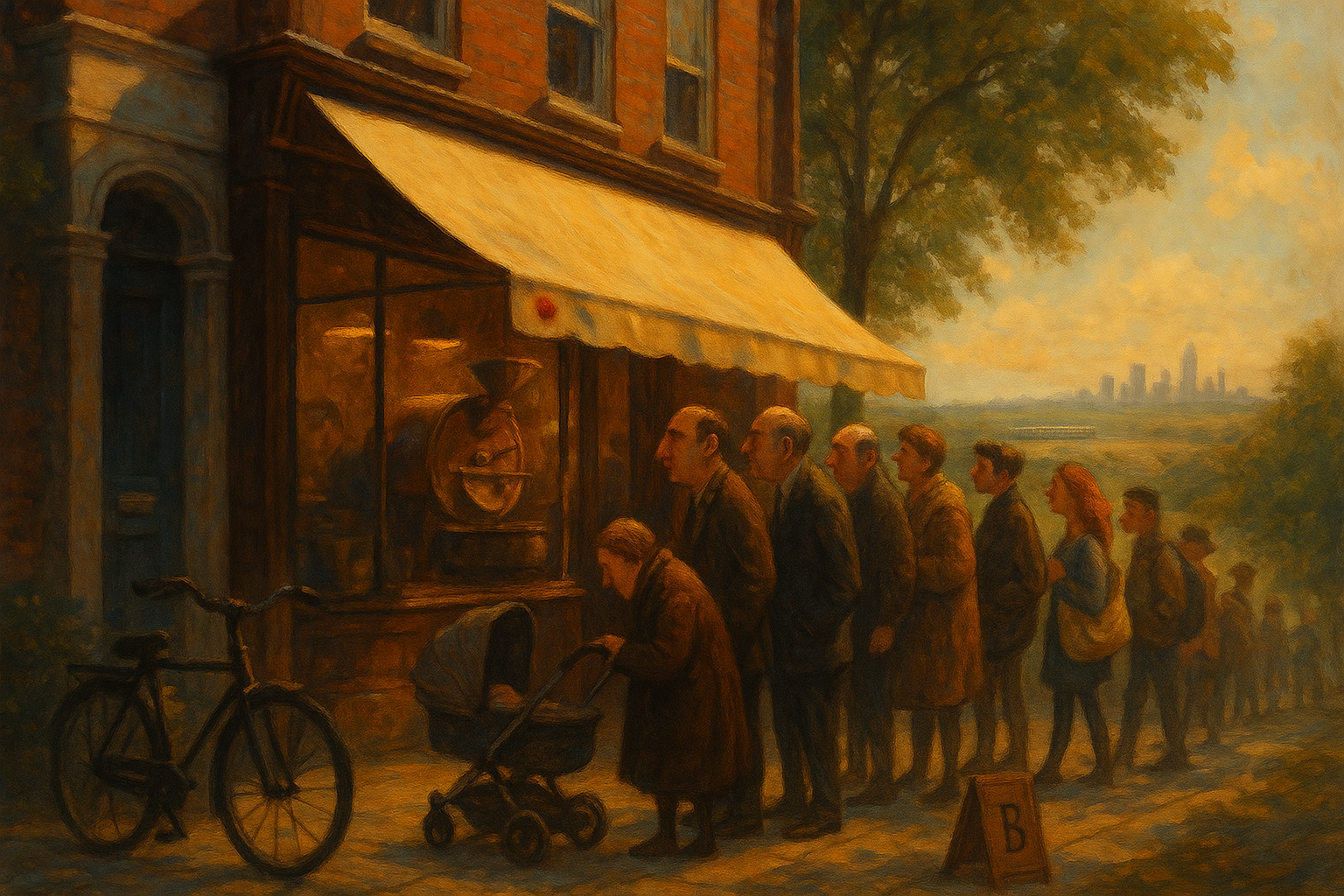
Go and look at what has happened to a decent commuter town in the past six years. There is a roastery. There is a bakery doing a genuine long ferment. There is a wine shop that pours by the glass on Thursdays and a restaurant whose chef used to work somewhere with a star and got tired of the commute and the rent. None of that existed in 2019. All of it exists now, and it exists for one boring structural reason: those people are home on Tuesday.
Hybrid work did not just move where people sleep. It moved where people are awake with money at eleven in the morning on a weekday, and eleven on a weekday is when cafes either survive or do not. A suburb that empties at eight and refills at seven cannot support a serious coffee bar, because a serious coffee bar needs an all-day trade to justify the machine, the staff and the lease. A suburb that retains forty percent of its working population all day can support one. So one appears. Then the bakery appears next to it, because the footfall is now real. Then a wine bar, because the bakery proved the street.
That is the whole mechanism. Amenity follows daytime population. It always has. The city never had better restaurants because cities are magic, it had better restaurants because cities had people in them between nine and five.
Which reframes the property question entirely. The suburban premium was never really about houses, it was about access to other people’s density. If that density partially relocates, the discount on suburban living compresses without a single house changing. The asset did not improve. The context did.
For anyone in food and drink, this is the most legible location signal available right now, and it is much better than a footfall report. Do not ask how many people live somewhere. Ask how many of them are there on a Wednesday at eleven. That number moved enormously between 2019 and now, it moved unevenly between towns, and it has not been priced into commercial rents anything like as fast as it has been priced into houses.
The old bargain assumed the interesting things were downtown and would stay there. They stayed where the customers were, which turned out to be a different commitment entirely.
The good flat white followed the laptop. It was never loyal to the postcode.
Source: Forbes Global Properties, “Beyond The City Center: Six Splendid Suburban Homes Around The World”
