The European Central Bank raised its deposit rate a quarter point to 2.5 percent on Thursday, meeting in Berlin rather than Frankfurt, and Christine Lagarde called the decision a no-brainer. It was the second hike since the fighting between the United States and Iran sent energy prices through the roof, and the main refinancing rate went to 2.65 percent with the marginal lending facility at 2.9 percent.
Here is what the bank is actually doing. It is raising the cost of borrowing across twenty economies in order to suppress a price level that is being driven by crude oil moving through the Strait of Hormuz. The ECB has no ships there. It has no say in whether a ceasefire holds. It has, in Lagarde’s own account, spent the summer watching a memorandum of understanding collapse and modelling oil scenarios because modelling is the only lever in the building that reaches that far.
Inflation is now expected to average three percent across the eurozone this year, above the two percent target, with the return to target pushed out to the end of 2027. Growth forecasts were nudged up to 0.9 percent. Bond yields climbed, equities fell, and traders immediately began pricing in more hikes well into next year. The bank insisted it is not pre-committing to anything. Nobody believed it.
Every cafe operator in the world has lived this exact meeting.
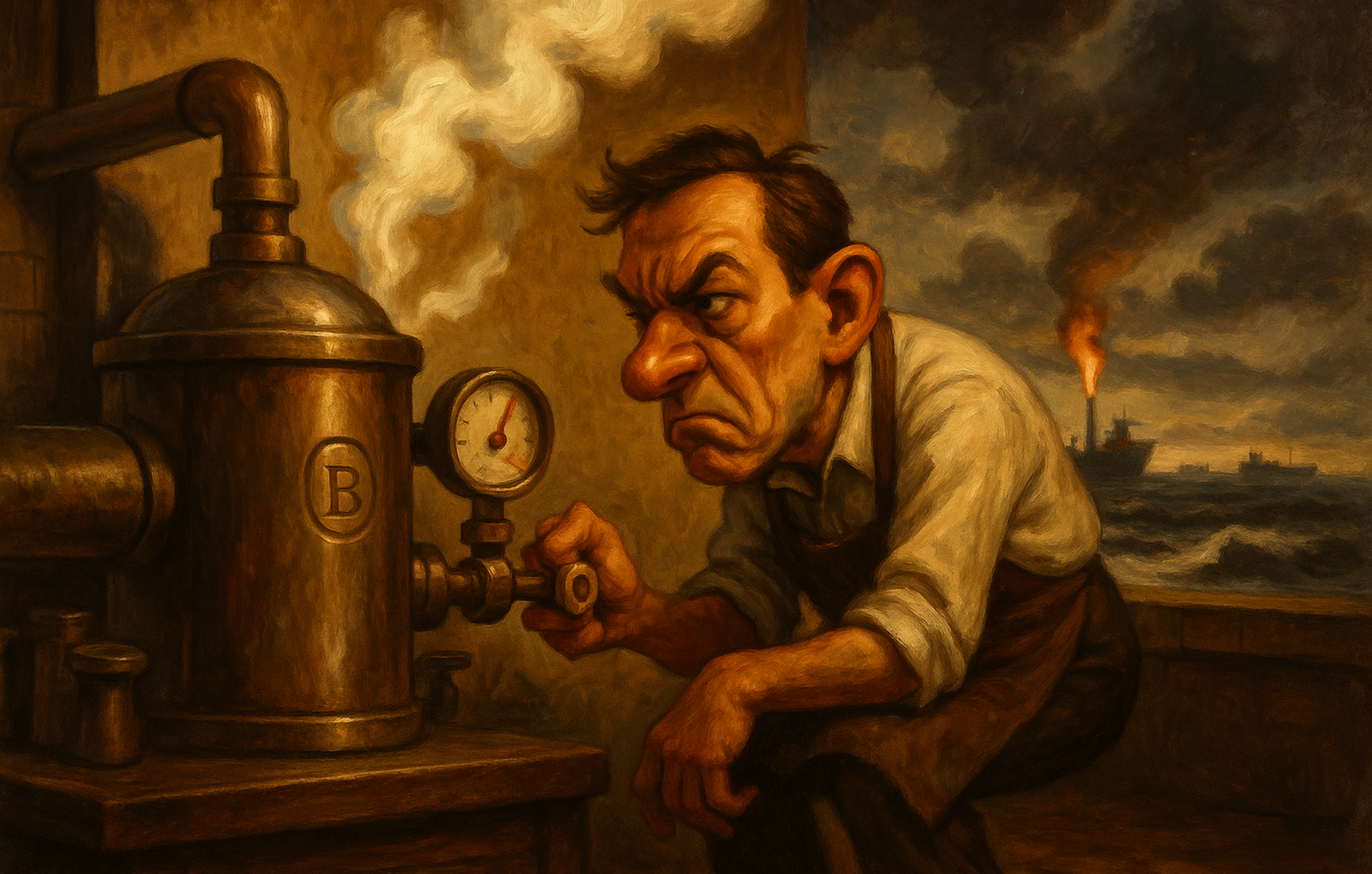
Your boiler is running hot. You did not turn it up. The building’s mains pressure changed because of work happening three streets over, and now every shot is pulling short and bitter and the customers are noticing. You cannot go and stop the roadworks. What you can do is stand at your own machine and start tightening things, adjusting grind, dropping dose, easing the group pressure, making a series of real and defensible interventions on the only equipment you are allowed to touch. Some of it will help. None of it addresses the cause, and you know that while you are doing it.
That is monetary policy in an energy shock. The central bank cannot lower the price of a barrel. It can only make everything else in the economy cost more, until demand falls far enough that the barrel matters less. The instrument is real, the transmission works, and it is aimed at a completely different part of the problem to the one that started it.
Lagarde has been careful all year about the distinction between an energy problem and a demand problem, and the careful language matters, because the two call for opposite responses. If the eurozone were overheating on its own demand, 2.5 percent would be a modest and obvious step. It is not overheating. The economy has held up better than anyone expected, which is not the same thing as running hot, and even at 2.5 percent the deposit rate sits inside the range the bank considers neutral. Going further means deciding, explicitly, that policy should now restrain an economy that was never the source of the fire.
That is the decision sitting on the table for the next meeting, and the market has already assumed the answer.
There is one more wrinkle that never gets enough attention. This is a single rate for very different economies. The same quarter point lands on a German exporter, a Greek hotel and an Irish software firm, and those three are not experiencing the same war at all. One boiler, twenty cafes, one dial.
So the eurozone tightens, the Fed heads into its own meeting with markets pricing a hike at close to ninety percent, and the entire developed world spends the autumn adjusting a machine in response to something happening at sea.
The gauge is in Berlin. The heat is in Hormuz.
Source: Euronews, “ECB hikes rates to 2.5% as energy shock pushes eurozone inflation higher”
