Still Arguing over Why It Tastes Burnt
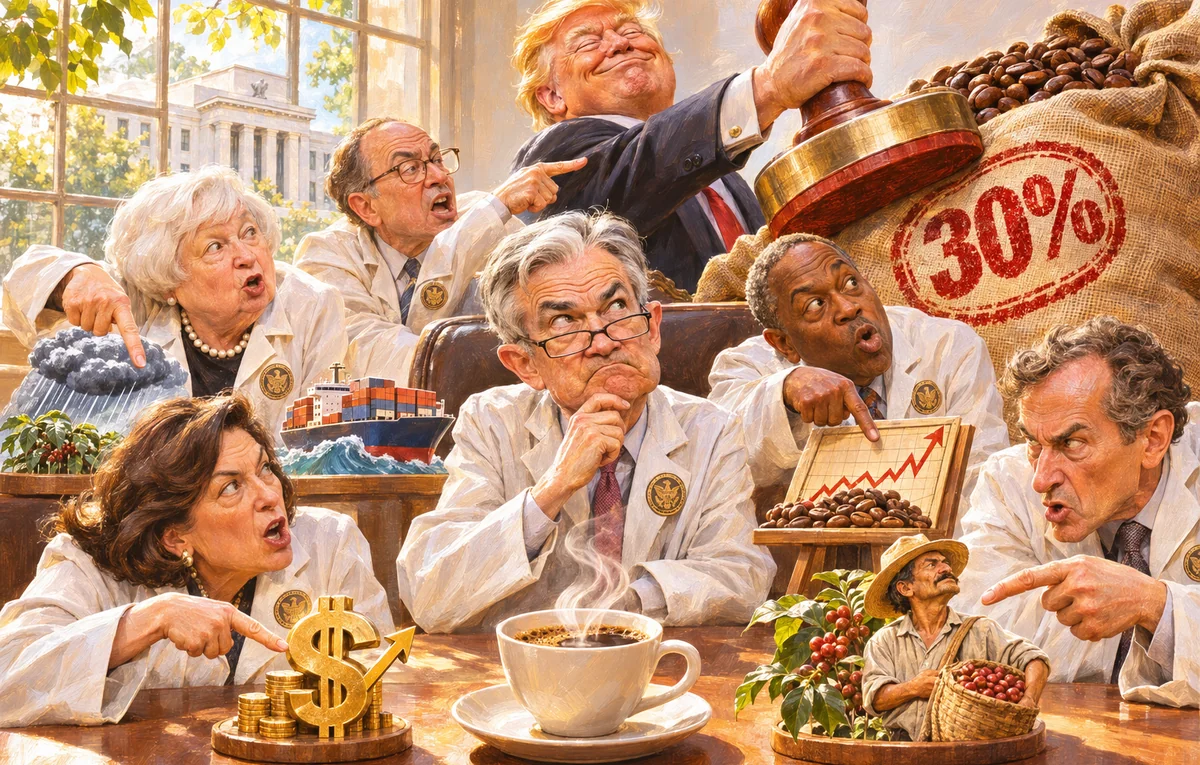
When the coffee tastes burnt, everyone at the table agrees on that much. The fight is over who scorched it.
Federal Reserve policymakers are openly at odds about what is actually driving high inflation, even as tariffs threaten to lift import prices by 30% or more. As WTAQ reported, the disagreement is not about whether prices are too hot - they plainly are - but about the cause, which is a far more awkward thing for a committee to admit it cannot settle. The cup is bitter. The diagnosis is a shouting match.
A roast can taste scorched for several unrelated reasons, and the barista who guesses wrong makes it worse with the fix. Maybe the beans went in too hot. Maybe the roast ran too long. Maybe the beans themselves arrived already damaged from a supplier nobody inspected. Each cause demands a different correction, and applying the remedy for one problem to a cup that has a different problem is how you turn a bad batch into an undrinkable one. The Fed is standing over a bitter pot with its specialists pointing at different burners, and the tariff threat is a supplier about to deliver beans stamped 30% pricier at the door.
The coffee lens sharpens exactly what is at stake in the argument. If the bitterness is demand - too many customers, too much money chasing too few cups - the answer is to cool the room, raise the price of borrowing, let the queue thin. If it is supply - tariffs scorching the beans before they even reach the grinder - then cooling the room does nothing about a cost baked in upstream, and may simply punish customers for a problem that started at the port. The 30% import threat matters precisely because it is a supply-side flame the Fed's main tool was never designed to reach. You cannot fix an expensive bean by telling people to drink less coffee.
The insight is that policy made under genuine disagreement about cause is a guess wearing a confident suit, and the markets know it. A committee that cannot agree on why the roast is burnt cannot be sure its correction will help, which is why every split within the Fed translates into a wider band of outcomes the rest of the economy has to price. The honest position is the uncomfortable one on display: that inflation in a tariff-shadowed economy may be two problems wearing one taste, part demand and part cost, and no single turn of the dial addresses both. Admitting that is better than the false certainty that scorches the next batch worse than the last.
So the spectacle of Fed officials disagreeing in public is not weakness, however much it unsettles a market that craves a single clean story. It is the sound of serious people refusing to pretend a complicated bitterness has a simple cause. The tariff beans are coming regardless, stamped and dearer, and they will push the flavour one way while demand pushes it another. The committee that guesses the cause correctly gets to pour something drinkable next quarter. The one that guesses wrong gets to explain, yet again, why the fix made the cup taste worse. Everyone agrees it is burnt. The only question that matters now is who is right about the fire.