Traders Weigh the Cup Against the Spill

Every oil price is a bet about the future dressed up as a number about the present. This week the bet tilted toward calm, and the barrel fell to prove it.
Oil dropped as traders did the arithmetic of hope against hazard. On one side, the prospect of Iran talks - diplomacy that could ease tension and keep crude moving freely. On the other, the ever-present shipping risk in the Strait of Hormuz, the chokepoint where a single incident can throttle a fifth of the world's seaborne oil. As City AM reported, the market weighed the two and came down on the side of the talks, letting the price fall even with the strait still fragile. That is not optimism. It is a probability-weighted judgment, rendered in dollars per barrel.
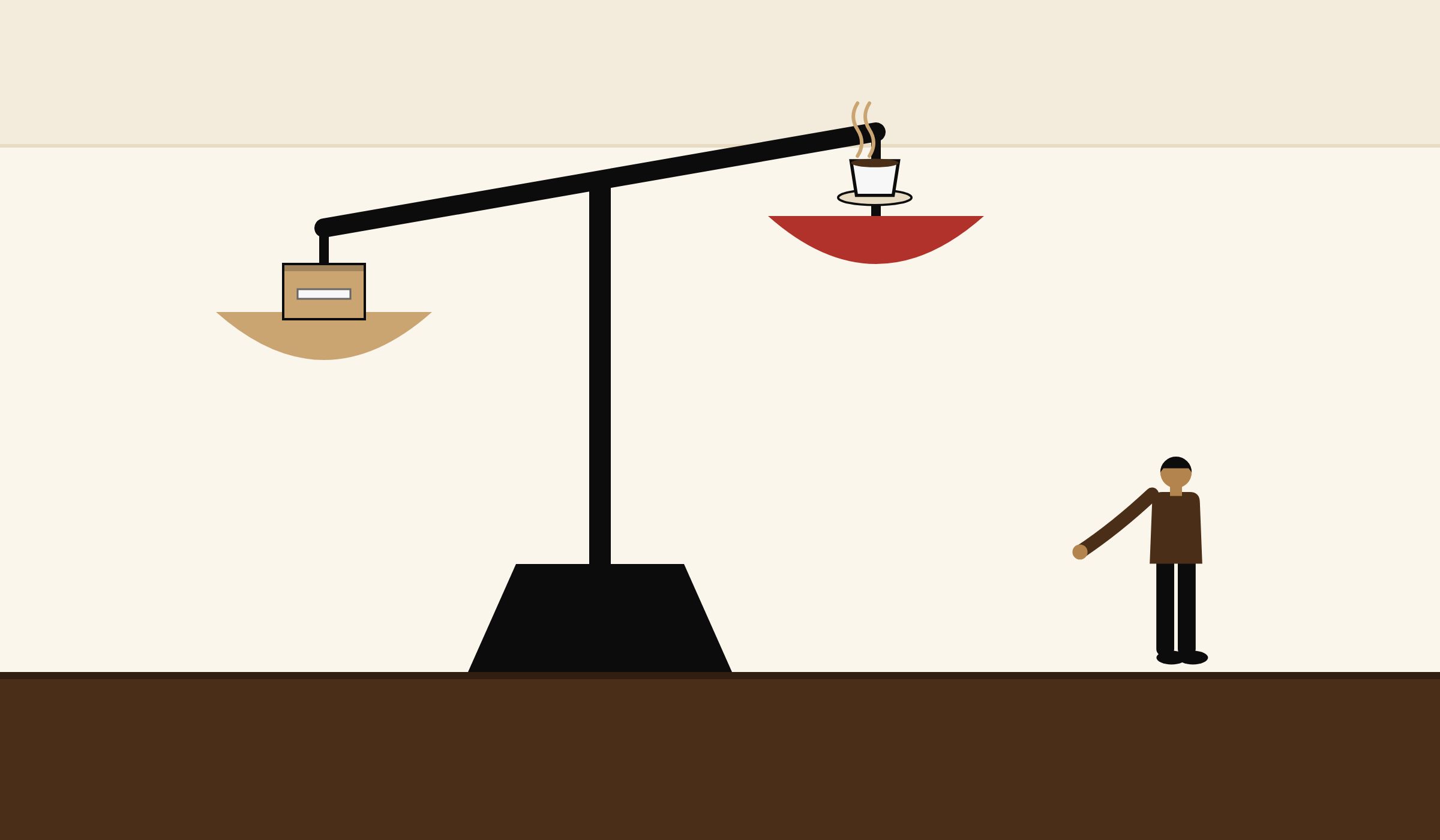
Picture a barista deciding how full to fill a cup being carried across a slippery floor. Fill it to the brim and you are pricing in a smooth walk - maximum confidence, no room for a stumble. Leave it lower and you are hedging against a spill, sacrificing volume for safety. The oil price is that fill line, and traders are the barista reading the floor. Hopes of Iran talks make the floor look dry, so the market fills the cup a little fuller and the per-barrel premium drops. The Hormuz risk is the wet patch nobody can quite see, the reason the cup never gets filled all the way to the rim. The falling price this week is the barista deciding the walk looks safe enough to risk a fuller pour.
The insight is that oil does not price events - it prices the odds of events, continuously, and a falling price in a tense week is the market quietly upgrading the chance of peace. This is the thing that confuses people who expect prices to track headlines one for one. The strait is still dangerous today, yet the price fell, because the number is not a measure of today's risk - it is a measure of tomorrow's probability, and tomorrow's probability just shifted toward talks. The market is always carrying the cup across the floor it expects, not the floor it is standing on.
Which is also why the calm is conditional and the barista keeps one eye down. The fill line can drop again in an instant if the talks stall or the strait flares, because the probability it is pricing can reverse faster than any ship can turn around. Traders filling the cup fuller on hopes of diplomacy are making a reversible bet, and they know it - the whole point of a fill line is that you can adjust it before the spill, not after.
So oil fell this week on a wager that the floor is drying, Iran talks over Hormuz risk, hope outweighing hazard by a margin the market was willing to put money on. The cup is a little fuller than it was. Whether it reaches the table without a spill is the one thing the price cannot promise - it can only keep guessing, one barrel at a time, adjusting the fill line with every step across a floor that could turn slick without warning.