A Deal Brewed, a Peace Never Poured
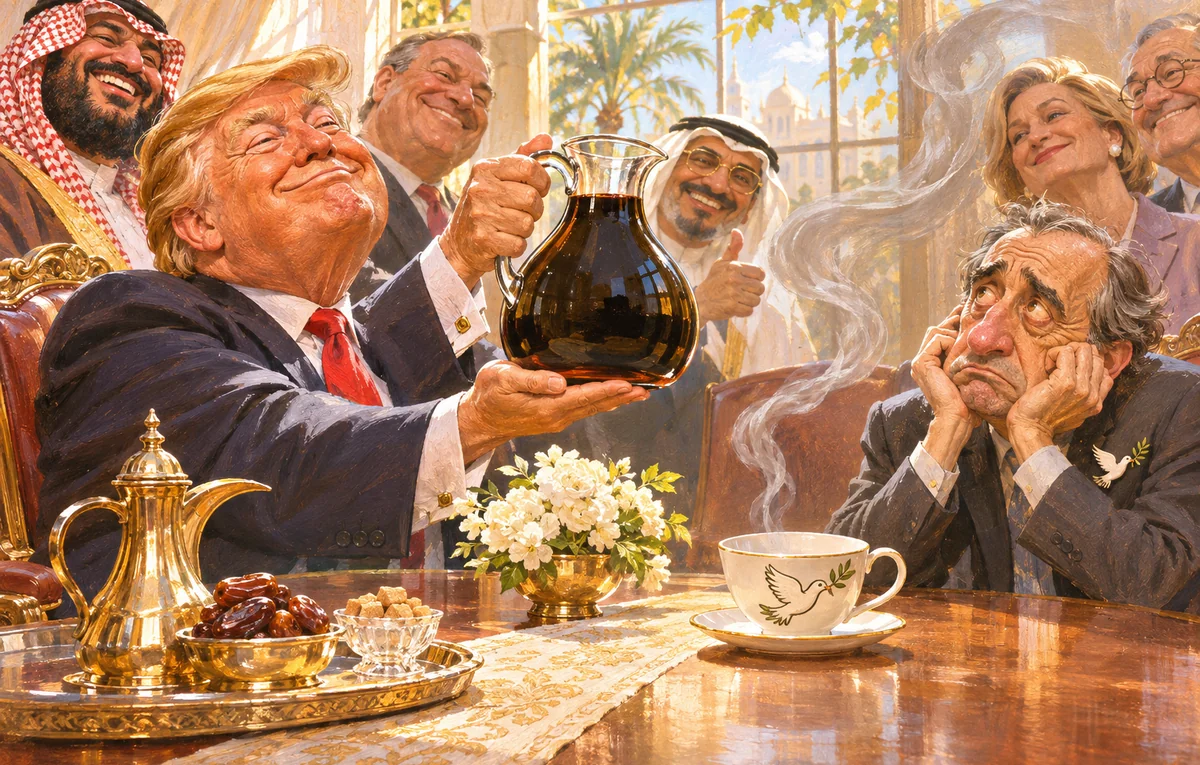
You can pay a great deal for a very full carafe and still walk away from the table thirsty, if the thing you actually came for was never in the pot.
Washington secured a $10 billion Russian oil deal after more than a year of patient diplomatic engagement, and the end to the war that was supposed to come with it did not arrive. As EU Today reported, the oil was real and the diplomacy was long, but the promised peace stayed stubbornly off the menu, leaving a transaction that delivered exactly one of the two things it was meant to pour. The carafe is full. The cup everyone was waiting for is dry.
Diplomacy is a long negotiation over who pours what into whose cup, and the oldest trap at that table is accepting the drink you can see while trusting a promise about the drink you cannot. Oil is tangible. It flows, it is measured, it has a price with ten zeros, and it can be delivered the moment the ink dries. Peace is the harder brew, the one that cannot be poured on a schedule or guaranteed by a signature, and a counterpart who hands over the easy carafe while nodding toward the difficult one has made the oldest move in the room. The tangible good buys cover for the intangible one that never comes.
The coffee lens makes the asymmetry plain. A party that controls both the oil and the war can serve the oil instantly and keep the peace permanently brewing, always nearly ready, always one more round of talks away. Each delay is sold as progress, each full carafe of crude as evidence of good faith, while the cup marked peace sits empty under a thin cloud of smoke. The buyer keeps paying for proximity to a resolution that functions better, for the seller, as a perpetual promise than as a delivered drink. An unfinished peace is leverage. A finished one is just an ending, and endings cannot be sold twice.
The insight is that the easy half of a bargain is often handed over precisely to disguise the quiet abandonment of the hard half, and a year of engagement is long enough to mistake motion for progress. The oil deal is not nothing - $10 billion is a genuine pour, and someone is drinking it. But it was wrapped in the language of a larger settlement, and the settlement is the part that did not materialise, which means the transaction should be read for what it delivered rather than what it was dressed as. A full carafe does not prove the harder cup is coming. Frequently it is the reason the harder cup can keep being postponed.
So the table has produced a deal and withheld a peace, and the honest account separates the two instead of letting the fuller vessel speak for both. The oil flowed. The war did not stop. The year of diplomacy bought a commodity and a longer wait, which is a different result from the one the handshake advertised. The lesson is the one every patient negotiator eventually swallows at a long table: the drink you can measure will always arrive faster than the one you actually crossed the room for, and a counterpart who understands that will keep the easy carafe flowing for as long as the hard cup stays empty and you keep paying to sit down.