Canada Turns the Flame up on the Pot
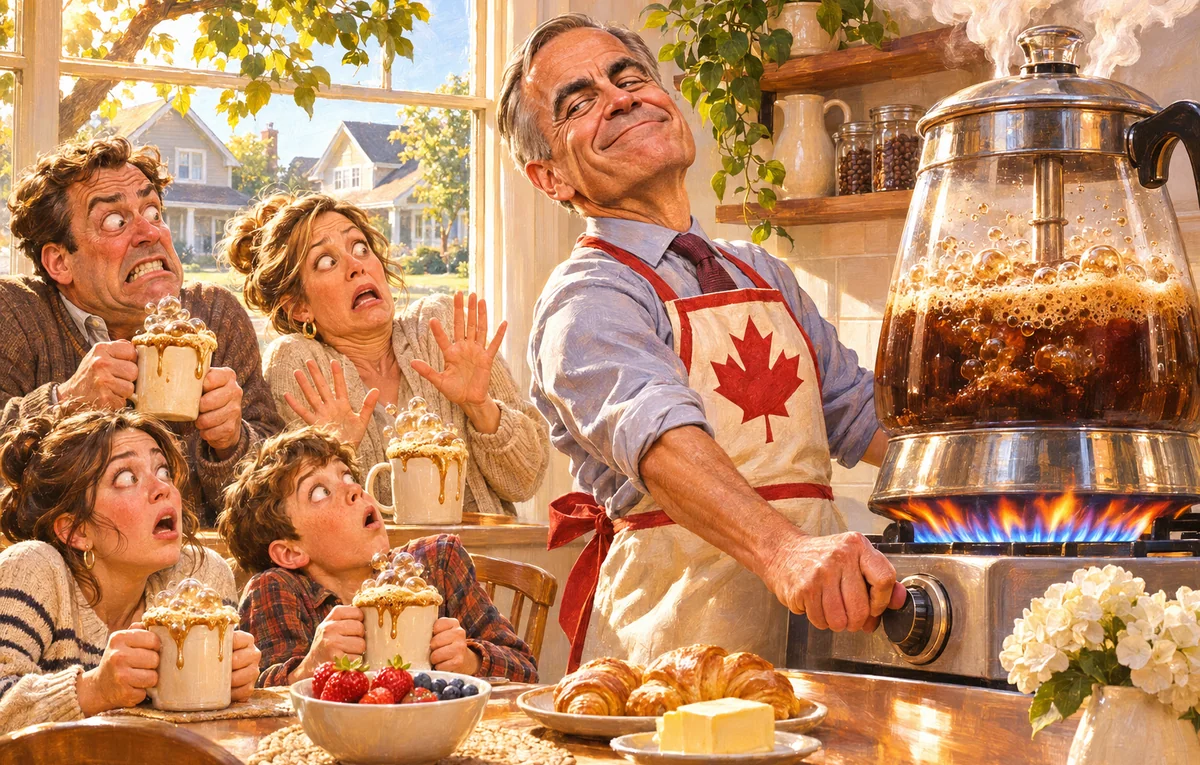
Turn up the flame under a pot and the people sitting closest to the stove feel it long before the water admits it is boiling.
Economists now expect the Bank of Canada to raise interest rates next month, and the people nearest the burner are already reacting. As Global News reported, variable mortgage rates have climbed on the back of the last increase, with oil and gas prices sitting squarely in the frame as the central bank weighs whether the water needs another turn of the dial. The hike has not formally happened yet, and households are already adjusting their grip on the handle.
A central bank setting rates is a barista controlling the flame under the whole country's percolator. Too low and the economy over-extracts, everything bubbles over, prices run hot and the brew turns acrid. Too high and the pot goes cold, lending seizes, growth thins to a trickle. The entire craft is holding the temperature in the narrow band where the coffee comes out strong without scorching, and the Bank of Canada is reaching for the knob precisely because it thinks the pot is running hotter than it wants - energy prices stoking the flame from underneath, where it is hardest to reach.
The coffee lens makes the cruelty of the mechanism visible. A flame turned up at the base takes time to reach the surface, but it does not take time at all to reach the metal nearest the fire. Variable-rate mortgage holders are that metal. They are the part of the pot bolted directly to the burner, feeling every adjustment immediately, while fixed-rate borrowers float higher up in the water and stay cooler for longer. When the headline says rates may rise next month, it is describing a decision that has, for a large slice of the population, already arrived as a hotter payment this month. The announcement is a formality. The heat is current.
The insight is that monetary policy is never felt evenly, and the distance between a household and the flame decides almost everything about how the hike lands. The oil and gas prices pushing the Bank toward a raise are themselves a flame under a different part of the pot - the cost of moving and heating everything, feeding straight back into the inflation the rate is meant to cool. It is a stove with two burners lit at once, and the barista is trying to steady a brew that is being warmed from more than one direction. That is a harder pour than the clean single-shot version the textbooks draw, and everyone in the kitchen knows it.
So the forecast is really a weather warning for the people closest to the stove. The economists can debate the exact size of the turn, and the oil price can wander, but the variable-rate borrower has already been told what next month tastes like, because the heat reached their handle first. A rate decision is announced in a calm room with a prepared statement and a practised voice. It is felt at a kitchen table, in the number at the bottom of a mortgage statement, by the people who happen to be sitting nearest the fire. The pot has not boiled over yet. The ones touching the metal already know which way it is heading.