Who Spilled the Coffee on Purpose
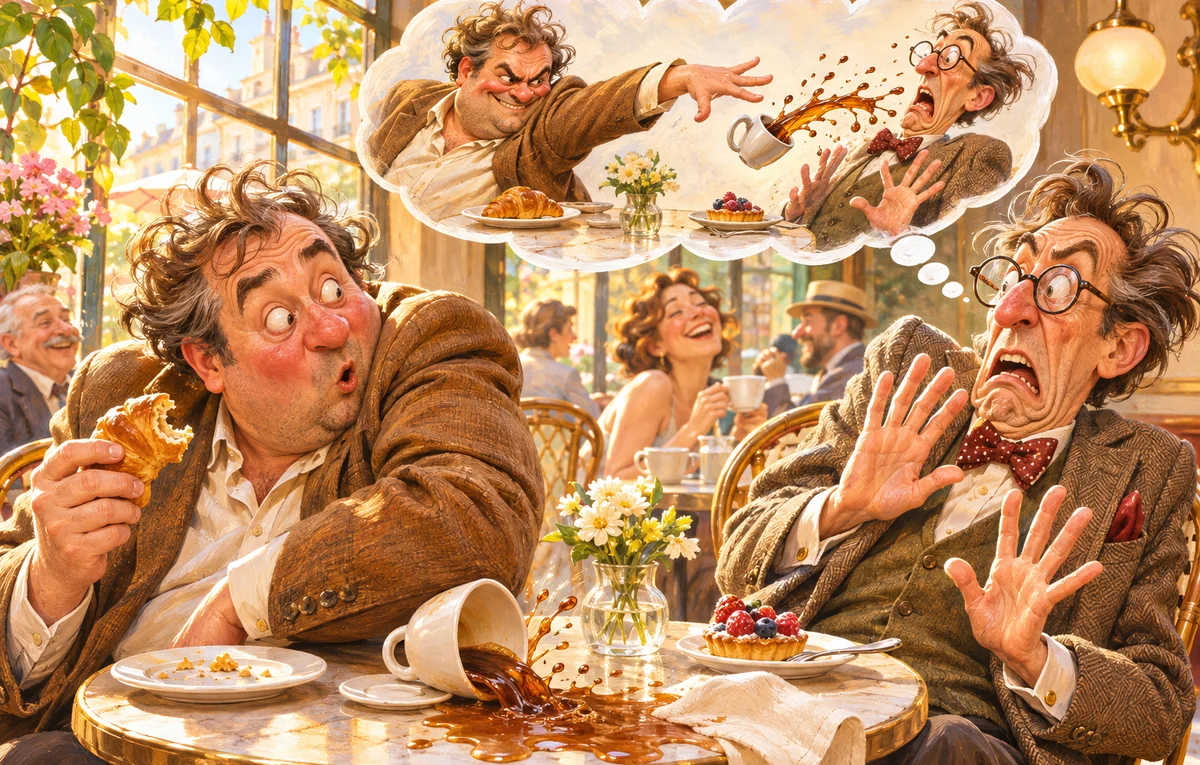
The hardest question in any human collision is almost never what happened, but whether it was meant. Brain-wave research into people with borderline personality disorder landed on a distinction so precise it reorganises how we should think about the condition. They spot deliberate harm exactly as accurately as anyone else - the aim is not broken. What differs is the accidents. Where others register a stumble, a mishap, an elbow that slipped, people with BPD are more likely to read intent, to perceive the harm as chosen, according to PsyPost. The signal is fine. It is the noise that gets misfiled.
This matters because it dismantles the lazy caricature, which treats the condition as a kind of blanket oversensitivity, a volume knob turned up on everything. It is far more specific and far more poignant than that. The capacity to detect real malice is intact and well-calibrated; nobody is being fooled about genuine cruelty. The misfire lives entirely in the ambiguous middle, the vast grey zone of ordinary human clumsiness, where most of life actually happens and where the wrong reading does the most damage. The problem is not seeing threat where there is none everywhere. It is seeing it in the spill.
Everyone has lived the scene, even if only from the comfortable side of it. Someone's elbow catches a cup at a crowded table and the coffee goes everywhere. For most people the interpretation is instant and unbothered - an accident, a mess, a quick apology, forgotten by the second sip of the replacement. But imagine the nervous system that receives the identical event and renders it as a thrown cup, a deliberate act, coffee hurled with purpose. Same spill. Same wet table. Two irreconcilable readings of the same event, one of which makes the world basically safe and one of which makes it a place where people aim. The water is the same. The story written over it is a different universe.
The behaviour this explains, and should soften, is the one that gets labelled as overreaction by people who have never had to live inside the misreading. If your brain genuinely renders the accident as intent - not as a choice to be dramatic, but as a perception arriving pre-interpreted, below the level of decision - then the reaction that follows is not disproportionate at all. It is perfectly proportionate to the event as experienced. The response fits the perceived cause flawlessly; it is the perceived cause that got scrambled upstream, in the fast, pre-conscious machinery that tags an action as meant or not meant before the thinking mind is even consulted.
The larger insight here is that so much of what we call conflict is not disagreement about events but divergence in reading intent, and almost none of us realise how much lifting that reading does. The spill is observable and shared. The purpose behind it is invented, inferred, assigned by a nervous system doing its best with incomplete information in a fraction of a second. Two people can witness the exact same gesture and leave with opposite accounts of what kind of person the other is, and both will swear they are simply describing what happened. The research just caught the moment of divergence on a monitor, which most arguments never get to see.
So the usable thing, for anyone who loves or works alongside someone wired this way, is to stop arguing about the spill and start gently questioning the story written over it. The event is rarely in dispute. The intent is where the whole thing lives or dies, and the intent was never printed on the cup to begin with - it was supplied by the watcher, fast and certain and sometimes wrong. Most harm in this world is an elbow, not an arm. Learning to tell the difference, or to doubt your first reading of it, may be the most underrated skill there is. The coffee spilled. Whether it was thrown is a separate, far harder cup to read.