You Changed the Sign, Not the Roast
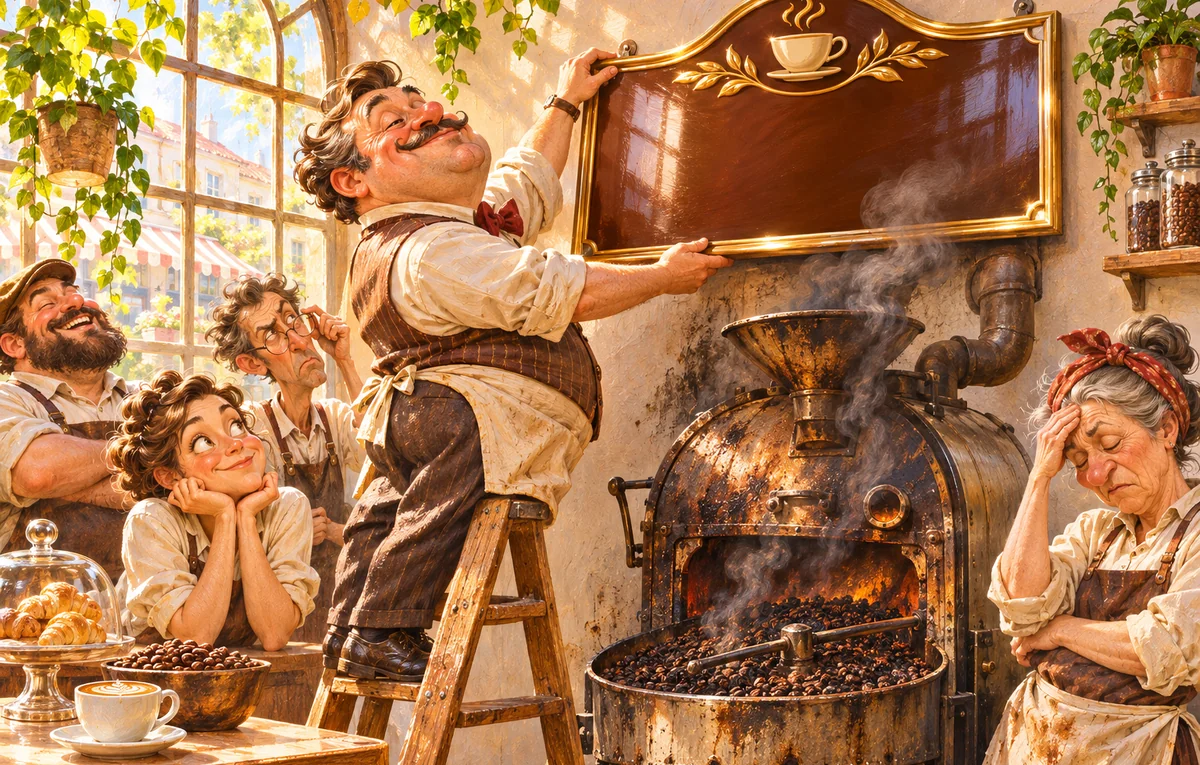
They reprinted the menu and left the roaster filthy. Three years after the Casey report laid the Metropolitan Police bare, a fresh independent review reported by The Guardian finds the culture largely unchanged. Three years, a landmark report, a river of promises, and the thing the report was about is more or less exactly where it was. The diagnosis was accepted. The disease carried on. That is not a failure of knowledge. Everybody knew. It is a failure of will dressed up as a process.
The pattern is wearily familiar to anyone who has watched an institution respond to being told the truth about itself. The report lands, the apology is issued, the action plan is published with satisfying numbers of workstreams, and a great deal of visible motion occurs around the problem without ever quite touching it. Reform becomes a performance staged for the people demanding reform, and the performance is mistaken for the thing itself. Then a review comes around, lifts the lid, and finds the same smell. Culture, it turns out, does not read press releases.
Think of a cafe that keeps serving bitter, scorched coffee until the complaints become impossible to ignore. Management responds decisively - a gorgeous new menu board, a rebrand, warm words about a renewed commitment to quality. What they do not do is clean the roaster, because the roaster is caked in years of burnt residue that taints every batch that passes through it, and cleaning it is slow, filthy, unglamorous work that nobody gets photographed doing. So the sign is new and the coffee is the same, and the customers, who came for the coffee and not the signage, taste no difference at all. The flavour lives in the roaster. It was never in the board.
The behavioural insight is that culture is a roaster, not a menu. It is the accumulated residue of how things are actually done, seasoned in over years, and it flavours everything that moves through it regardless of what the official description claims. You cannot rewrite it with a document because it was never written down in the first place - it was burnt in, cup by cup, decision by decision, until it became the taste of the place. Changing it means scrubbing the equipment that produces the behaviour, which is the one task every reform drive quietly avoids because it is harder than anything on the action plan.
This is why the Casey report could be completely correct and completely ineffective at the same time, and why that combination should surprise nobody. A perfect diagnosis changes nothing on its own. The report named the residue with precision. Naming residue does not remove it; scraping does, and scraping requires someone with the authority and the stomach to shut the roaster down, strip it, and refuse to serve another batch until it runs clean. Three years on, the review's verdict is simply that nobody picked up the brush. The machine kept running because stopping it was inconvenient.
So the lesson for any institution caught serving something bitter is bleak but clarifying. The report is the easy part. The apology is the easy part. The action plan with its reassuring architecture is the easiest part of all. The hard part - the only part that ever changes the taste - is the greasy, thankless scrubbing of the thing that actually does the roasting, done long after the cameras have packed up and the news has moved on.
The Met got a brand-new menu board three years ago. The coffee still tastes of the same old char - because you can hang whatever sign you like, but the customer only ever drinks the roast.