The Routes We Never Walked Back
Everyone assumed the cities would snap back the moment they were allowed to, that the pause was a held breath rather than a broken habit. They did not. New research tracking daily movement across Latin America found that mobility never returned to its pre-COVID pattern, and the ways it failed to return deepened the inequalities already baked into who gets to move through a city and who stays pinned to one corner of it, as Phys.org reported. The routes people once walked did not reopen. They quietly rerouted around the people who could least afford the detour.
The temptation is to read this as a story about traffic, which undersells it badly. Movement through a city is not logistics; it is access, and access is everything. Who can reach the good job, the better clinic, the cheaper market, the part of town where opportunity physically sits - all of it is decided by whether and how freely a person moves. When the old patterns of movement collapse and reassemble unevenly, what is really collapsing and reassembling is the map of who can get to a better life, redrawn without anyone voting on it.
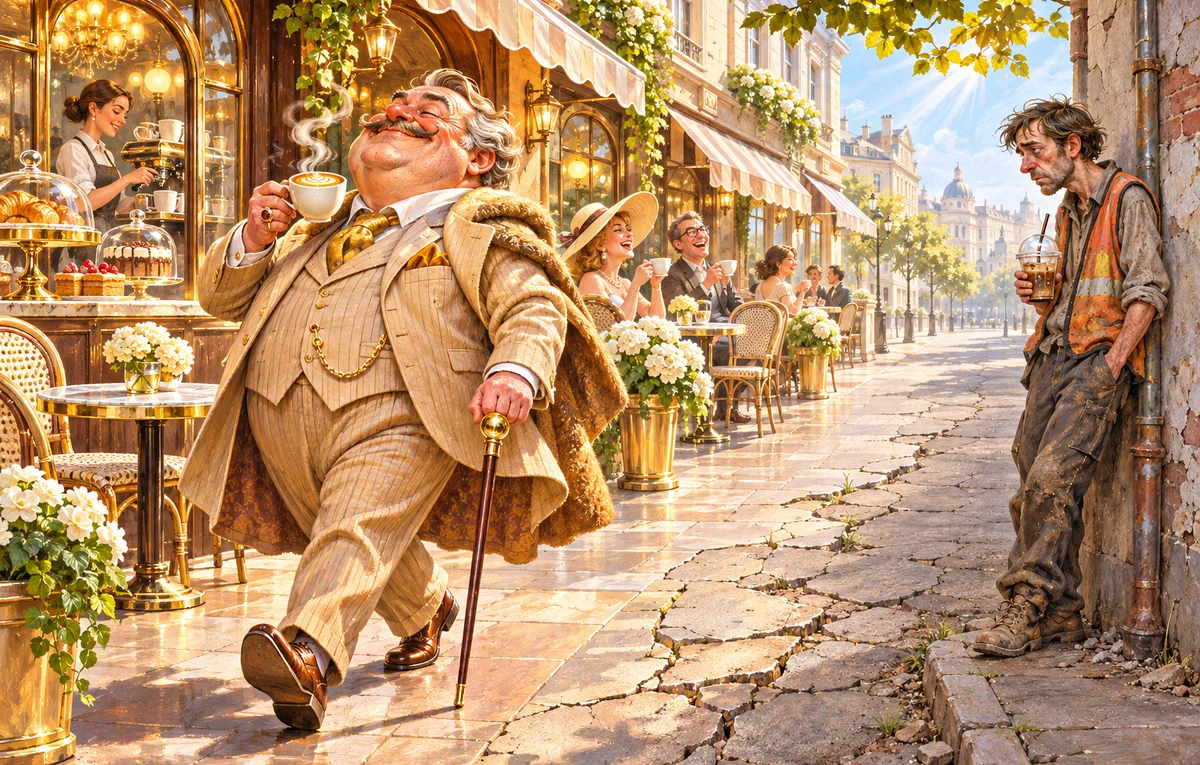
Consider the difference between two people and their morning coffee. One can stroll, unhurried, between whichever cafes they fancy, the whole neighbourhood available to them, the walk itself a small pleasure and the choice of cup entirely open. The other grabs whatever is nearest the single route they are still able to take, drinks it cold on a corner because stopping costs time they do not have, and never sees the cafes three streets over that may as well be in another country. Same city. Same morning. Two completely different radii of what the day can contain. The freedom to wander for a better cup is the whole inequality in miniature.
The behaviour underneath is habit hardening into structure, which is how temporary arrangements become permanent ones without anybody deciding they should. The pandemic forced new patterns - stay close, move less, route around - and for the comfortable those patterns relaxed the moment they could. For everyone else they set like concrete, because the alternative routes were never really theirs to take in the first place. A detour is a minor annoyance to someone with options and a sentence to someone without them. The emergency passed. The narrowed map it left behind did not, and the people living inside the narrow version stopped noticing the walls.
The sharp insight is that mobility is a privilege that disguises itself as a neutral fact of geography, and the disguise is excellent. We talk about cities as if the streets are equally available to all who stand on them, when in truth the freedom to move - to choose a longer, pleasanter, more opportune route - is distributed as unevenly as income, and now more so. The research did not just find that people move differently. It found that the capacity to move freely, to treat the whole city as walkable and reachable, quietly concentrated upward while the pause was on, and stayed concentrated after it lifted. Mobility went from a shared assumption to a sorted asset.
So the thing worth sitting with is that the city never reopened equally, whatever the reopening headlines claimed. Some people got their wandering back, their open map, their choice of corner cafe and the easy luxury of changing their mind halfway there. Others are still standing where the emergency left them, drinking whatever is in reach, watching the free-movers drift between options they will never be offered. The pavement between the two is cracking, and nobody is being paid to repair it. The route home, for a great many, simply never came back - and a city you cannot cross is just a smaller city wearing a big one's name.