Health Is a Blend of Where You Started
The comforting lie about health is that it is a scoreboard of personal choices, and the inconvenient research keeps refusing to leave that lie intact. A new analysis from the ESRI tied long-standing illness to deprivation - to where people start and what surrounds them - while also tying it to modifiable risk factors and habits, as The Journal reported. Both things are true at once, and the discomfort lives precisely in holding them together. Illness is shaped by circumstance you did not pick, and by behaviours that, in theory, you did. The question is how much the first quietly decides the second.
This is where most conversations about health go lazy, splitting into two camps that are each half right and therefore both wrong. One camp says it is all personal responsibility - eat better, move more, drink less, and the outcomes follow. The other says it is all structure - poverty and environment and the hand you were dealt. The ESRI's finding is more honest and more awkward than either, because it refuses to let go of either rope. The habits matter. The deprivation matters. And crucially, the deprivation is often what sets the menu of habits a person can realistically choose from in the first place.
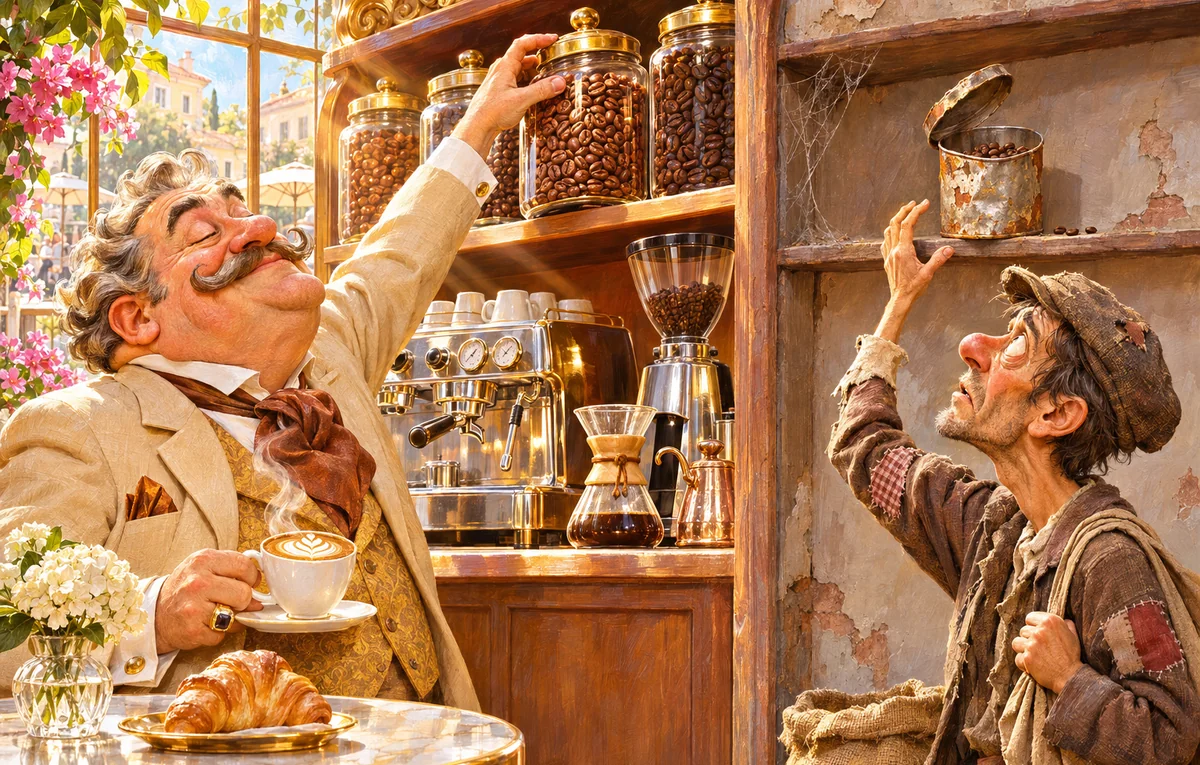
Picture two cafes, or rather two shelves behind the same counter. One is stocked with fresh, bright, single-origin beans, gleaming equipment, a dozen options, and the time and knowledge to use them well. The other holds a single battered tin and a kettle. Now tell both customers that the quality of their morning cup is entirely a matter of their choices. It is technically true - each can choose - but only one of them is choosing from a shelf worth choosing from. The habit of making a good cup is real and it is modifiable, but it is downstream of a shelf that was stocked, or not stocked, long before either customer walked in.
That is the behavioural knot the study ties so precisely. Modifiable risk factors are genuinely modifiable - nobody is saying habits do not count, and the research explicitly says they do. But the capacity to modify them is not evenly distributed, because the easier, healthier choice is cheaper, nearer, and more available on the well-stocked shelf and distant to the point of fantasy on the bare one. Telling someone to simply choose the better option assumes the better option is on their shelf at a price they can pay in money, time, and energy. Often it is not. The habit is modifiable in principle and locked in practice.
The insight worth carrying out of this is that habit and circumstance are not rival explanations to be argued between but a single chain to be read in order. Deprivation does not reach past behaviour to cause illness directly, as if choices were irrelevant; it works through behaviour, by narrowing which behaviours are even on offer. The bare shelf does not pour the bad cup itself. It simply ensures the bad cup is the only one within reach, and then lets the world blame the drinker for what they were handed. That is the trick inequality plays - it dresses a stocking problem up as a choosing problem.
So the honest reading is that health is a blend, and the blend was mixed partly by the drinker and partly by whoever stocked the shelf they were born in front of. The habits are real and they can change, and pretending otherwise helps no one. But what is in the cup depends enormously on what the shelf could afford, and judging the cup without ever looking at the shelf is how we have managed to call a structural failure a personal one for so long. Everyone chooses their coffee. Not everyone was handed the same shelf to choose from - and the cup tells you less about the drinker than about the room they were standing in.