Everyone's Drinking, Nobody's at the Same Cafe
A surge in people wanting the news sounds like a unifying moment, right up until you ask where they actually went to get it. A survey around the midterms found that more people searched for news as the vote approached - the appetite was up, the engagement real - but younger and older adults reached for strikingly different sources to feed it, as Connecticut Public Radio reported. The hunger was shared. The table was not. Everyone showed up thirsty and then walked into entirely different rooms.
This is the quiet rewiring of civic life, and it hides inside a reassuring headline. We tend to read rising news consumption as a sign of a healthy, attentive public, the citizenry doing its homework. But consumption volume tells you nothing about whether people are consuming the same thing, and the same reality, and the same set of facts to argue over. A country can be more informed and more divided at once, because being informed is now a function of which feed you opened, not which paper landed on which doorstep. The appetite went up. The common menu quietly disappeared.
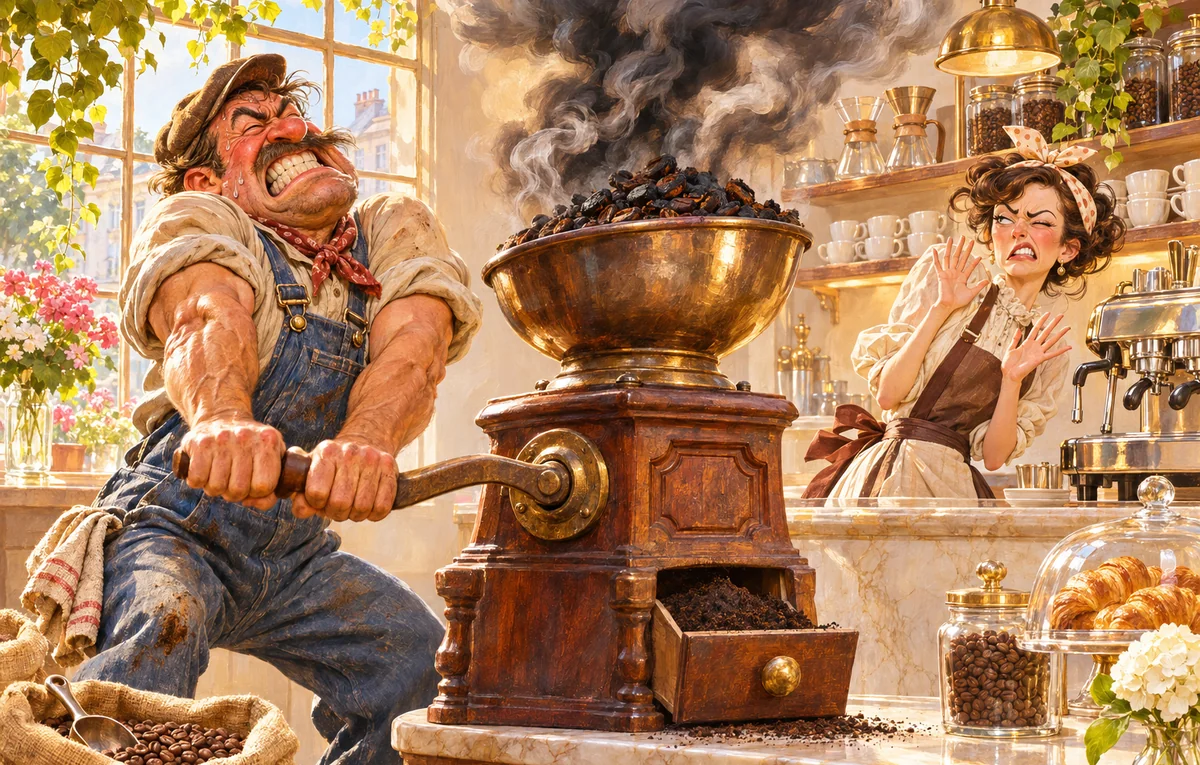
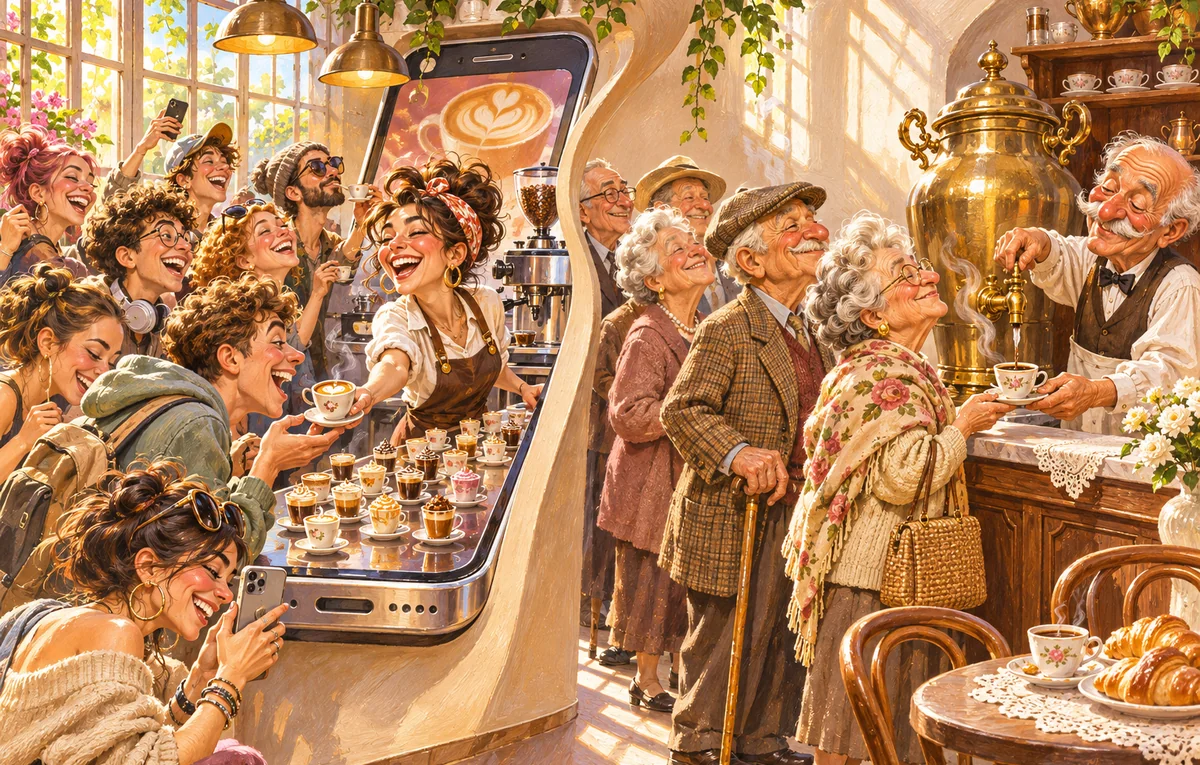
Picture the old town cafe, the single one, where everybody got their morning fix from the same urn. The coffee may have been mediocre, the brass dented, the choice nonexistent, but there was a there there - one counter, one blend, one conversation that everyone had drunk from the same pot before joining. Now picture what replaced it: the young crowd huddled over a phone-shaped bar dispensing a thousand tiny personalised cups, each algorithmically pulled for the person holding it, while the older crowd queues at a separate traditional spout entirely. Both are caffeinated. Both are convinced they are drinking coffee. Neither has any idea what is in the other's cup.
The behaviour driving this is not apathy, which is the comforting diagnosis, but its opposite dressed in different clothes. People are not disengaging; they are engaging furiously, inside sealed rooms. The generational split in sources is really a split in the water supply - what facts arrive, in what order, with what framing, decided upstream by platforms and habits that barely overlap between a twenty-year-old and a seventy-year-old. When the inputs diverge this hard, agreement downstream becomes almost mechanically impossible. You cannot reconcile two conversations that were never served from the same pot.
The deeper insight is that shared facts were always a function of shared infrastructure, not shared virtue. Previous generations did not agree more because they were wiser or more tolerant; they agreed more because there were three channels and one local paper, and the sheer scarcity of sources forced a common cup whether anyone liked it or not. The fragmentation we are living through is not a failure of character. It is the predictable result of finally giving everyone exactly the coffee they prefer, in exactly the room they prefer to drink it, with no reason ever to visit the other counter. Abundance did to the news what it does to everything - it personalised it, and personalisation is just another word for apart.
So the thing to notice, next time the engagement numbers climb and someone calls it a healthy democracy, is that drinking more is not the same as drinking together. The midterm surge was real and the thirst was genuine, and both of those things can be true while the country drifts into two cafes that share a street and nothing else. Everyone is caffeinated. Everyone is wide awake. And not a single one of them is sitting at the same table, which is a remarkable way for a crowd to feel so alone.