
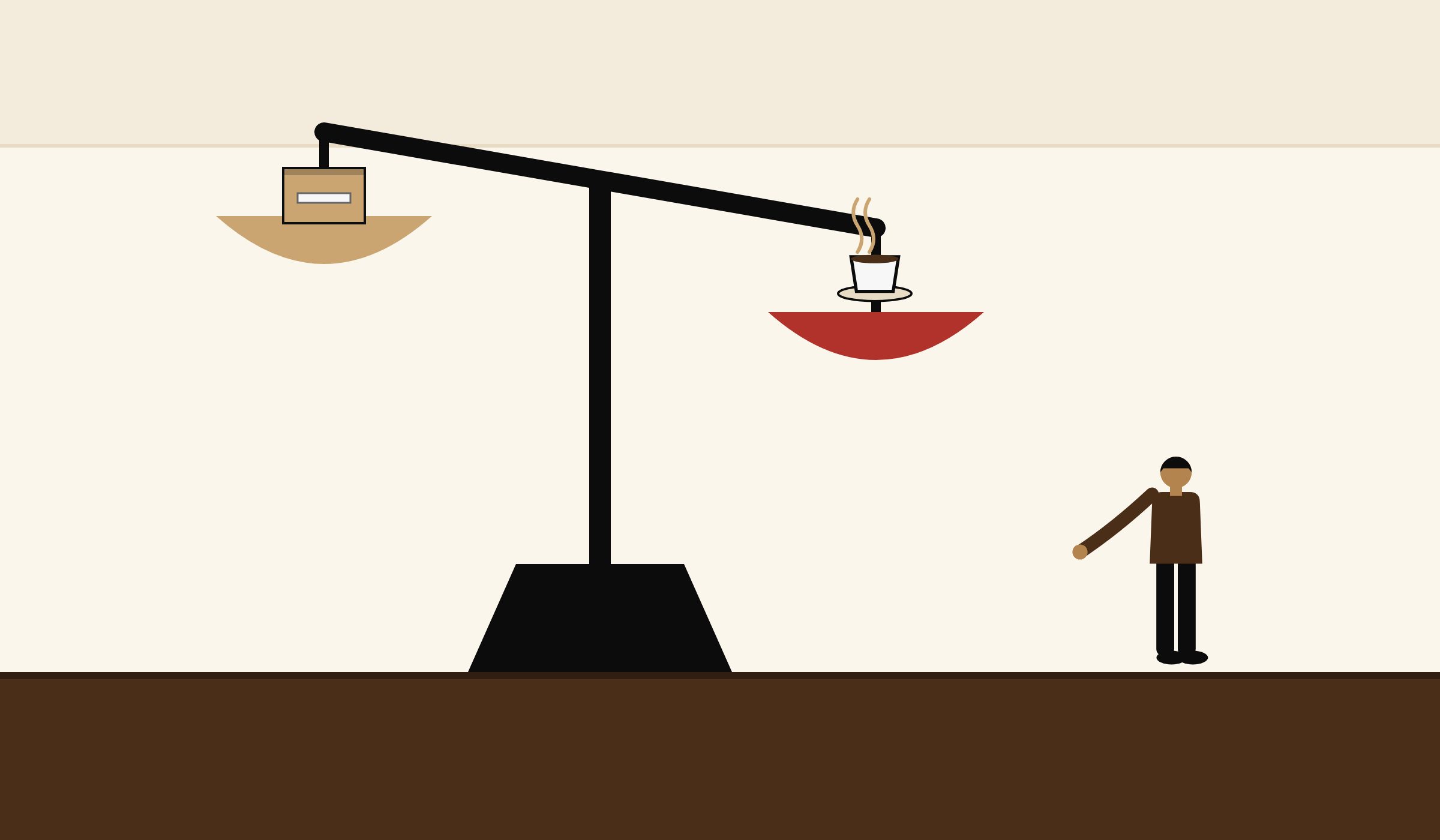
Gold moved up a little while oil moved down a little, and the entire explanation offered by the market was that nobody knows what the Federal Reserve is going to do. That is not an unsatisfying answer. That is the answer, and it tells you more about the current state of financial markets than a larger move would have.
The mechanics are straightforward enough. Softer oil means softer headline inflation, which means a central bank has more room to cut, which means lower real yields, which makes a non-yielding asset like gold relatively more attractive. Gold pays nothing, so its appeal is a function of what everything else pays. When the expected return on cash and short-dated government paper falls, the opportunity cost of holding an inert metal falls with it, and the metal appreciates without doing anything at all.
What is interesting is the size of the move, or rather the absence of one. Gold edged. In a month containing an energy market reversal, an unresolved rate decision and the usual supply of geopolitical anxiety, the oldest safe haven in finance declined to make a statement.
Here is where the coffee counter is instructive. There is a moment, about forty seconds into an extraction, when the stream changes colour and begins to blonde, and the operator has to decide whether to cut the shot now or let it run. Everything is already in motion. The grind is set, the dose is in the basket, the water is through the puck, and no further input is available. What the operator is doing in that moment is not acting but reading, and the discipline is in not touching anything while the evidence arrives. Cut early and you have an unbalanced shot. Let it run and you have washed it out. The decision is binary, the window is short, and the correct behaviour beforehand is stillness.
Gold is in the forty-second window. It is not expressing a view on inflation, because the inflation picture is contingent on a decision that has not been taken. It is not expressing a view on risk, because the risks in play are the ordinary ones. It is holding position while the evidence arrives, and the small upward drift is the sound of a modest number of participants deciding that a cut is marginally more likely than it was yesterday.
The insight is that gold’s famous role as a crisis hedge has become a smaller part of what it actually does. Most of the time, in most market conditions, gold is a real rate instrument. It rises when the market expects monetary accommodation and falls when it expects restraint, and the crisis premium only shows up on the days when a crisis is genuinely underway. Treating every gold movement as a referendum on confidence in the financial system produces a great deal of commentary and very little accuracy. Treating it as a vote on the direction of real yields produces a usable model.
This also explains why the oil link runs in the direction it does. A naive reading would expect high oil, high inflation and high gold to travel together, since gold is supposed to be the inflation hedge. The actual sequence is the opposite, because oil-driven inflation invites a hawkish central bank, and a hawkish central bank raises real yields, and high real yields are the one condition in which gold reliably struggles. Inflation is good for gold only when the central bank declines to fight it.
So the metal sat there and edged, which is the correct behaviour for an asset whose price depends on a vote it does not get to attend. The move will come after the decision, not before, and it will be larger than anything that happened on this particular Monday.
Source: Reuters, “Gold edges higher on softer oil, Fed rate outlook in focus”
