
A month ago the market gave the Federal Reserve a fifty-one per cent chance of sitting still this month. Today it gives it eighty. Nothing was announced in between. No official stood up and declared a change of course. The policy did not move, the committee did not vote, and yet the single most consequential number in global finance travelled from a coin toss to a near certainty, and the dollar has slipped as it went.
This is the part of markets that outsiders find hardest to accept, because it looks like the price is responding to nothing. The price is responding to a shift in collective conviction, which is a real thing with real consequences even though it has no press release. Fifty-one per cent means nobody knows. Eighty per cent means the question has effectively been settled in the minds of the people who have to trade it, and a settled question stops paying. A currency holds its premium when the market still believes a hike might arrive. Remove the doubt and the premium leaks out, quietly, over days, without a headline to hang it on.
Oil did most of the work. Energy prices have been the transmission belt for the whole rate conversation on both sides of the Atlantic, and when the barrel eases, the inflation path eases with it, and the case for another tightening gets thinner without anyone having to argue it. That is the mechanical chain, and it runs in that order every time. A central bank reacting to an energy shock is not really setting policy, it is reporting on a commodity, and the market has learned to skip the middle step and read the commodity directly.
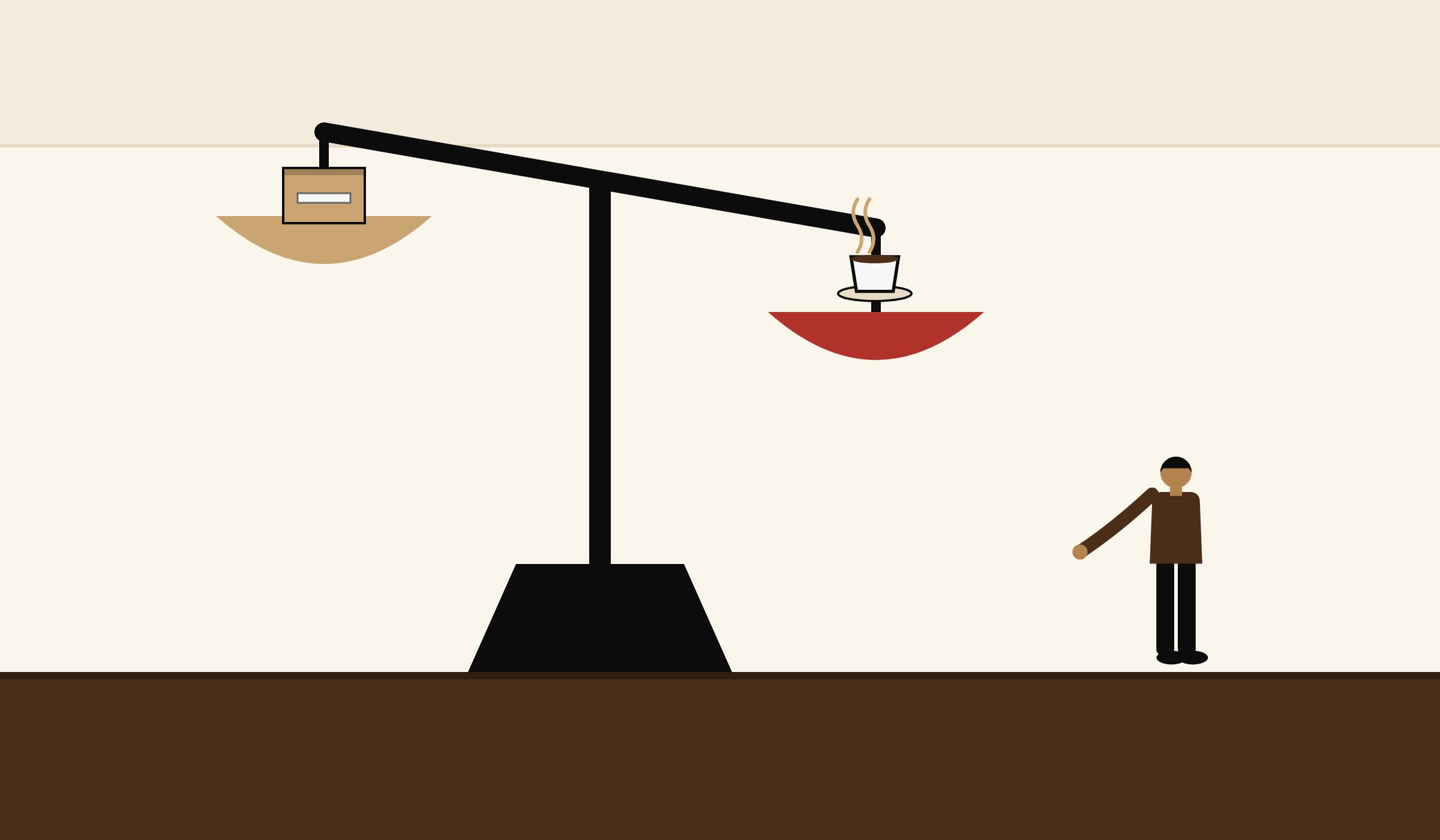
Anyone who has watched a cafe queue dissolve knows the shape of this. The queue is not held by the coffee, it is held by the belief that the coffee might run out. Say nothing and people stand in line. Announce that there is plenty for everyone and the line does not get served faster, it gets shorter, because half of it was only there on the chance of scarcity. The dollar had a line of that kind standing in it, composed of positions held on the possibility of another hike. The possibility faded, the positions had nothing left to wait for, and the line thinned on its own.
What makes the move worth noting is not the direction but the mechanism. Eighty per cent is not unanimity, and the remaining fifth of the probability distribution still contains a hawkish surprise, which is exactly the configuration in which currency markets get hurt. A market priced at fifty-one per cent cannot be shocked by either outcome. A market priced at eighty per cent can be badly shocked by one of them, and the fewer people positioned for that one, the more violent the adjustment when it arrives. Conviction is cheap to acquire and expensive to carry.
There is also a reading of this that favours the central bank, and it rarely gets stated plainly. A committee that can move market expectations thirty points without taking an action has demonstrated that its communication is doing the work its instruments would otherwise have to do. That is the stated goal of every modern monetary authority, and it is achieved far less often than the speeches imply. Getting the market to price a hold is almost as useful as holding, and considerably cheaper, because it leaves the actual instrument untouched and available.
So the dollar is softer and nothing happened. The policy rate is where it was, the committee has not met, and eighty per cent of the money in the world has nevertheless changed its mind about December’s cousin, this month. The oil price moved first, the probability moved second, the currency moved third, and the only thing published in between was a set of commodity quotes that anybody could read.
The market did not wait to be told. It read the barrel and filled in the rest.
