
The company began with a man in Bolton hand-making spiked running shoes in the 1890s, and the detail worth keeping is that Joseph William Foster was solving a physics problem, not building a brand. Runners wanted grip. Nobody had engineered the spike properly. J.W. Foster and Sons made shoes good enough that athletes at the highest level of the sport wore them, and the firm stayed a specialist supplier for the better part of seventy years before two grandsons renamed it Reebok in the late 1950s.
That lineage matters because it set up the condition that has defined the company ever since. Reebok has, at almost every point in its modern life, been running three competing ideas through one set of factories, one marketing budget and one sales force. It was a serious performance-engineering house. It was, after the aerobics boom of the early 1980s, a fitness and lifestyle brand selling soft leather shoes to people who had no intention of racing anybody. And from the late 1980s onward it was a basketball and team-sport contender trying to take territory from a competitor in Oregon that had decided to own exactly that ground. Each of those identities was commercially real. Each one demanded a different product cycle, a different endorsement strategy, a different retail shelf and a different customer. None of them was abandoned.
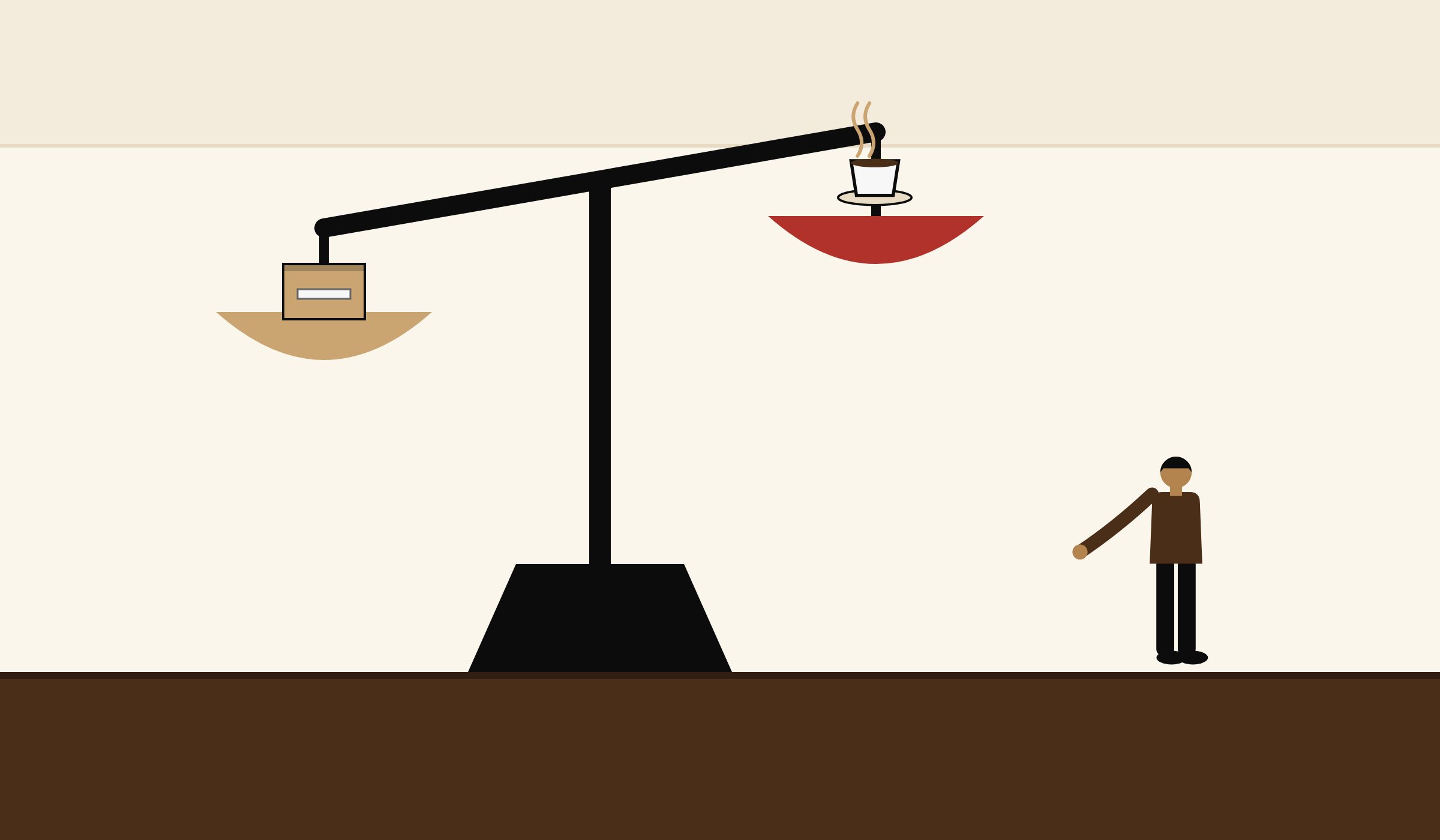
Anyone who has worked a bar at volume knows how this ends. You can hold a light filter roast, a medium house blend and a dark espresso roast in the same shop, but you cannot run them through one grinder. The moment you try, every cup is a compromise of the one before it: you are chasing a dial that was correct forty seconds ago for a different drink. The fix is not a better barista or a cleverer menu. It is more grinders, which is to say more capital, more counter space and more throughput discipline, or it is the decision to serve less. Shops that refuse both choices do not fail loudly. They just become the place where nothing is quite right.
Reebok refused both choices for a long time, and that is the unglamorous mechanics the retellings skip. The brand did briefly outsell its great rival in the US in the mid-1980s, which is a genuine achievement and stands on its own. What followed was not a loss of creativity but an accumulation of operating drag: three product roadmaps to fund, inventory written down across categories that cannibalised each other, endorsement commitments priced against a competitor with deeper margins, and a wholesale channel that could not be told a single clear story about who the shoes were for. Adidas acquired the business in 2006 for roughly 3.8 billion dollars and spent the following decade discovering that the repositioning bill was the real purchase price. Stores were closed. Categories were cut. The brand was pointed at CrossFit and functional fitness, which was the correct answer, and getting there required writing off most of the optionality that had looked like strength. Adidas sold Reebok on in 2021 for about 2.5 billion dollars, having done the hard narrowing that made the brand coherent again.
The lesson is not that pivots are expensive, though they are. It is that the cost of a pivot is set years earlier, by how many identities you let the business carry while things were going well. Every additional idea you keep alive in good times is a liability that only prices itself when you finally need to choose. Reebok’s turnaround was not slow because the strategy was wrong. It was slow because there were three strategies to dismantle, and all three had real customers, real contracts and real inventory attached.
Pick the roast. One grinder is not a constraint on ambition. It is the only honest statement of your capacity.
Source: NeTT Business News, “Reebok’s turnaround: the pivot and the unglamorous truth”