Ask a person whether science has improved their own life and the answer arrives quickly and in the affirmative. Ask that same person whether their neighbours would say the same thing, and the confidence drains out of the room. A global survey reported by CIDRAP at the University of Minnesota found that 81 percent of respondents said science benefits them personally, while a markedly smaller share believed most people in their own country held that view. Every individual in the room thinks they are the exception. Statistically, almost nobody is.
This is pluralistic ignorance, the social-science term for a crowd that privately agrees and publicly assumes otherwise. It is not a measurement of science. It is a measurement of how badly people read the room they are standing in, and the reading has consequences, because institutions do not budget for the room that exists. They budget for the room they imagine, and the imagined room is hostile.
Anyone who has run a coffee counter knows the shape of this. The customer who orders the single origin, drinks it slowly, and then apologises for being fussy, because he is certain the queue behind him came for something fast and brown and forgettable. The queue behind him ordered the single origin. Every one of them apologised too. The counter ends up stocking for a crowd of indifferent drinkers who do not exist, while the actual crowd quietly tolerates a worse cup than it wanted, each member convinced they are the lone connoisseur in a town of philistines. Nobody lied. Everybody guessed, and the guess ran the inventory.
What the survey exposes is a market failure of belief. Public communication built on the assumption of widespread hostility behaves defensively. It over-explains, pre-empts attacks that were never coming, and adopts the clenched tone of an institution expecting to be shouted at. That tone then becomes the evidence people use to conclude that trust must indeed be collapsing, since why else would everyone sound so braced. The defensive crouch manufactures the crisis it was adopted to survive. Meanwhile the 81 percent sit in the waiting room, each one assuming they are surrounded by sceptics, each one too socially cautious to be the first to say that the vaccine worked and the water is clean and the phone in their pocket is a miracle.
The commercial lesson travels well beyond laboratories. Any organisation that surveys what people say about others rather than what they say about themselves is buying a portrait of its own anxiety at full price. Consumer research is thick with this error: ask shoppers what the average shopper wants and you get a caricature assembled from advertising, headlines and the loudest person on the internet. Ask them what they want and you get something quieter, warmer and considerably easier to sell to. The distance between those two answers is where strategy goes to die.
There is a practical move available, and it is cheaper than a campaign. Tell the room what the room actually thinks. Social-norms messaging works precisely because the gap is informational rather than attitudinal, and the correction travels fast once someone is willing to state the majority position out loud. The institution that reports its own popularity accurately gets to stop apologising, and an institution that stops apologising is considerably more persuasive than one performing a siege.
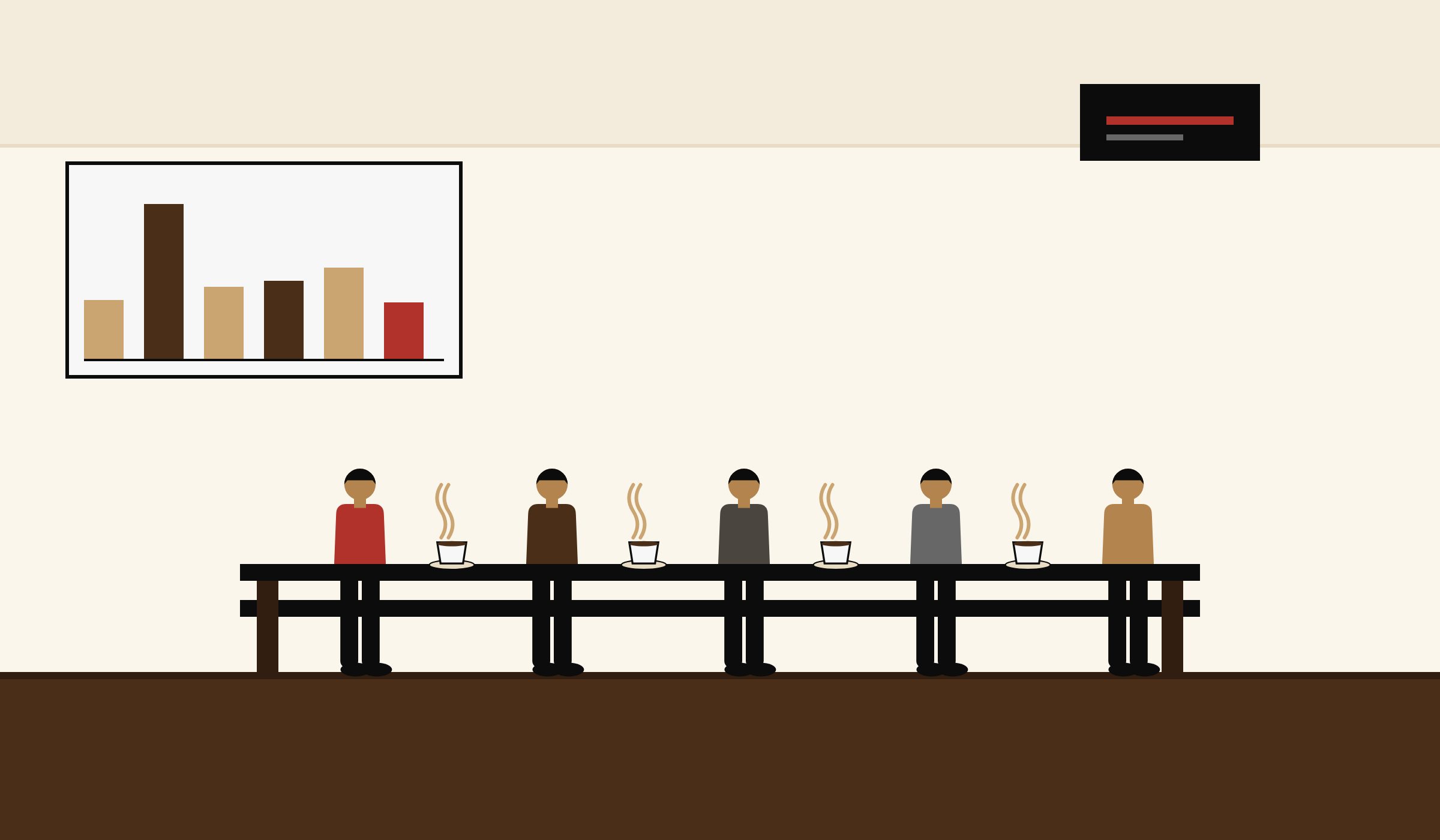
The silence in that waiting room was never disagreement. It was twelve people holding identical cups, each waiting for somebody else to admit it was good.
Source: CIDRAP, University of Minnesota, “Trust in science under pressure, global survey finds”