
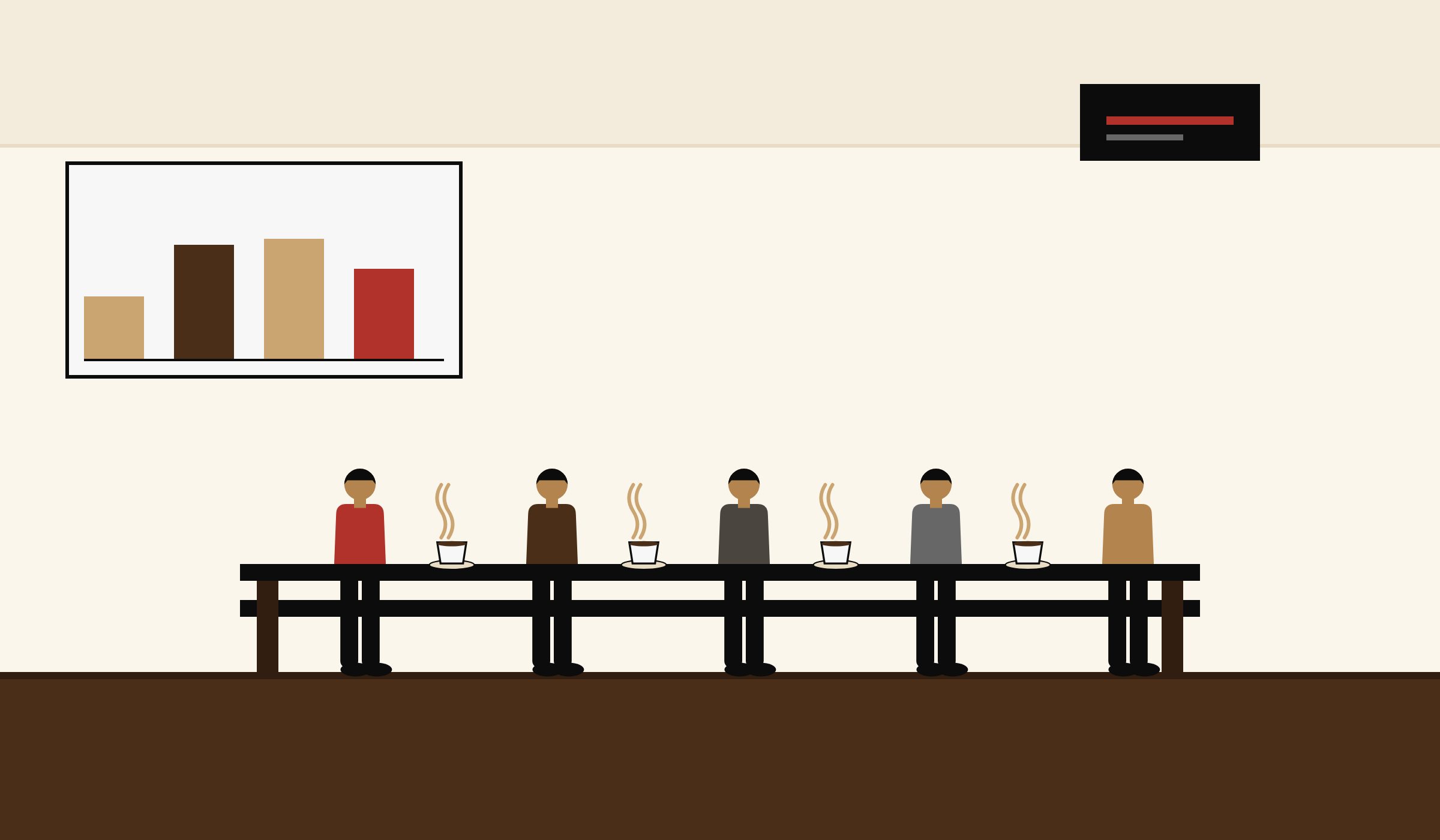
Research led by the Centers for Disease Control and Prevention, following influenza through households across multiple seasons, has established something that every office already knows in its bones and has never stated out loud. People decide they are no longer contagious by consulting how they feel. Virus, consulted separately, has a different view. The study tracked shedding alongside symptoms and found the two curves running on their own schedules, with the comfortable part of recovery arriving while transmission was still on the table.
The behavioural half of the finding is the part with commercial consequences. Few people with flu isolate for the period guidance actually recommends, and the reason is not defiance. It is that the signal they are using is the wrong signal. Fever breaks, the headache lifts, the person showers for the first time in two days and experiences the specific euphoria of feeling human again, and that euphoria gets read as an all clear. The body issues no second notification. There is no alert that says shedding continues, kindly remain where you are. So the recovered-feeling person rejoins the world at roughly the moment they are most mobile and still usefully infectious, which from the virus’s perspective is a logistics triumph.
Espresso has the same trap built into it, which is why baristas are trained off the visual. A shot looks finished well before it is finished: the crema sets, the stream pales, the cup looks like coffee, and the eye says stop. The instruments say otherwise, and anyone who has pulled by appearance rather than by scale and timer has produced a sequence of drinks that looked correct and tasted like nothing twice. The lesson transfers exactly. When the observable cue and the underlying process diverge, trusting the cue feels like competence and is not.
Businesses have spent years treating sick leave as a cost line and a trust problem, which has produced policies carefully engineered to solve the wrong thing. The widespread assumption is that people take too much leave and must be discouraged, so the architecture gets built around proof: doctor’s notes, return-to-work forms, the quiet reputational tax on anyone who disappears for a week. What the household data suggests is that the actual leakage runs the other way. The expensive event is not the extra day taken. It is the day returned too early, by somebody who genuinely believed they were fine, into a room of thirty people who will now each take their own days.
That reframes the economics. A single premature return is not an absence avoided; it is an absence multiplied and deferred into a week when nobody has budgeted for it. Firms that measure attendance are measuring the input and missing the output, which is total days lost across the floor. The companies that have quietly worked this out are the ones that stopped asking employees to self-assess their infectiousness, because the research is now clear that self-assessment is being made against a cue that does not track the thing it is standing in for.
There is a wider pattern here worth lifting out of the clinic. Organisations run on self-reported readiness constantly. Is the project on track, is the code ready to ship, is the client happy, is the candidate up to speed. In every case the person answering is reading an internal feeling and reporting it as an external fact, and in every case the feeling arrives before the condition it is supposed to describe. The flu study is a rare instance where somebody measured both curves at once and published the gap.
Thirty-four people in an open-plan office, each privately certain they are past it. The data says certainty arrives first and the virus follows at its own pace.
The cup looks ready. The scale disagrees.
Source: San Francisco Chronicle, “When are you actually done being contagious with the flu?”