
The most expensive sentence in aviation this quarter was not about empty seats. Delta cut its profit outlook for the year while telling the market, in effect, that the planes are full and the people still want to fly. The problem is not the top line. The problem is the kerosene, with the fuel bill climbing by something in the order of six billion dollars, and no amount of strong demand gets you out from under a cost line that large moving in the wrong direction. The shares took it as bad news about Delta. The sector took it as bad news about everybody.
That reaction is correct, which is the uncomfortable part. Airlines differ enormously in route network, loyalty economics, premium cabin mix and balance sheet quality, and they differ almost not at all in the price they pay for jet fuel. A refinery does not offer a frequent flyer discount. When the input repricing is industry-wide, a warning from the operator with the best premium mix and the strongest corporate book is not an outlier, it is a floor. If the airline that is supposed to be best insulated is cutting guidance, the ones with thinner margins and weaker pricing power are simply waiting their turn to say so out loud.
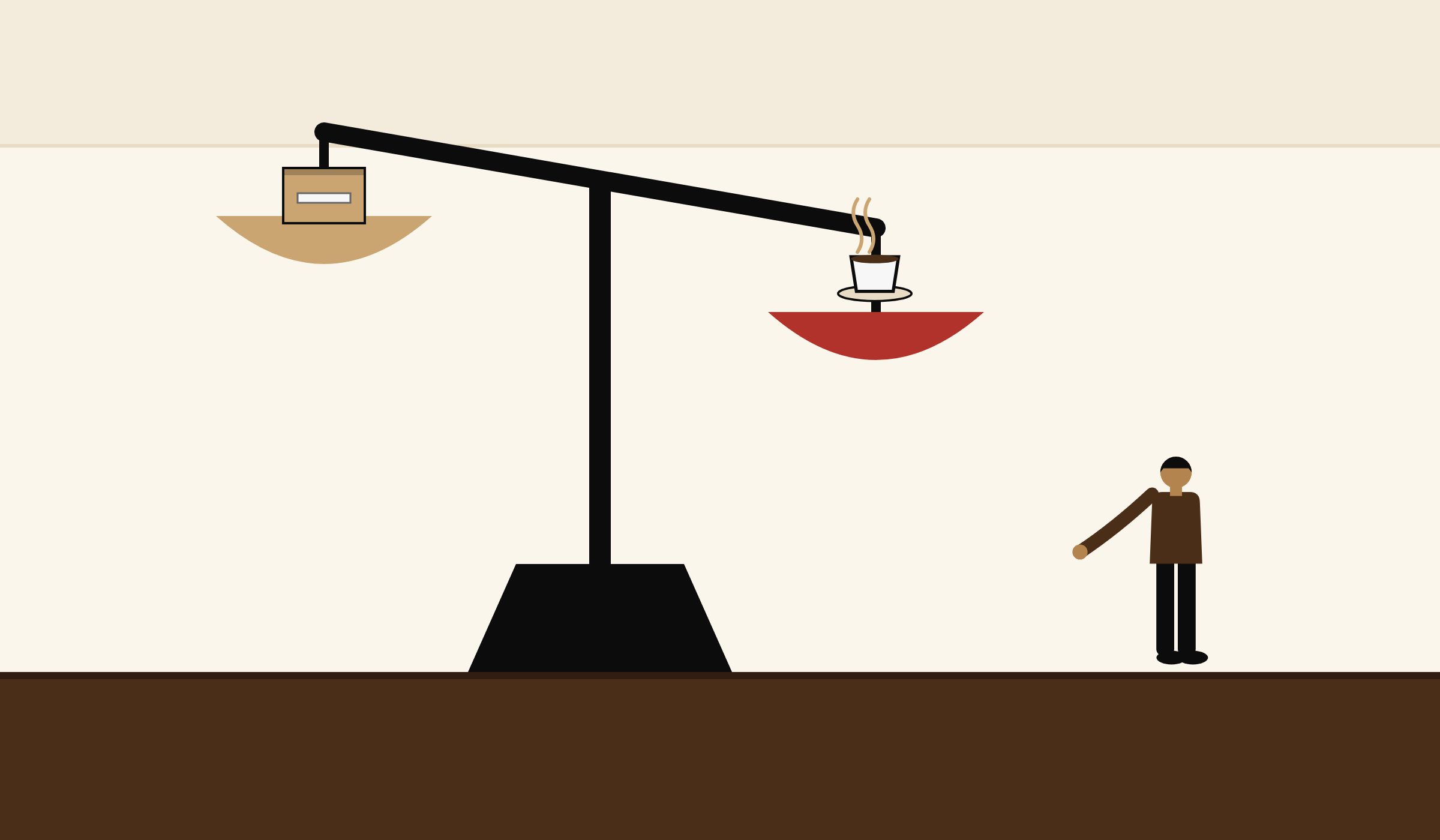
The analogy a cafe owner would reach for is the one about the espresso that cost nothing to pull. The bean, the labour, the cup, the milk and the rent are the obvious inputs, and a good operator manages all of them with real skill. Then the wholesale green coffee price moves thirty per cent against them in a season and every bit of that skill is reduced to a rounding error. You can train the staff, tighten the waste, refresh the menu and run the best room on the street, and still hand the whole gain to whoever sells you the raw material. Being excellent at the parts you control does not exempt you from the parts you do not.
What makes the airline version worse is the timing asymmetry. Fuel reprices continuously. Fares reprice through booking curves that were set weeks or months ago, against capacity that was committed a season earlier, flown by aircraft ordered a decade earlier. An airline cannot shrink quickly without destroying the network effects that make the remaining flights profitable, and it cannot raise fares freely without handing market share to a competitor who has decided to absorb the pain for a quarter longer. So the cost arrives immediately and the response arrives slowly, and the gap between the two is the shareholder’s.
The strategic read, then, is that this is a margin story dressed as a demand story, and the distinction decides what investors should watch next. Demand weakness would show up as discounting, load factor slippage and capacity cuts, and would be a problem about the consumer. A fuel squeeze with demand intact shows up as exactly what Delta described, which is a problem about the input market and the hedging book. Those two scenarios call for opposite trades. The sector sold off on one headline and will spend the next two months working out which of them it actually read.
Meanwhile somewhere upstream, a refinery is having the best quarter it has had in years on precisely the spread that is costing the airlines their guidance. The barrel does not care who ends up holding it. It simply moves along the chain, leaving a mark on every balance sheet it touches, and this quarter the mark landed on the people selling seats rather than the people selling distillate. The planes are full. The cabins are busy. Everything else, as the industry has just been reminded, is fuel.
Source: The Armchair Trader, “Delta Airlines: what does profit warning mean for airline sector”