
For roughly a decade, the received path for a clothing brand was to get out of stores as quickly as the lease allowed. Rent was dead weight, staff were a variable cost, and the internet offered a market with no geography and no fittings budget. mini mioche, a Canadian children’s apparel brand, has now gone the other way, opening a flagship in Toronto’s Leslieville, and the stated reason is not nostalgia for retail. It is the trade war, which has made a border look less like a line on a map and more like a tollbooth with a politician’s hand on the lever.
The logic is cleaner than it first appears. A Canadian brand selling heavily into the United States lives or dies by tariff schedules, customs treatment of low-value parcels, currency moves and the willingness of an American customer to absorb a landed cost that changes without notice. None of those variables are forecastable from a Toronto boardroom, and all of them can move in a single news cycle. Domestic physical retail has the opposite profile. The rent is known, the term is known, the customer is reachable without crossing anything, and nobody in another country can reprice the transaction between order and delivery. A lease is a fixed cost, and in a volatile trading environment a fixed cost is not a burden. It is certainty, bought at a stated price.
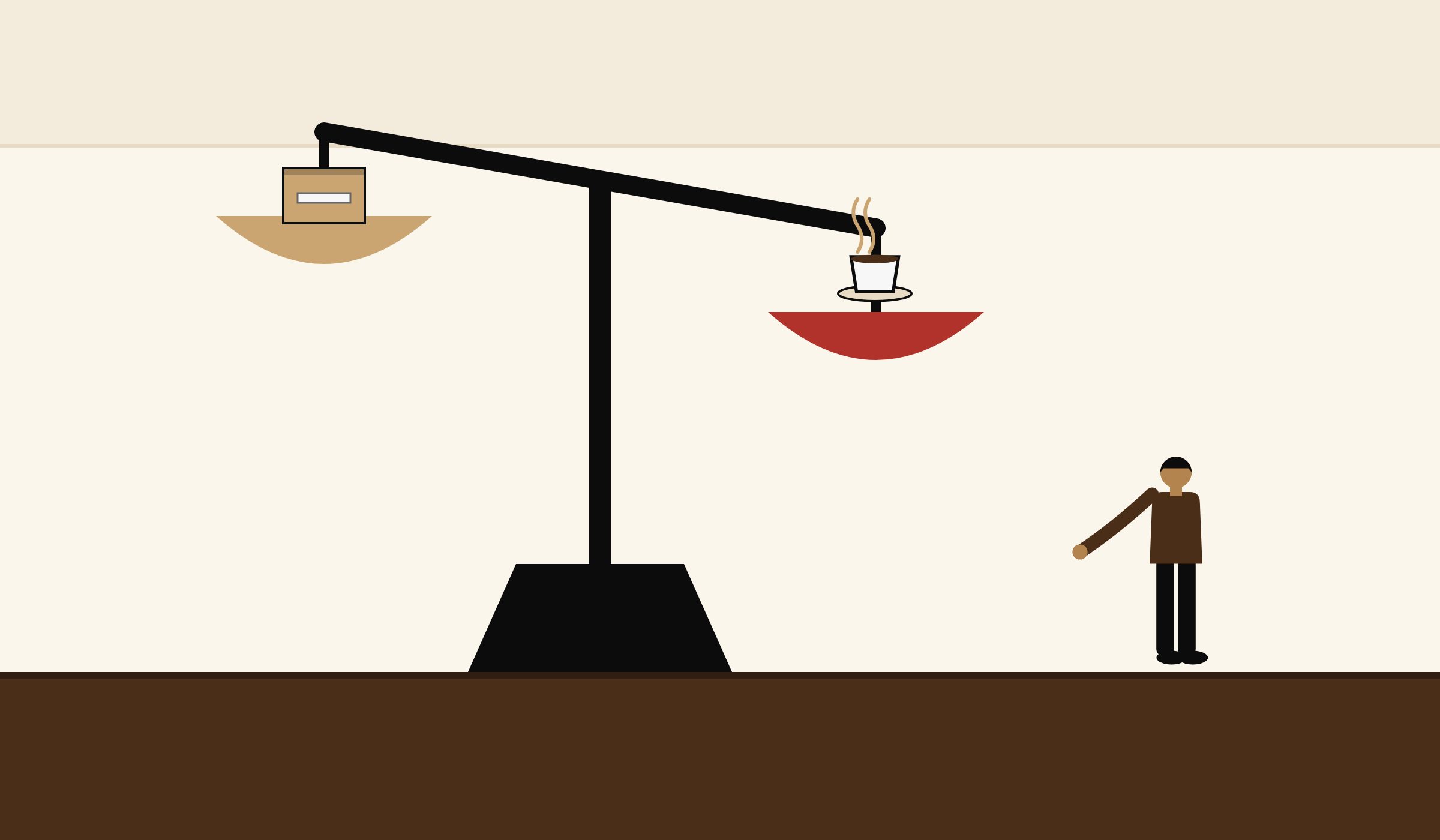
Anyone who has run a cafe through a commodity swing knows the manoeuvre. When green coffee prices start jumping on weather and freight and export policy, the operator who survives is rarely the one with the cleverest hedge on the futures curve. It is the one with a steady queue of regulars who walk in because the shop is on their street. The exposure you cannot control gets offset by the demand you can see with your own eyes. mini mioche is buying a queue it can see, in a currency it already earns, from customers who will not be surprised at checkout by someone else’s policy decision.
The insight is that physical retail has quietly changed category. For ten years it was treated as a distribution channel, and judged accordingly, on sales per square foot against the cost of the lease, a comparison online always won. What it actually is, for a brand of this size, is a combination of marketing asset, customer research facility, returns-handling depot and local demand anchor, none of which appear in the sales-per-square-foot calculation and all of which have become more valuable as online acquisition costs climbed. A children’s clothing brand gains something particular from a room: parents want to feel a seam, children need to be measured against something, and the pram in the doorway is a conversation that no amount of paid social reproduces. Leslieville, a neighbourhood thick with exactly that household, is not a random pin in a map.
There is a wider pattern here that will keep recurring. Trade friction does not simply reduce commerce; it relocates it. Every tariff, every parcel-threshold change, every customs delay raises the relative return on serving the market you are standing in. Brands built to sell across a border in both directions are now rebuilding to sell depth rather than distance, and depth is a physical activity. The border did not make these companies smaller. It made them local, which is a different thing, and in some cases a sturdier one.
So the window gets papered over, the rail goes up, the till is installed, and a brand that spent years proving it did not need a shop opens one on purpose. The trade war wrote a new growth strategy, and mini mioche read it carefully, then went out and signed a lease on the only part of the market nobody in another capital city gets to vote on.
Source: Retail Insider, “mini mioche returns to Toronto retail as trade war reshapes growth strategy”