
Every year the European Week of Regions and Cities fills a stretch of Brussels with mayors, regional presidents and development agency directors, and every year the official theme is cooperation. This year, the twenty-fourth edition opened with something closer to a defensive formation. The argument is about the next EU budget, and specifically about whether the money that currently flows to regions through regional channels should instead flow to member state capitals, to be allocated onward under national plans. Everyone involved insists this is a technical discussion about delivery mechanisms. It is a discussion about who signs.
The case for pulling the money inward is not ridiculous, which is what makes the fight real. Centralised national plans are faster to agree, easier to audit, simpler to point at a political priority, and vastly less administratively tangled than thousands of regional programmes each with their own committees and co-financing arithmetic. Anyone who has watched a cohesion project spend two years in approval can see why a finance ministry would prefer one envelope and one set of milestones. The counter-case is that the region knows which bridge is failing, which training college feeds which employer, and which town will lose its last pharmacy next year, and that none of this survives the journey to a capital city, let alone to a spreadsheet in Brussels agreed with that capital.
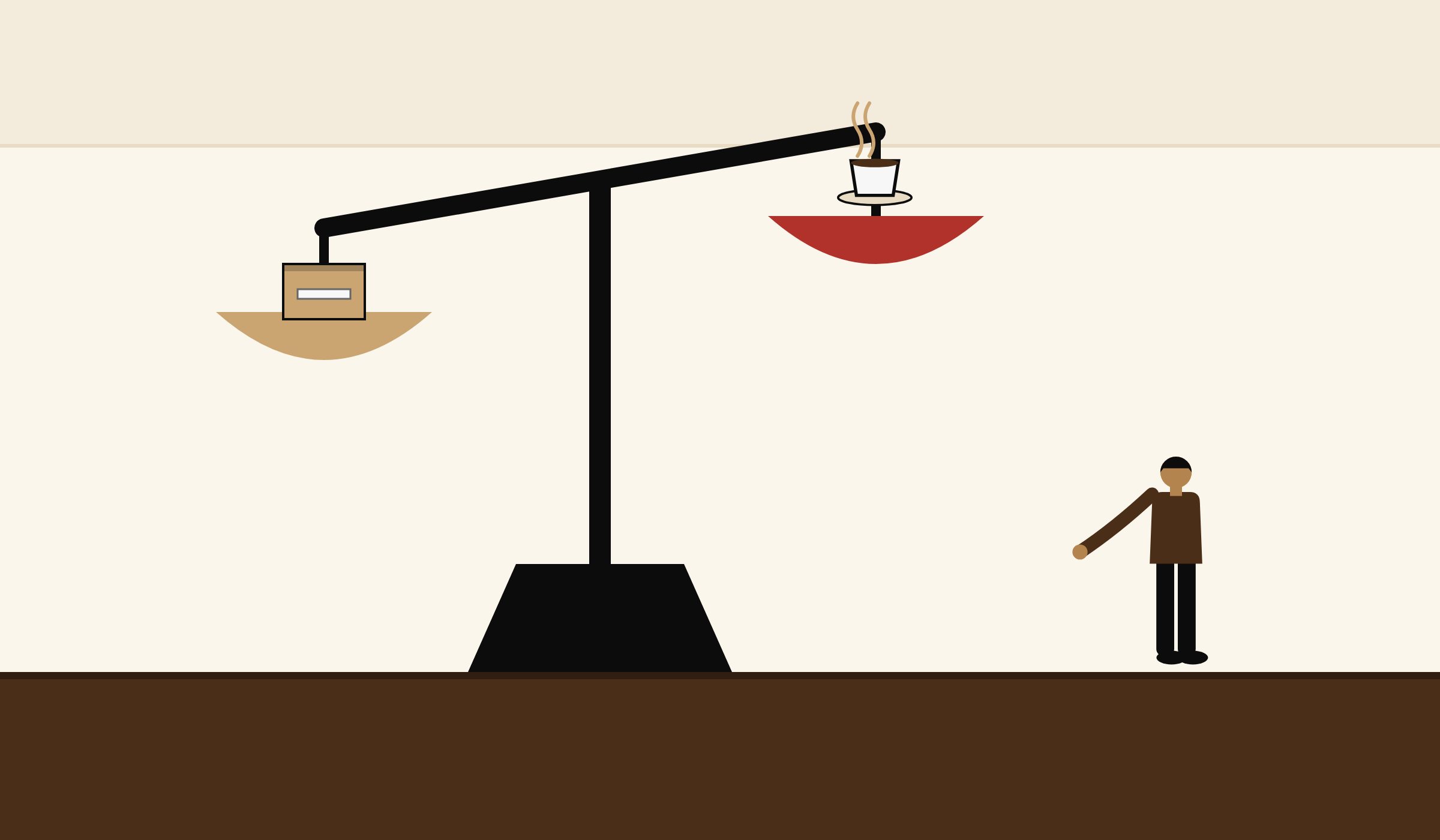
Coffee has an exact version of this argument, and the industry settled it some time ago. You can grind centrally, in bulk, to a single calibration, and ship pre-ground coffee to every outlet. It is efficient, it is consistent, it is dramatically easier to manage, and it produces a cup that is uniformly acceptable and never good, because grind setting has to respond to the humidity in the room and the bean in the hopper and the water coming out of that particular pipe. The shops that care keep the grinder on the counter and adjust it through the day. Centralisation does not destroy quality by being careless. It destroys quality by being distant, which is the only argument the regions actually have and also the correct one.
The deeper insight is that funding architecture is political architecture, and everyone in the chamber knows it. A regional government that administers European money has a direct relationship with Brussels, a staff that exists because of it, a seat at tables it would not otherwise reach, and a line of accountability that does not pass through its national capital. Route that money through the capital and the region becomes a supplicant to its own government, which many national governments would regard as a tidying-up exercise long overdue. This is why the resistance is loudest from regions with strong identities and weak leverage at home. They are not defending a disbursement method. They are defending the only fiscal relationship they have that cannot be switched off domestically.
The timing sharpens it. Budget cycles are where structural changes get made, because they arrive as arithmetic rather than as constitutional reform, and nobody holds a referendum on an allocation annex. A shift of this kind, once executed in a budget framework, is close to irreversible, since rebuilding regional delivery capacity after it has been stood down takes a decade and a political appetite that will not exist. The regions turning up in Brussels this week understand that they are arguing about the next forty years in the language of the next seven.
So they will spend the week doing what the week is for, which is being visibly numerous in the same building as the people drafting the text. It is an unglamorous form of power and it is the form available to them. The capitals, meanwhile, will keep describing the whole thing as simplification, in the comfortable knowledge that whoever ends up holding the grinder will also decide, every single morning, how fine the setting needs to be.
Source: INSIGHT EU MONITORING, “EU regions warn against centralisation of funding in next EU budget”