
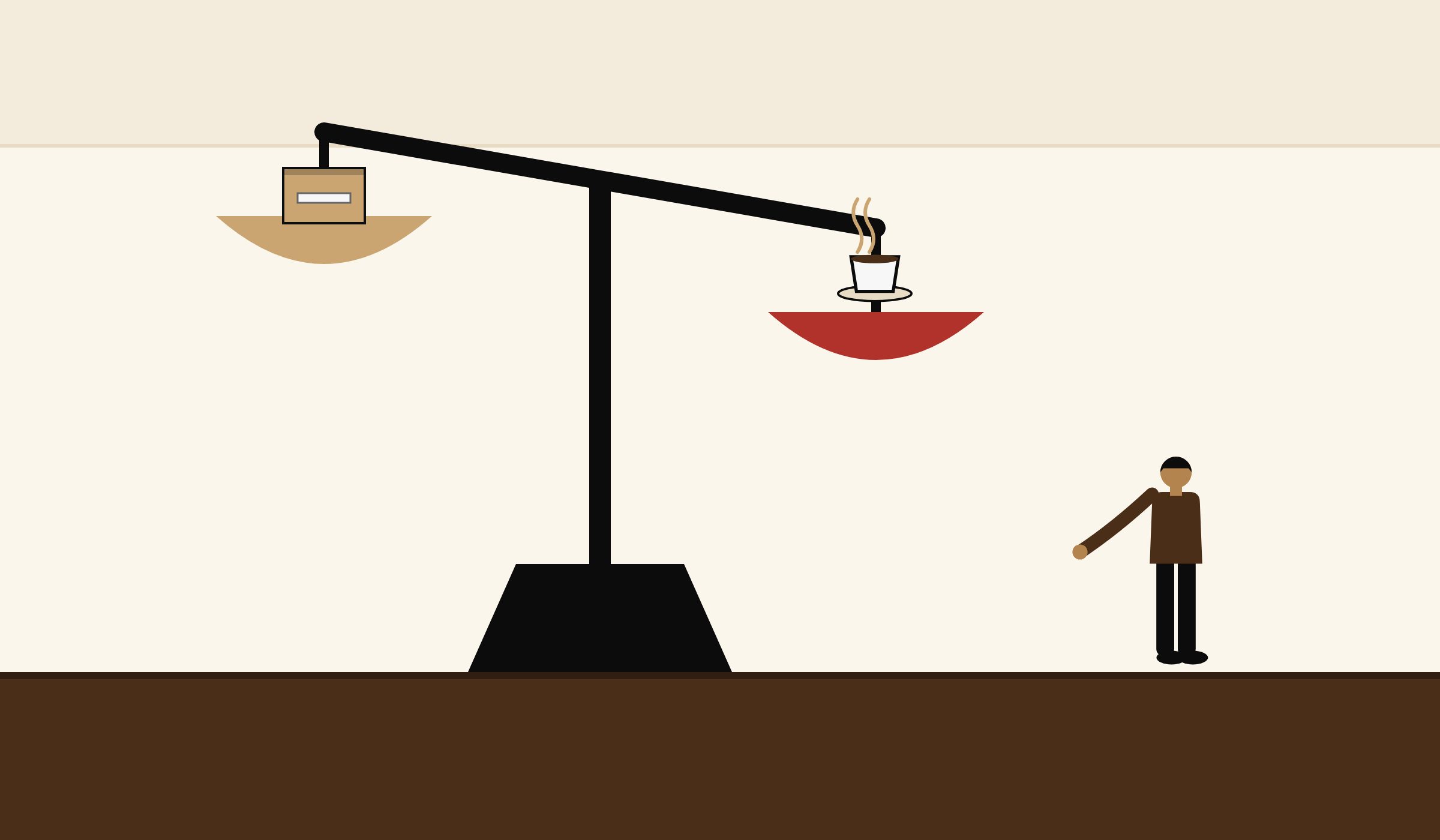
The useful thing about a test is that it does not care what you think of yourself. A study of more than 600,000 people, reported by VICE, found that women scored higher on emotional intelligence tests, and that men tended to overestimate their own ability in the same domain. Two findings, one measured and one self-reported, and the interesting story is the distance between them.
Emotional intelligence has had a difficult run as a concept, partly because it was oversold to management consultancies and partly because for years it was assessed by asking people how emotionally intelligent they thought they were. That is a design flaw of some elegance: the trait includes accurate self-perception, so a self-report instrument hands its highest scores to exactly the respondents least equipped to answer it. A performance test avoids the trap by requiring the subject to actually do the thing. At a sample of six hundred thousand, the result stops being a curiosity and becomes a fact about the population.
Every coffee counter has a version of this and it arrives on a Saturday. The customer who announces that he can identify the origin blind, holds the cup to the light, swirls it with intent, and then describes a Kenyan as chocolatey and smooth. Nobody corrects him, because it is Saturday and the queue is long. Meanwhile the person who orders quietly, drinks, and says only that it tastes brighter than last week has just made the single most accurate statement in the building. Confidence and calibration are independent variables, and the till does not distinguish between them, which is how the loud palate survives for years without ever being tested.
The commercial consequence is a selection problem, and it is expensive. Organisations hire and promote on displayed confidence because confidence is legible in a twenty-minute interview and competence frequently is not. Where the role genuinely requires reading people, mediating conflict and noticing what has not been said, a confident self-assessment is not merely unhelpful evidence but mildly adverse evidence, since overestimation in this specific domain is a failure of the exact faculty being hired for. The firm ends up staffing its most interpersonally demanding positions using the least reliable available signal, then describing the result as a culture problem.
The sex difference in scores will attract most of the attention and is the less actionable half of the finding. Whatever its origins, an employer cannot do much with a population average except misuse it. The calibration gap is the operationally useful part, because it is a procedural problem with a procedural fix. Stop asking candidates to rate themselves on skills that include self-knowledge. Test the skill. Situational judgement instruments exist, cost less than a bad senior hire, and have the considerable advantage of generating an answer the candidate cannot flatter.
There is also a lesson here for anybody assessing their own competence in any domain with soft feedback. Skills that produce immediate, unambiguous scoreboards keep their practitioners honest. Nobody overestimates their bench press for long. Skills whose feedback arrives slowly, politely and through intermediaries permit years of comfortable self-assessment, and emotional intelligence sits at the far end of that spectrum, where the people best placed to tell you the truth are precisely the people your deficiency has taught them not to approach.
Six hundred thousand people sat a test and the test answered. The quiet drinker had it right about the brightness, the confident one is still describing a Kenyan as chocolatey, and only one of them was ever going to find out.
Source: VICE, “Men think they’re more emotionally intelligent than they actually are, study finds”