
Researchers in Oregon have tested what happens when public health messaging stops opening with the evidence and opens instead with the audience’s own values, including an explicit acknowledgement of their distrust. The result was a measurable increase in openness among vaccine-hesitant adults. Same underlying recommendation, same facts available, different first sentence, and a different number at the other end.
The finding is modest in its claims and large in its implications, and the implications run straight into commercial territory. What was tested is not a vaccine-specific trick. It is a general property of how people process a message from a source they are not sure about, which describes the position of roughly every business attempting to sell something to someone who has been disappointed before.
The default posture in persuasion is to lead with the strongest evidence, on the reasonable theory that strong evidence is persuasive. This works beautifully on an audience that already accepts the source’s standing to present evidence at all. On a sceptical audience it does something closer to the opposite, because the recipient is not yet evaluating the claim. They are evaluating whether to let you make claims. Evidence delivered into that gap reads as pressure, and pressure from an untrusted source is the thing being resisted. The Oregon work suggests the sequencing is not a stylistic matter. It is the difference between being heard and being filed.
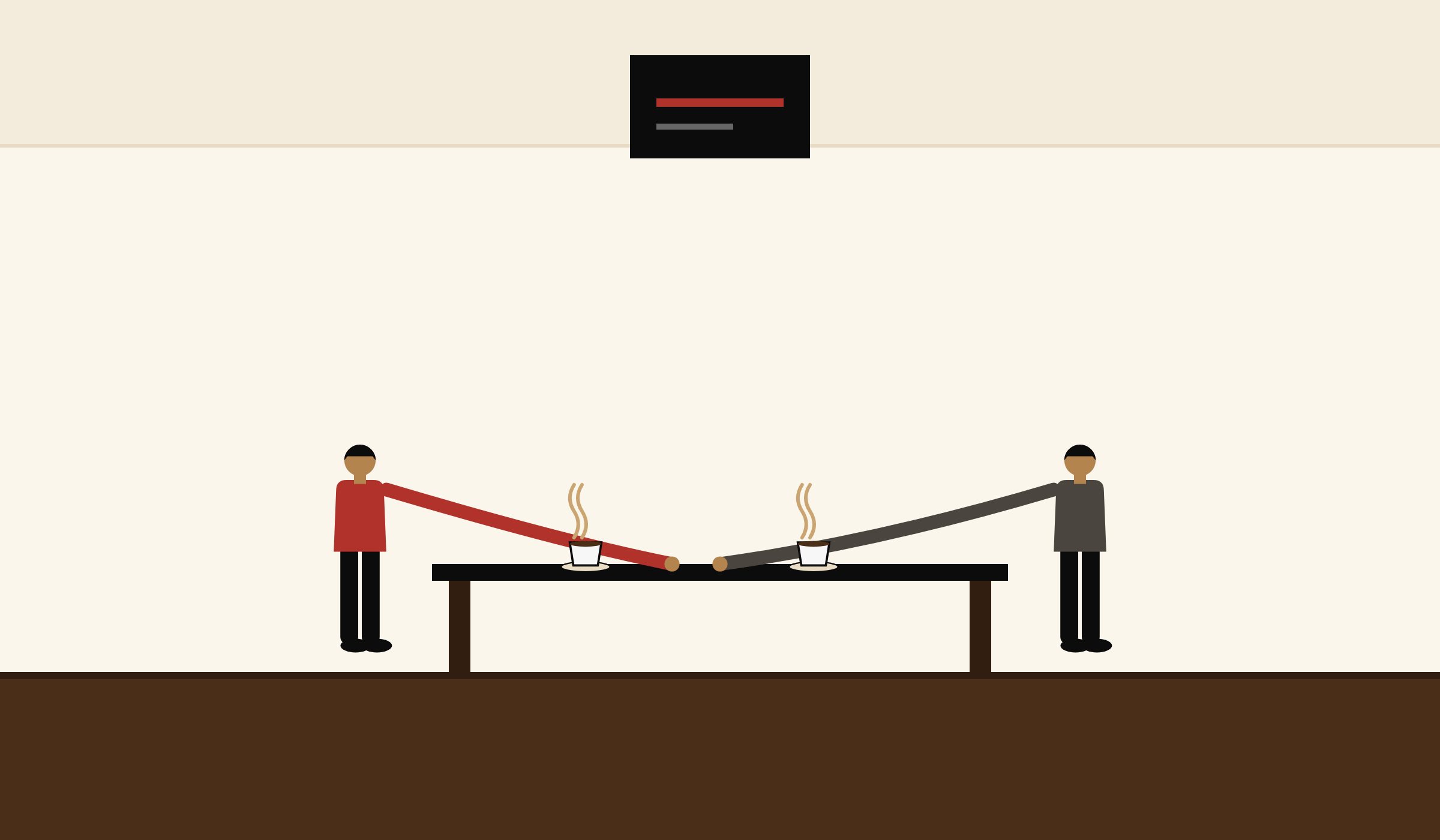
Anyone who has run a counter knows the shape of this, and good baristas learn it in their first month. A customer who has had a bad cup from you is not interested in your sourcing story, your water filtration, or the certificate on the wall. Every one of those is a reason they should have enjoyed the coffee, which is a polite way of informing them that they were wrong about their own mouth. The move that works is to say the cup was off, because you cannot sell a second cup to someone whose first cup you are still disputing. The sourcing story becomes interesting only afterwards, at which point it becomes genuinely interesting, and the same words that read as deflection five minutes earlier now read as competence.
That is the mechanism, and it costs nothing to implement. It is not agreeing with a false belief, which is the objection usually raised and which the structure does not require. It is confirming that the concern is a real concern held by a reasonable person, which is almost always true and almost always omitted. Institutions omit it because they experience acknowledgement as concession, a feeling especially strong in regulated industries where every sentence is reviewed by someone whose job is to prevent admissions. So the communication goes out stripped of the one element that would have made the rest of it legible, perfectly accurate and operationally inert.
The commercial applications are not subtle. Any firm re-entering a market after a failure, any lender talking to people who have been handled badly by lenders, any insurer explaining a claims process, any company whose category carries a general and well-earned reputation for sharp practice. In every one of those situations the standing instinct is to open with the proof, and in every one of them the audience is still deciding whether the speaker has standing. The Oregon result says the sceptical audience is not unreachable. It says they are reachable in a specific order, and that the order has been wrong.
Marketing departments spend enormous sums testing creative, channel, offer and timing, and comparatively nothing testing sequence. This study is a quiet argument that sequence may be the highest-yield variable available, because it governs whether anything downstream of it gets processed at all.
The evidence was never the problem. It was arriving second and being read as a correction.
Source: KEZI, “Oregon study finds values-based messages move vaccine-hesitant adults”