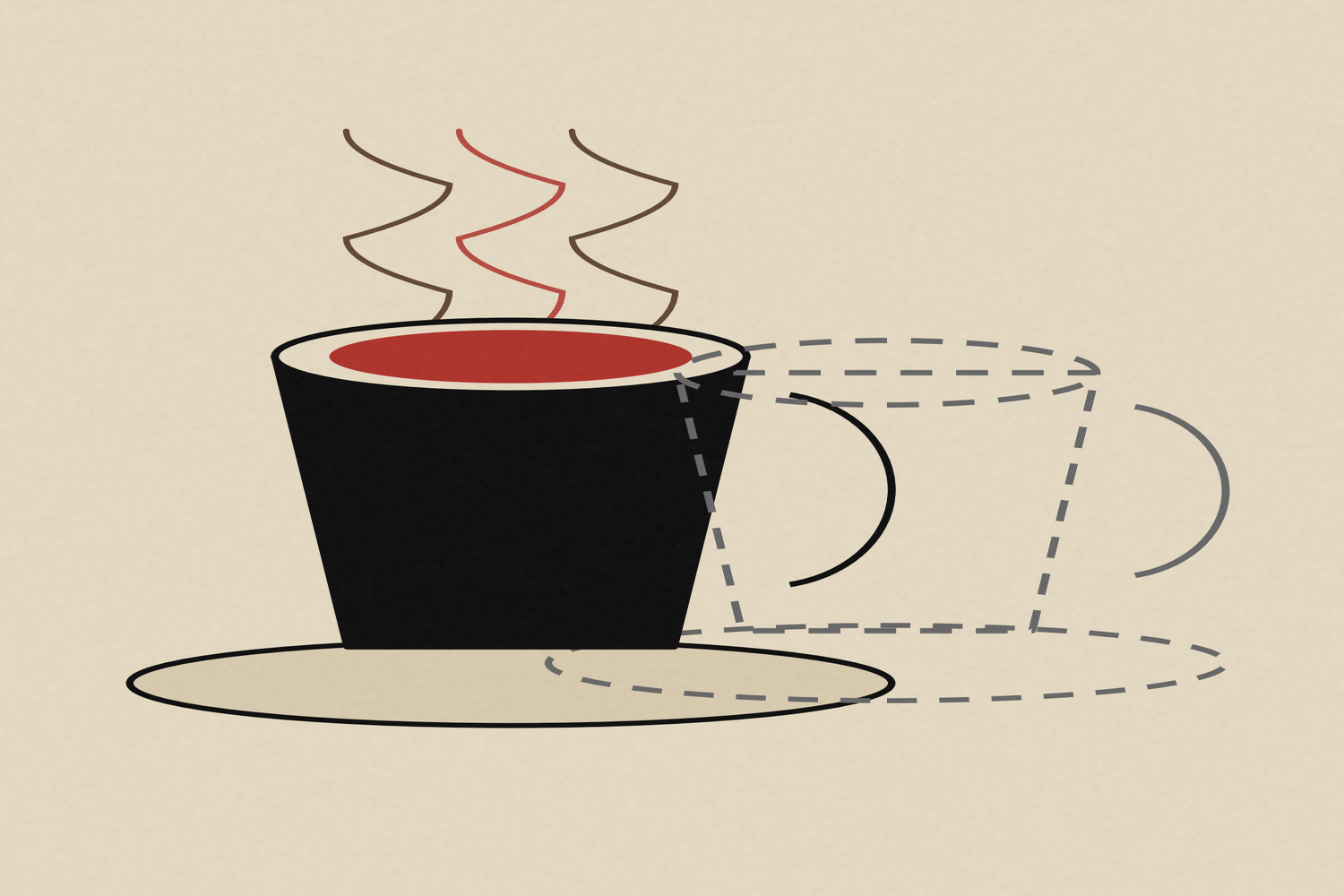
Neutral coffee has a name. It is called warm water, and nobody has ever asked for a second cup. Neutral commentary suffers the same fate: technically a beverage, technically present, and gone from memory before the saucer is cleared. We have decided, with full intention and no apology, that this is not the cup we are pouring.
The case for a point of view starts where most defences of journalism would rather not look. Trust in the trade is thinning. The Reuters Institute’s most recent global survey of nearly 100,000 readers across 48 markets finds overall trust in news stuck at forty percent for the third year running, while the same share now actively avoids the news at all. In the United States the floor keeps shifting: Pew Research reports that trust in national news organisations has slid to fifty-six percent, a twenty-point fall in less than a decade, and a separate survey finds a majority of Americans hold low confidence that journalists act in the public’s interest at all. The instinct, in a crisis like this, is to retreat into blandness. To offend no one. To stand carefully in the middle of the road and call it balance.
It is exactly the wrong move, and coffee explains why. Order an espresso and you receive an opinion in a cup: concentrated, deliberate, the beans saying precisely what they came to say. Dilute it to please everyone and you arrive at warm milk, a drink that asks nothing of you and leaves nothing behind. BeanBreaker is espresso by design. Not because strong is fashionable, but because strength is honesty. A barista who waters down the shot so that no palate is challenged has not served the room; he has insulted it. Diluted opinion satisfies no one, which is the quiet tragedy of the middle of the road. The road is where things get run over.
Here is the insight the industry keeps mistaking for risk: a transparent stance, argued with rigour, builds more trust than the performance of having none. The objectivity many newsrooms cling to is what critics have aptly called the view from nowhere – a voiceless hover above the facts that pretends the writer arrived without a brain or a heartbeat. Readers are not fooled. They sense the perspective that the prose is straining to hide, and they trust the concealment less than they would have trusted the opinion. Neutrality and rigour are not the same thing. Rigour means doing the work: checking the claim, naming the source, following the evidence even when it bruises your own argument. Neutrality is what you reach for when you would rather not do that work and would prefer the reader sort it out alone. One is a discipline. The other is an alibi.
A point of view, declared openly, is a contract. It tells the reader where the writer stands, which means the reader knows exactly what to weigh and where to push back. That is more useful, not less, than the smooth surface of false balance that grants equal airtime to the sound argument and the bad one and calls the result fairness. Fairness is not splitting the difference between right and wrong. It is showing your reasoning so plainly that a reader who disagrees can find the precise sentence where you parted ways. We would rather be argued with than ignored. Disagreement is engagement; indifference is the void.
None of this is a licence for noise. A stance without evidence is just a tantrum in a nicer font, and the cure for bland media is emphatically not loud media. The discipline is to be sharp and right at the same time – to hold a view and hold it accountable to fact, to target power and contradiction rather than dignity, and to let the reader reach the conclusion while we do the heavy lifting of getting there honestly. Strong coffee and burnt coffee are not the same thing, and confusing the two is how publications mistake shouting for conviction.
So we will keep pulling the shot at full strength. We will tell you what we think, show you why, and trust you to be the kind of reader who can handle a flavour. In a market drowning in interchangeable, agreeable, instantly forgettable content, a clear and honest point of view is no longer a liability to be managed. It is the most valuable thing a publication owns. We would rather be the cup you remember than the one you forget. Neutrality is the single flavour we refuse to serve.
