Shutting one door in a globalised economy mostly teaches the traffic where the side entrance is. That is the uncomfortable lesson of the past four years, and it is the part that rarely makes the press release. A sanction is announced with the gravity of a verdict, the implication being that something has been stopped. Stopped is a strong word for a world this porous. Redirected is closer to the truth.
Go back to early 2022. After Russia invaded Ukraine, advanced economies assembled the broadest sanctions package in modern history, and the headline arithmetic looked decisive. Sanctioning countries cut their exports to Russia by roughly $5.9 billion a month and slashed imports by about $12.4 billion. On paper, a wall. Then the wall developed a remarkable number of windows. Analysts at Bruegel found that non-sanctioning economies quietly replaced most of Russia’s lost trade, raising their own exports to Russia by around $5.5 billion a month and their imports by some $12 billion. The deficit the West intended to create was, within a year, almost filled in from the other side of the map.
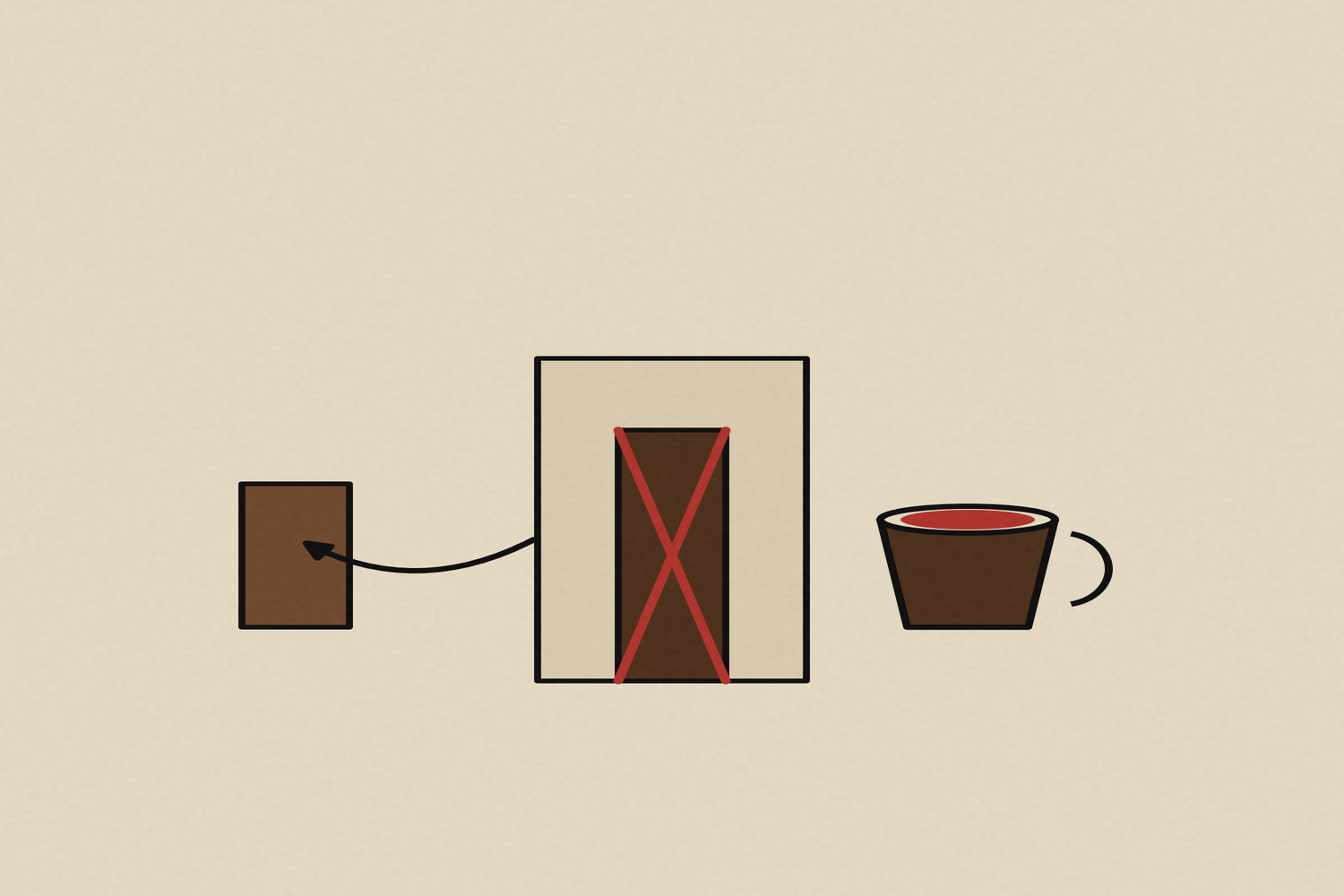
Think of it as a café shut down on the main street. The sign comes off, the lights go dark, the regulators take their photograph of the locked door. Everyone nods at a job done. And then, one block over, a place reopens with a new awning and a different name, serving the same beans from the same roaster to the same customers, who have simply learned a new route to their morning cup. Nothing about the appetite changed. Only the address did, and the willingness of someone, somewhere, to keep pouring.
The pourers, in this case, are third countries. Russia legalised so-called “parallel imports” in mid-2022, and the goods began flowing through intermediaries with almost theatrical speed. Control Risks documented how exports to Russia from certain transit states surged dramatically in months, with Armenia up 287 percent, Turkey 145 percent, and Kazakhstan 125 percent, much of it electrical machinery and components that no domestic boom could plausibly explain. The mechanics are mundane and effective: a firm in a transit country takes a Russian order, buys from a Western supplier, parks the goods in a customs warehouse, then re-exports them onward so they arrive stamped as local, their origin politely forgotten.
This is the insight the gesture obscures. Sanctions do not so much eliminate trade as reshape its geography, and the reshaping has a name economists prefer to drama: trade diversion. Researchers writing for CEPR’s VoxEU found that while direct flows between Russia and sanctioning states collapsed, bilateral trade costs between Russia and Turkey, China and India fell sharply, with Russia-India trade more than doubling almost immediately after 2022. The same studies caution that the substitution is uneven and that supply of specialised goods was genuinely crippled. Sanctions, in other words, are not theatre. But they are also not the clean off-switch the announcement implies. Their bite lives in enforcement, in the unglamorous work of tracing shipments and pressuring intermediaries, far more than in the moment a door is sealed.
That distinction matters now, because the map keeps redrawing itself in real time. Each closed route teaches the next workaround. Customs alerts name longer and longer lists of countries implicated in re-exporting restricted goods, from Central Asia to the Gulf, and every fresh name is a measure of how quickly demand routes around obstruction. The policy that treats a sanction as a finished act, rather than a permanent chase, is buying applause it has not yet earned.
None of which means the lights should stay on for everyone. It means the metric is wrong. The honest question is not whether a regime can still buy a chip, but how much more it must pay, through how many hands, and how much that friction degrades what it can actually do. A good sanction does not pretend to be a wall; it behaves like a tax on inconvenience, raising the cost and risk of every transaction until the maths stops working. Effectiveness is a function of patience and plumbing, of audits and follow-through, not of the press conference that opens the campaign.
Because a closed café doesn’t make anyone stop drinking coffee. It just moves where they queue. Sanctions redraw the map far more reliably than they empty it, and the side entrance is always open to whoever is thirsty enough to find it.
