The Barista Benched Mid-Pour
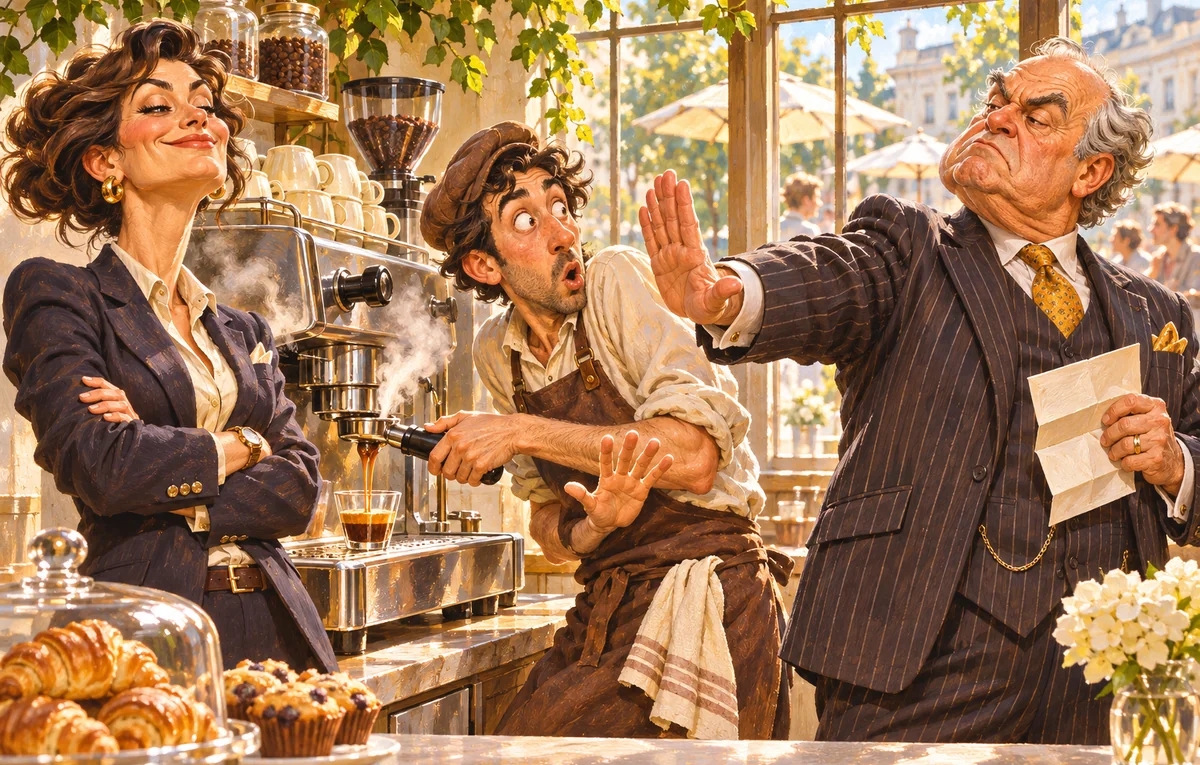
Nothing stops a service like watching the manager pull the barista off the machine mid-pour. The cup is half full, the crema is forming, and suddenly the person running the show is standing in the corner holding nothing. GCM has just done the corporate version of that. The company suspended its chief executive after a letter arrived from Tang, and the room is now left staring at an espresso machine that was, until a moment ago, being worked by someone who presumably knew where all the buttons were.
The detail that gives the move its weight is the shareholder register. Polo Investments sat on 43.3 million shares, 11.50% of the company, as of June 2025, and in a situation like this the size of a holding is the volume of a voice. When Morningstar laid out the sequence - a letter, a suspension - it read less like a scandal and more like a power structure asserting itself. Letters from large holders do not usually request. They inform. And a board that suspends its own chief executive in the space of a news cycle is not improvising; it is responding to a hand it has decided it cannot ignore.
Here is where the espresso machine earns its place in the story. A good cafe lives and dies on the person at the group head, and everyone in the room knows it. The owner can own the lease, the beans, the fittings and the brand, but the hands on the portafilter are the ones turning capital into coffee minute by minute. So when ownership decides those hands have to come off, it is making a statement far louder than any menu change. It is saying the machine matters more than the operator, and that the operator, however fluent, works at the pleasure of whoever holds the deed. The suspended executive is not accused by that act. They are reminded of it.
The insight is unglamorous and permanent: control and contribution are not the same thing, and the gap between them is where every boardroom drama lives. An executive supplies the pour. A major shareholder supplies the premises. For long stretches those two cooperate so smoothly that everyone forgets which is which, and the chief executive starts to feel like the cafe rather than its employee. Then a letter lands, a percentage flexes, and the hierarchy snaps back into its original shape. The person who was making the coffee discovers, in real time, that they were always standing on someone else's floor.
What happens next is the part nobody can plate yet. A suspension is not a dismissal, the way a benched barista is not a fired one; it is a pause with the outcome still cooling. The board has bought itself time and signalled its loyalties in a single motion, and the market now has to guess whether the machine runs better with new hands or simply runs colder. Shareholders who liked the old pour will watch for the taste to change. Those who sent the letter will watch to see their point acknowledged. The company, meanwhile, keeps the lights on and the grinders running, because the strange thing about suspending the person at the top is how little the day-to-day notices at first.
Every executive believes, somewhere quiet, that the machine is theirs because they are the only one who can work it. GCM has just offered the standing correction. The one who owns the room decides who stands at the machine, and they can wave you off the group head between one shot and the next, letter in hand, while the cup you were pulling goes cold on the tray with your name still chalked above it.