Buying the Beans You Just Called Bitter
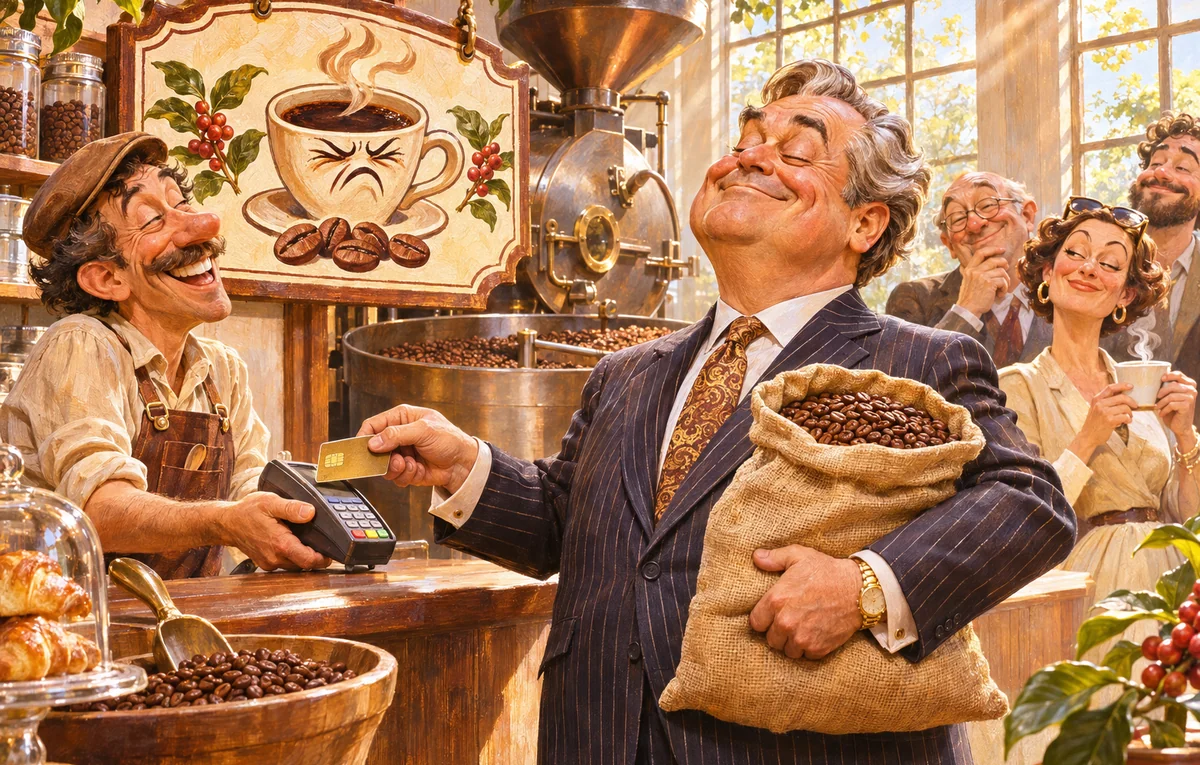
Nothing tells you how a brew really tastes like watching the person who made it order a second cup.
Coats, the industrial thread maker, issued a profit warning, and then its chief executive did something that reads as either reassurance or cheek depending on where you sit. He went out and bought shares in his own company. As Morningstar recorded in the director dealings, the purchase landed just days after the warning that had sent everyone else reaching for the exit. The man who told the room the roast was coming in weak then walked up to the counter and bought a sack of the beans.
A profit warning is a chef stepping out of the kitchen to tell the dining room the sauce is thinner than promised. It is an uncomfortable confession, and the usual reaction is a quiet thinning of the crowd, a few cancelled orders, a dip in the tip jar. What you almost never see is the chef sitting down at a table afterward and ordering the exact dish he just apologised for. That gesture carries a specific flavour. It says he has tasted the whole pot, not only the bitter mouthful everyone fixated on, and he is willing to put his own money where the warning was.
The coffee lens makes the signal legible. Anyone can talk warmly about a blend. Marketing talks, roast notes talk, investor relations decks talk in long confident paragraphs. But a buyer spending his own cash on beans he personally flagged as off is sending a message that costs him something to send, and cost is what separates a real signal from cheap noise. A barista who drinks his own espresso all shift is making a quieter, more convincing argument than any chalkboard out front. The purchase is the drinking.
The insight is that the direction of a confession and the direction of a bet can point opposite ways, and when they do, the bet is usually the more honest of the two. Words about a company are free and infinitely flexible. Money moving against the mood of the moment is neither. A warning says the next quarter looks lean. A chief executive buying into that lean quarter says he thinks the market has mistaken a thin pour for a spoiled batch, and that the difference will show up in the cup long after the headline has gone cold. He could be wrong. He has, at least, agreed to be wrong expensively.
That is the part worth holding onto. Plenty of insiders sell into strength and go quiet into weakness, which is exactly why the opposite move stands out like a double shot in a decaf order. It does not guarantee the roast recovers. Markets have watched confident founders drink their own bitter brew to the last drop and still go cold. But the man who warns the room and then buys the beans has at minimum refused the easy comfort of talking one way while his wallet walks the other. He has taken a sip in public, swallowed, and gone back for more. The dining room can still leave. He has told them, as plainly as money can, that he is staying for the whole pot.