When the Bitterness Spreads Down the Counter
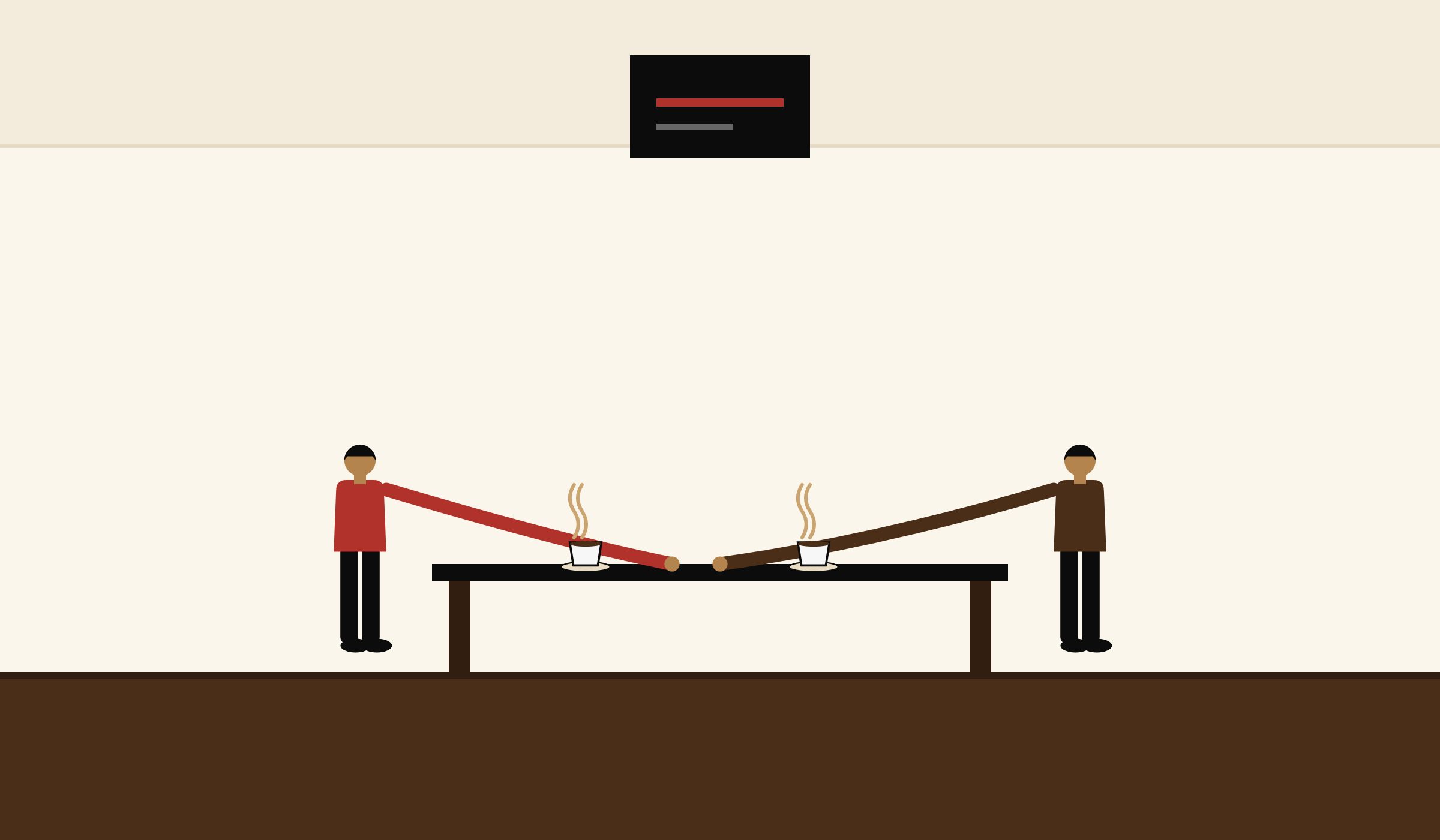
In a room where everyone drinks from the same pot, one soured cup does not stay one cup for long.
Kuwait has condemned continued Iranian attacks on Bahrain as the Gulf conflict widens, a small state raising its voice over a strike aimed at another small state across the same stretch of water. On a map the Gulf looks like a scatter of separate nations, each with its own flag and skyline and sovereign cup. In practice it is one long shared counter, a single body of water fringed by capitals close enough to see each other's weather, and what spoils at one end of it rarely has the courtesy to stay there.
That is the geography worth sitting with. The Gulf is less a set of distinct cafes than one crowded room with many stools, and the states ranged along it have spent decades learning that the warmth of the place is collective and so is the chill. When conflict scalds one patron, the others cannot simply look away and sip, because they are breathing the same air and drinking from the same source. Kuwait condemning an attack on Bahrain is not charity or distant sympathy. It is a regular at the far end of the bar noticing that the bitterness has started travelling, and knowing exactly which way it travels.
The coffee itself is the oldest social language this region has. The Gulf majlis runs on the small cup passed from hand to hand, the gahwa that seals a greeting and opens a negotiation, a ritual whose entire point is that hospitality is shared and obligations are mutual. To raise the cup together is to say we are in this room as one. So when a state speaks up for a neighbour under attack, it is drawing on a grammar far older than modern borders - the understanding that at a true majlis, an insult to one guest is felt by every guest, and silence from the rest is its own kind of answer.
The insight is that proximity converts a bilateral quarrel into a shared condition whether anyone consents or not. As the Arab Times reported, the conflict is widening, and widening is precisely what conflicts do in a space this tight. There is no partition in the room. The smoke from one end reaches the other, the unease pools in the middle, and the states that imagined they could keep their own cup clean discover that a shared counter has no private corners. Kuwait's condemnation is the sound of a neighbour refusing to pretend the souring is somebody else's problem.
This is the thing distant observers consistently misread about the Gulf. They see rival powers and assume indifference between them, as if each capital were a sealed cafe minding its own trade. But the water binds them tighter than their rivalries divide them. A strike on Bahrain is a strike felt on the Kuwaiti stool, not out of affection necessarily, but out of the plain physics of a room where everyone sits within reach of the same spill. Shared space manufactures shared stakes, and no amount of flag-drawing undoes it.
So a small state speaks for a smaller one, and the condemnation matters less for its force than for what it admits: that the counter is one counter, the pot is one pot, and the comfort of the whole room depends on nobody's cup being allowed to turn poison unanswered.
The widening is the warning. Bitterness, in a shared room, is never a private matter. It just takes a little while to reach your own cup, and by then it is already too late to pretend you did not see it coming.