The Cup Tastes Fine, the Water Already Turned
The most dangerous kind of damage is the kind that does not announce itself. A NASA-funded study finds that simulated space radiation altered brain immune cells in mice, with no measurable short-term behavioural change. The cells changed. The behaviour did not. And that gap between the two is the entire, unsettling point.
It would be easier if damage always came with a symptom - if the thing going wrong inside also showed up outside, promptly, where you could see it and respond. This study describes the opposite arrangement. At the level of the brain's immune cells, something real shifted under the radiation. At the level of how the mice actually behaved in the short term, nothing did. If you were only watching the behaviour - which, in a human on a long mission, is mostly what you would be able to watch - you would conclude everything was fine, and you would be confidently, measurably wrong about what was happening underneath.
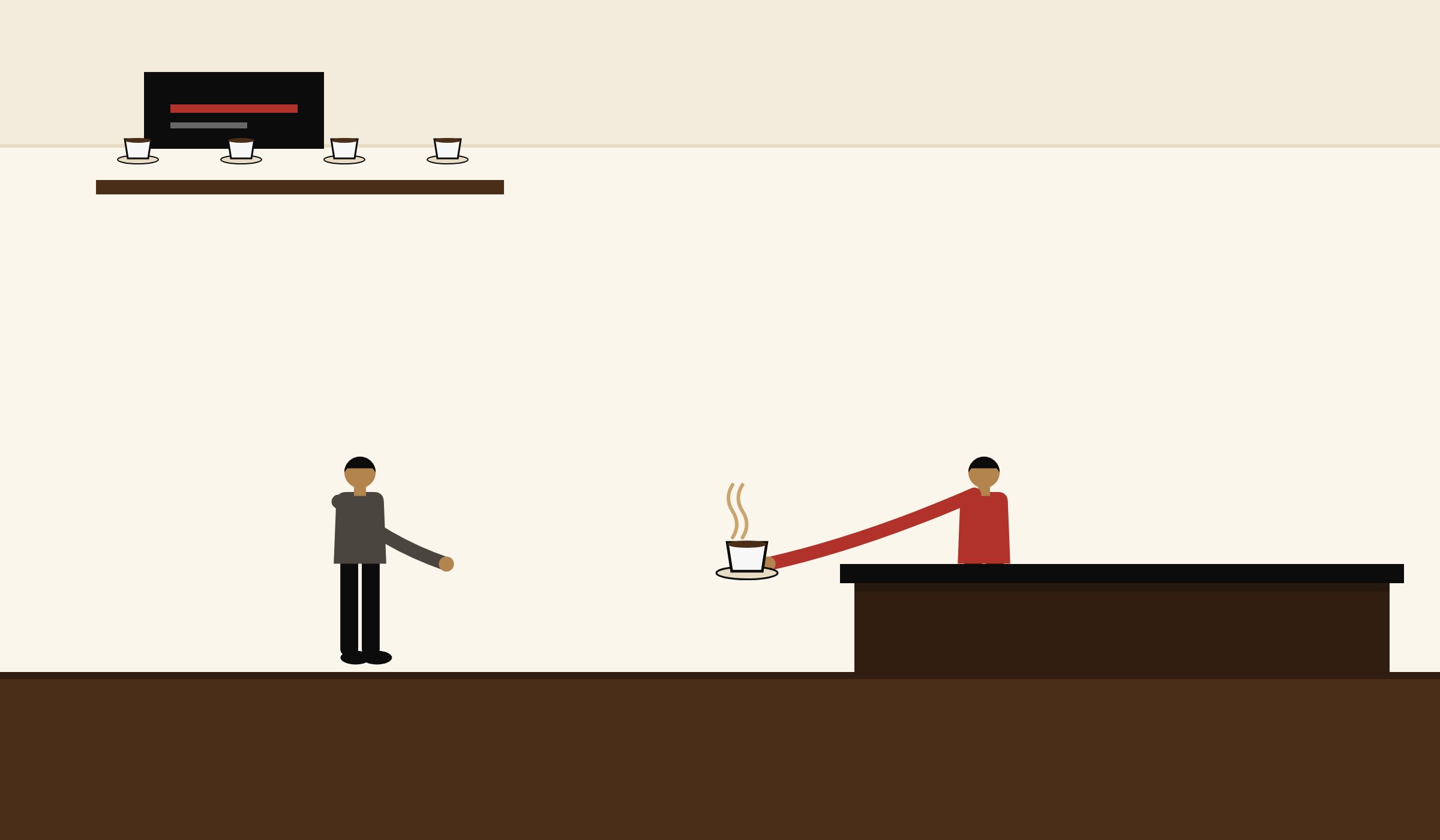
Any barista has met the version of this that lives in the water line. The cup comes out tasting completely normal - good aroma, right colour, no off note your tongue can catch - and yet the water feeding the machine has already begun to turn, picking up something from a filter overdue for changing or a line starting to foul. The taste has not caught up to the chemistry yet. For a while, maybe a good while, you keep serving cups that pass every check your senses can run, while the actual problem sits upstream in the water, advancing quietly, waiting for the day it finally crosses into something you can taste. By the time the cup tastes wrong, the water turned a long time ago.
That lag is the behaviour the study forces us to reckon with, and it is a lag our instincts handle terribly. We are built to respond to felt consequences - the burnt tongue, the off cup, the symptom. A change with no symptom barely registers as a change at all; it feels like a non-event, because nothing happened that we could feel. But the mice are a clean demonstration that something can happen fully and completely at the level that matters while producing, for now, no signal at the level we monitor. As Moneycontrol reported, the alteration in the brain cells came with no behavioural change to flag it, which is precisely what makes it worth flagging.
For space travel the stakes write themselves: a crew on a long mission, exposed to exactly this kind of radiation, could be accumulating real changes while every behavioural check they run comes back clean, because the behaviour is the last thing to turn, not the first. A monitoring regime that only watches behaviour is a regime watching the taste of the cup and ignoring the water, confident all is well right up until the moment it is spectacularly not.
The wider lesson is about what we choose to measure, and why we so often measure the wrong thing - the symptom instead of the source, the taste instead of the water. A clean behavioural readout is reassuring exactly because it is the level we can see, and reassurance is seductive. But the study is a plain warning that the absence of a visible problem is not the same as the absence of a problem. Sometimes the cup tastes fine because the damage has not finished travelling yet. The water turned first. It always turns first.



