No Room Left for the Surprise Cup
There is a specific modern discomfort in not knowing how a thing will turn out, and it appears to be concentrating in the young. Research finds that young adults' intolerance of uncertainty is rising nearly three times faster than in other cohorts since 2012 - a steeper climb, in a shorter window, in the group with, on paper, the most open future ahead of them.
Intolerance of uncertainty is a precise idea, not just a fancy word for worry. It is the distress produced specifically by not knowing - the inability to sit in the gap between a question and its answer without that gap itself becoming painful. A person high in it does not merely dislike bad outcomes; they find the unresolved state, the maybe, the we'll see, genuinely hard to bear. And that particular intolerance is accelerating in young adults faster than anywhere else, pulling away from the rest of the population since 2012 like a car changing lanes.
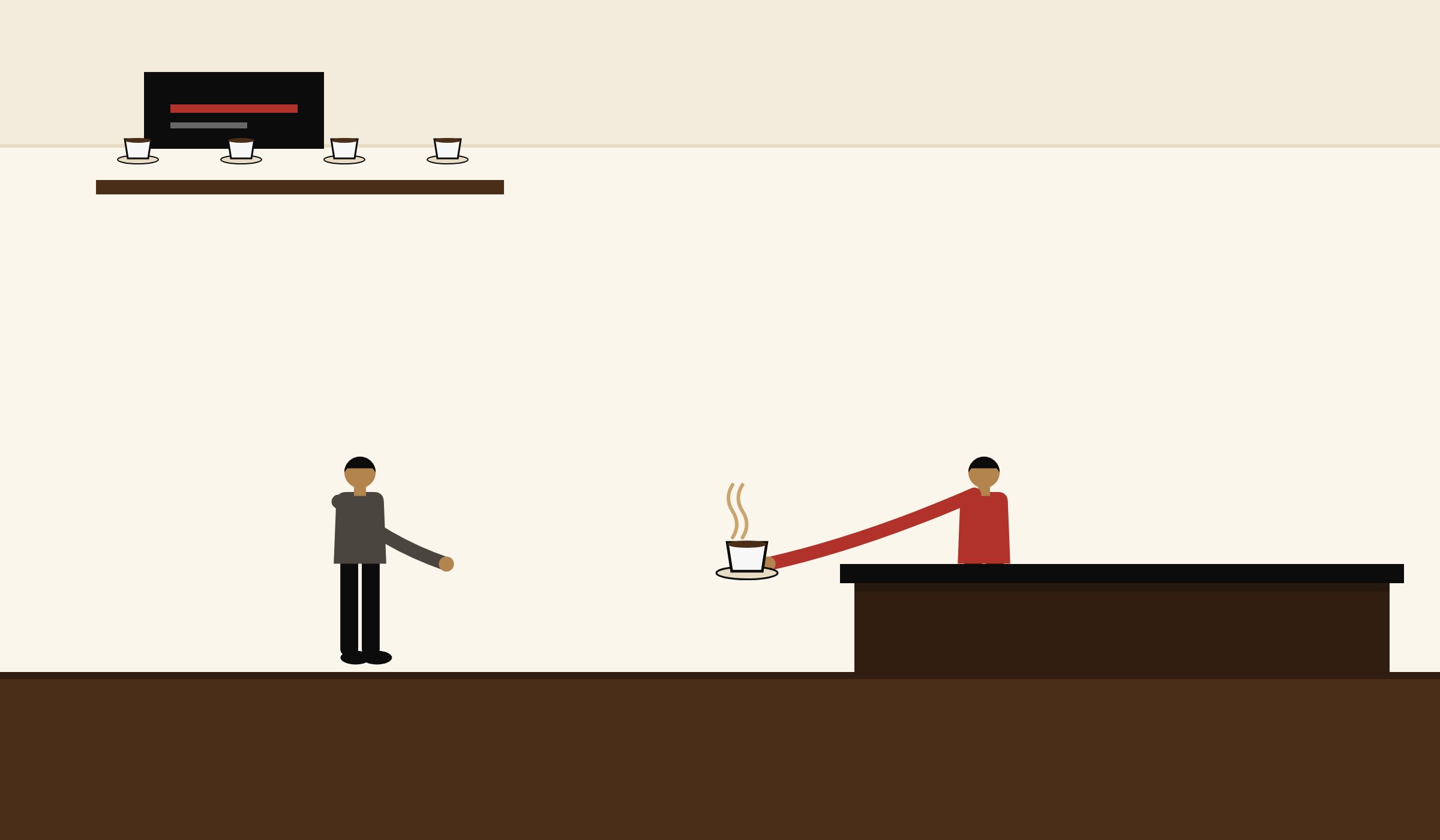
Think about how someone orders in a café, because it tells on them. There is the drinker who, every single visit, orders the exact same thing, down to the size and the milk, and would rather walk out than risk a drink they cannot predict. Then there is the one who occasionally says surprise me, let the barista pick, and accepts whatever lands in front of them as part of the fun. The first drinker is not wrong to want a known quantity - predictability is comforting and sometimes wise. But a person who literally cannot order off-menu, who experiences the barista's choice as a threat rather than a small adventure, has traded a great deal of life's texture for the safety of knowing. The surprise cup has become unbearable, and a world without surprise cups is a narrower world than it looks.
That narrowing is the behaviour worth watching, because uncertainty is not an optional feature of being young. It is the whole substance of it. The years when young adults are climbing fastest in this intolerance are precisely the years built out of open questions - which path, which city, which person, which self. A cohort that finds not-knowing acutely distressing is a cohort experiencing its most uncertain decade as a sustained source of pain rather than possibility, which is a brutal mismatch between a life stage and the temperament arriving to meet it. As chosun.com reported, the rise is steepest in exactly this group, which is the group least able to escape the uncertainty it cannot tolerate.
Why 2012 and why the young is the harder question, and the honest move is not to pretend the number already answers it. But the shape of the problem is legible enough. When every outcome can be checked, forecast, reviewed and simulated in advance, the muscle for sitting in the unknown goes slack from disuse, and the generation that grew up with the most tools for eliminating uncertainty may simply have the least practice tolerating what remains. You do not build a stomach for the surprise cup by only ever ordering the usual.
Which leaves a quietly radical prescription hiding inside a grim statistic. The fix for an intolerance of uncertainty is not more certainty - it is more uncertainty, taken in small survivable doses, until the gap between question and answer stops feeling like a threat and starts feeling like a Tuesday. Order the thing you cannot predict. Let the barista choose. The cup might be bad. The point was never the cup.



