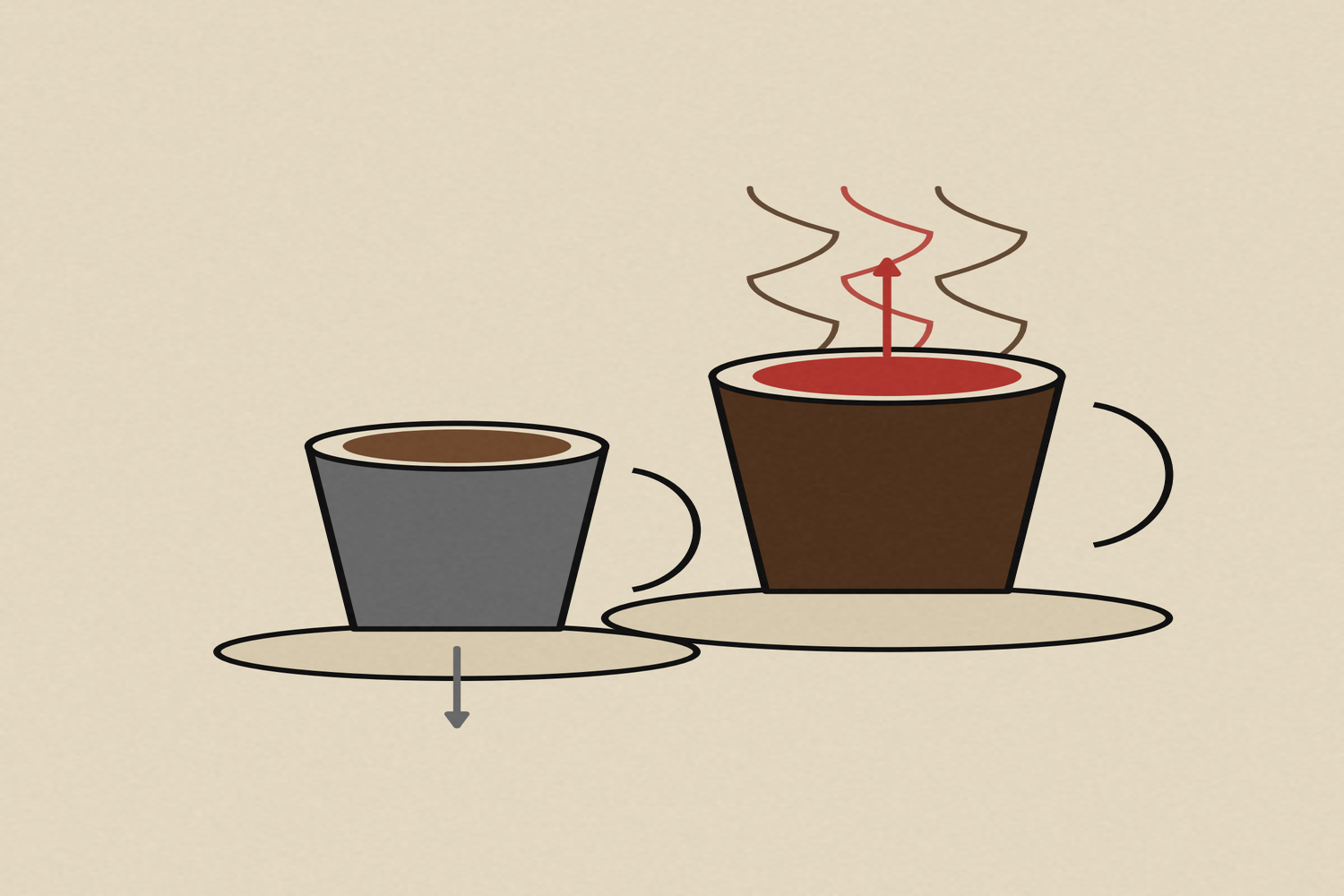
The United States didn’t fall in love with coffee so much as fall out with tea, loudly and on purpose. The romance we tell ourselves about America and its morning cup leaves out the resentment that lit the fire. There was no slow seduction, no gradual discovery of better beans. There was a grudge, a harbour, and a nation deciding that the kettle on the stove had started to smell like the empire it wanted gone.
The grudge had a date. On the night of December 16, 1773, colonists boarded three ships at Griffin’s Wharf and pitched 342 chests of British tea into Boston Harbour, a protest against taxation without representation that destroyed roughly 45 tons of leaf and embarrassed an empire. The tax was the spark, but the symbolism was the fuel. Tea was not just a drink; it was the most British thing in the colonial pantry, a daily ritual imported, taxed, and approved from across an ocean. To keep drinking it after the harbour ran brown was to keep curtsying to a Parliament three thousand miles away.
So the cup changed sides. The National Coffee Association’s own account is blunt about what followed: the Boston Tea Party, it notes, forever changed Americans’ beverage preference to coffee. Drinking coffee in the new republic became something close to a patriotic act, a way to take a side at breakfast. And the venues were already waiting. Long before the harbour incident, the colonies’ coffeehouses had been doing the quiet, dangerous work of revolution. Boston’s Green Dragon, where the Sons of Liberty gathered in the basement to plot against the crown, earned the nickname Headquarters of the Revolution from no less a figure than Daniel Webster. The men who planned the assault on the tea did it, fittingly, over coffee.
Here is where the ritual reveals itself. A nation switched its morning habit the way a town switches its loyalty after a falling-out – half taste, half statement. Nobody woke up on December 17th convinced that roasted beans simply tasted better than steeped leaves. They woke up convinced that one beverage belonged to them and the other belonged to the people they were about to fight. The flavour was almost beside the point. What mattered was what the cup announced about the hand holding it. Coffee won not because it was superior but because it was available for reinvention – unburdened by the East India Company, free of the taint of the tax, ready to be claimed as the drink of free men. Tea kept its taste and lost its meaning, and meaning, it turns out, is what people actually drink.
That is the part worth sitting with, because it complicates the flattering story America tells about its palate. Coffee’s dominance in the United States was as much political theatre as genuine preference – a reminder that consumer habits are shaped by identity and rebellion, not just by flavour. We like to believe our tastes are private, considered, ours. The historians of the Boston Tea Party, including those at the Smithsonian who have spent considerable energy debunking the myths around the event, keep finding the same thing: the line between conviction and performance was always thin. The colonists were making a point, and the point needed a prop. Two and a half centuries later, the prop is still in our hands every morning, its origin story mostly forgotten.
It is a pattern that outlives the harbour. We tell ourselves we choose our brands, our diets, our rituals on the merits, then quietly reach for whatever signals the tribe we want to belong to. The boycott becomes the preference becomes the tradition, until nobody remembers it was ever a protest at all. The most durable habits are often the ones that started as a refusal. A nation can rewrite its whole morning around a single act of spite and then, generations on, mistake the spite for love.
Look closely and the same machinery runs everywhere. Whole industries are built on the afterlife of old grievances, on tastes that were once arguments. The drink that conquered a continent did so wearing the colours of a cause, and once the cause faded the colours stayed, soaked into the routine. That is the strange economy of identity: a feeling becomes a flag becomes a purchase becomes a habit so ordinary nobody questions where it came from. The cup on the desk this morning is the quiet descendant of a riot, and it has no idea.
Which is the joke history left in the bottom of the cup. America’s coffee obsession started as a grudge against a teapot – proof that what’s in your cup can be a flag as much as a drink.
