The largest development program on earth has no headquarters, no logo, and no press office. It holds no summits, issues no glossy annual reports, and never once asks a finance minister for a photo opportunity. It is simply hundreds of millions of people sending money home, in small reliable amounts, on no agenda but their own.
And the sums are not small. In 2024, remittances to low- and middle-income countries reached roughly $685 billion, comfortably exceeding foreign direct investment and official aid combined, with the gap still widening. India alone took in $129 billion, Mexico $68 billion, the Philippines $40 billion. Over the past decade remittances climbed 57 percent while FDI to the same countries fell. In several economies the inflow is not a supplement but a foundation – equal to nearly half of GDP in Tajikistan, more than a third in Tonga. This is not charity arriving by parachute. It is wages crossing a border, one transfer at a time.
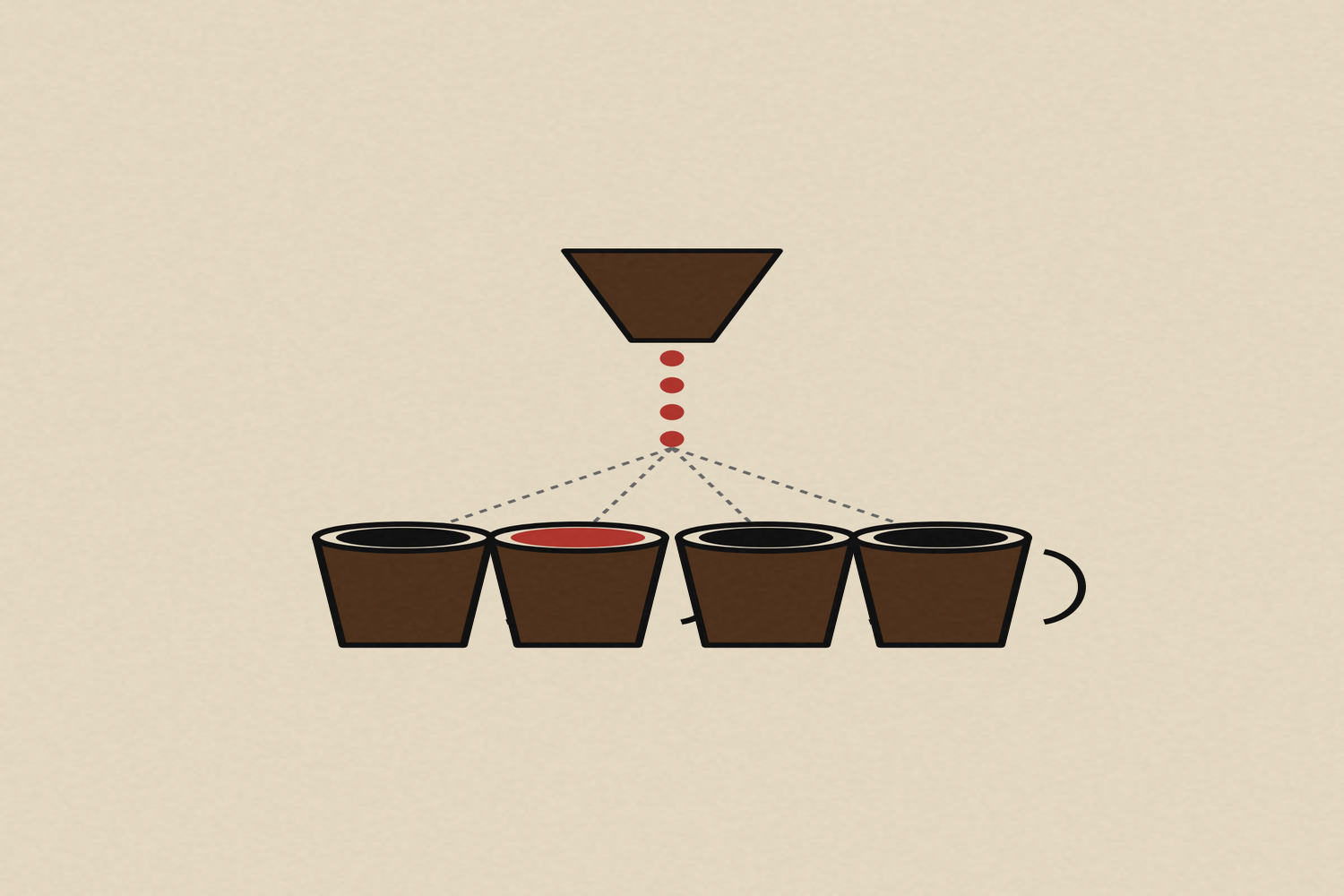
Here is where the coffee helps. We are trained to admire the espresso shot of development finance – the dramatic single pour of a megaproject, the ribbon-cutting, the press release with a number large enough to trend. It is intense, photogenic, and gone in a gulp. Remittances are the other thing entirely: the drip. Unhurried, almost dull to watch, a steady percolation that nobody films. But the drip is what actually keeps the household awake, the school fees paid, the roof patched before the rains. One pour impresses the room. The drip gets you through the week.
The substance underneath the metaphor is what makes it interesting. Big investment is moody. Foreign direct investment chases yield, panics at risk, and concentrates in a handful of large economies – a strong espresso poured into very few cups. Remittances behave like the opposite temperament. They are stable, widely distributed, and quietly counter-cyclical: when a home country is battered by drought, currency collapse, or recession, migrants abroad tend to send more, not less, precisely because the need is greater. The money flows toward the shock rather than fleeing it.
The pandemic was the cleanest test anyone could have asked for. Forecasters braced for collapse; surely a global lockdown would sever the lifeline. Instead, in 2020 remittances to developing countries dipped only about 1.6 percent – barely a wobble – even as foreign direct investment to those same economies fell by more than 30 percent. The big espresso machine sputtered and went cold. The drip kept dripping. Migrants cut their own spending, picked up extra shifts, and switched to cheaper digital channels rather than let the transfer stop. The US Federal Reserve, studying the global remittances cycle, found these flows spread far more evenly across nations than the lumpy, headline-grabbing geography of foreign capital.
What hides in plain sight here is a quiet correction to how we rank generosity. The development economy keeps its eye trained on institutions – the bank with the acronym, the donor with the pledge, the investor with the term sheet. Those flows are real and they matter. But the most dependable line on the ledger is drawn by people with no economists on staff, no board to answer to, and no incentive beyond a relative’s voice on the phone. The diaspora has effectively built a decentralized welfare system out of love and labour, and it does not bill for the service. It also pays its own overhead, surrendering a needless slice of every transfer to fees that the formal system has been slow to trim.
There is a behavioural lesson tucked inside the macro one. Stability rarely comes from the dramatic gesture; it comes from the repeated small one. The grand investment is a mood, swayed by sentiment and spreadsheets. The monthly transfer is a habit, anchored by obligation, and habits are what survive a crisis. Aid can be withdrawn, capital can flee, and FDI can be re-routed to a calmer jurisdiction overnight. The remittance shows up because someone, somewhere, decided long ago that it would – and that decision is renewed every payday without ceremony.
So the next time a development conference applauds a single enormous number, it is worth remembering who is actually keeping the lights on between the announcements. The world keeps watching the big investors, waiting for the next bold pour. Meanwhile the diaspora has been quietly filling the pot the whole time, one transfer at a time – the most dependable cup in development, and the only one that never seems to go cold.
