The Barista Who Walked Mid-Pour
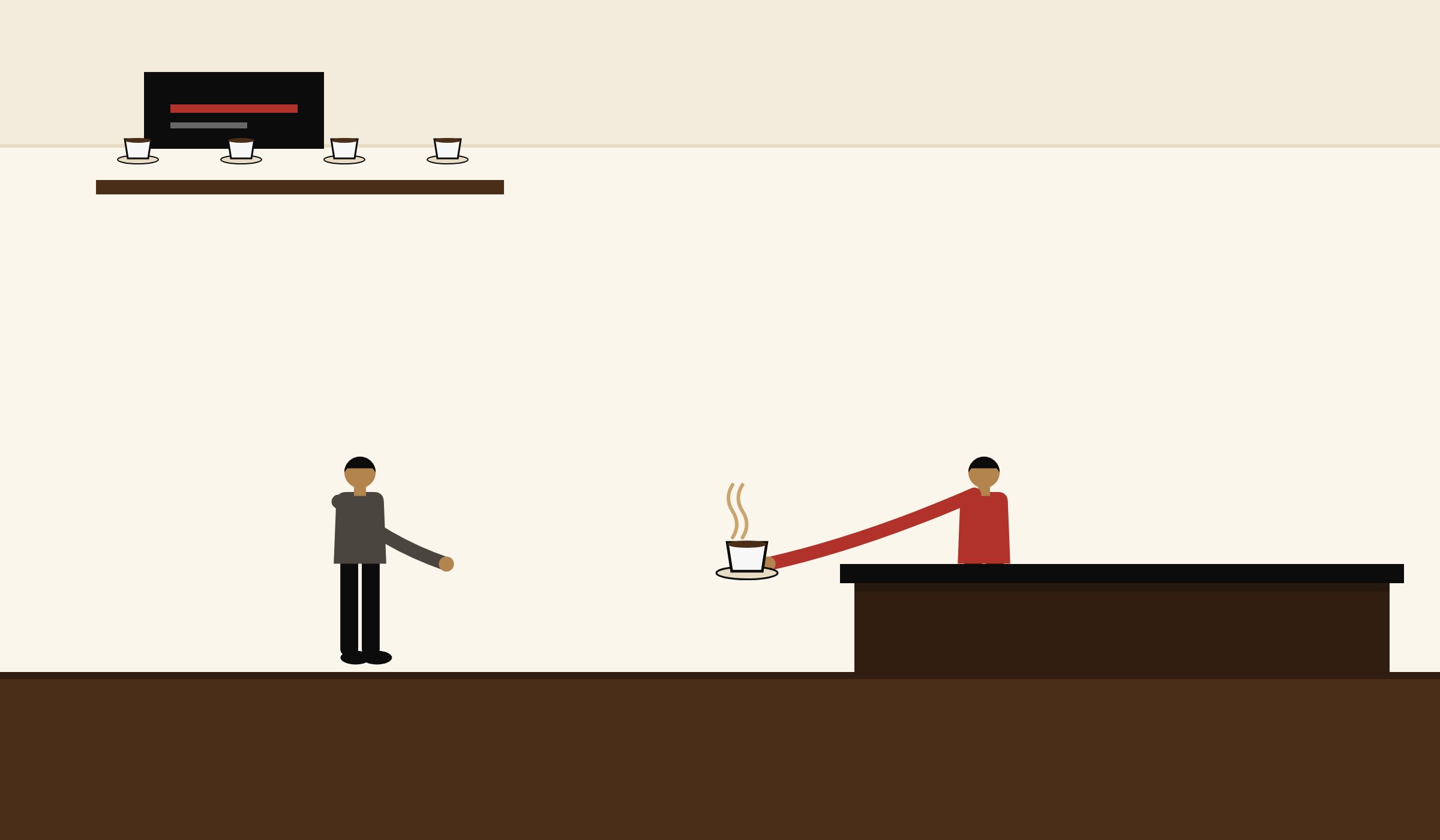
When a CEO leaves effective immediately, the interesting information is in what did not happen. Danish Crown's Niels Ulrich Duedahl has stepped down with no notice period, and the search for a successor has only just opened. No overlap, no transition quarter, no named heir warming up in the wings. The chief left the bar mid-pour, and the company is now advertising for someone to catch the cup before it hits the floor.
Context first, because the shape of an exit tells you more than the reason given for it. A planned departure looks like a relay - the outgoing leader runs alongside the incoming one, the baton changes hands at speed, and the business never breaks stride. An immediate exit with no successor is the opposite. It is a baton dropped on the track with a note that says "finding a new runner." Businesses do not design handovers this way when they have a choice. The absence of a notice period and the absence of a successor, together, are the story.
Here is the coffee of it. Picture a barista who, in the middle of a busy service, sets down the portafilter, takes off the apron, and walks out the door - no "I'm leaving next month," no training the next person on the house grind, no handover of which regulars take oat milk. The queue is still there. The machine is still hot. And management is now scrambling to find anyone who can work the bar while the orders pile up. A clean handover keeps the café running. A mid-pour walkout leaves a hot machine and a confused crew, and everyone downstream feels the gap even if nobody explains it.
The insight for a builder is that key-person risk is the quietest liability on your books, and it bills you at the worst possible time. Every organisation that lets one person hold the roast curves, the relationships and the running of the floor in their own head is one resignation away from an immediate crisis. The gap between Duedahl walking out and a successor walking in is the exact window where a company discovers how much it had outsourced to a single human - and how little of it was written down where anyone else could find it.
This is not an argument against the leader. It is an argument for the bench. The resilient business is the one that could survive its most important person leaving mid-pour, because the knowledge lives in systems, the relationships are shared, and someone has already been trained to step onto the bar. Danish Crown opening a successor search only after the departure suggests the planning and the parting arrived in the wrong order, as The Pig Site reported. The job of succession is to be boring, and boring requires doing it before you need it.
So the usable move is to run a mid-pour test on your own operation. Pick your most essential person - it may be you - and ask honestly: if they walked out the door today, with no notice and no replacement lined up, what breaks, and for how long? Every answer longer than "a few days" is a roast curve that lives only in one head, a regular whose order only one barista knows, a liability waiting for a Tuesday morning that catches you unprepared.
The grim gift of an immediate exit is that it makes the invisible visible. For a moment, everyone can see exactly how much depended on one person, because that person is suddenly gone. The builders who learn from Danish Crown will not wait for their own mid-pour walkout to find out. They will write the curves down, train the second barista, and make sure the café can keep serving even on the morning the most important apron is hanging empty by the door.