Refilling a Cup Someone Took Away
Losing a big funder is not the same as losing a little money, and the arithmetic proves it. Jane Fonda's Georgia nonprofit, founded in 1995, has raised $1.1 million from supporters after losing $2.2 million in federal funding. A heroic haul, a community rallying, and still only half the hole filled. That gap between what was lost and what was raised is the whole lesson, and it is one every builder should stare at before they get too comfortable with a single generous customer.
The context is a story playing out across the sector: an organisation that leaned on a large, reliable source of money suddenly finds that source withdrawn, and discovers that replacing it is not a matter of asking harder. Federal funding arrives in one big, dependable pour. Grassroots fundraising arrives in a thousand small cups, each requiring its own ask, its own relationship, its own moment of generosity. The nonprofit did extraordinarily well to raise $1.1 million that way. It still could not conjure the second million overnight, because the two kinds of money do not flow at the same speed.
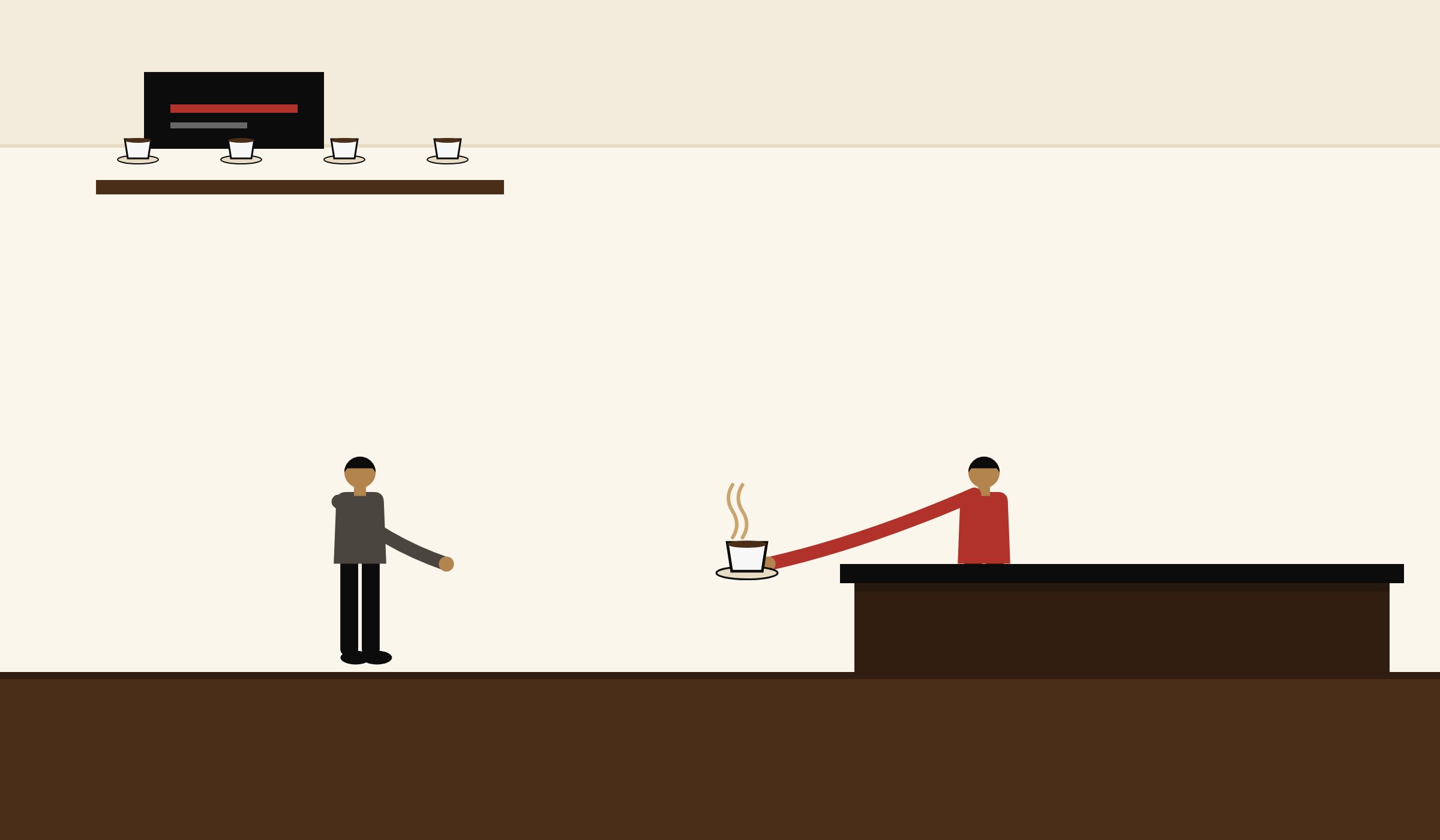
Here is the coffee of it. Imagine a café where one corporate account orders two hundred cups every morning, paid on time, no fuss - the backbone of the whole business. Then one day the account is gone. The owner hits the pavement and signs up new customers, real ones, loyal ones, and after weeks of relentless effort has replaced a hundred of those two hundred cups. That is a triumph of hustle. It is also only half the revenue, and the rent did not shrink to match. One account leaving does not mean one account's worth of effort to replace. It means a hundred conversations to rebuild what one handshake used to deliver.
The insight for a builder is that revenue concentration is a comfort that quietly turns into a cliff. A single funder, a single whale client, a single platform sending most of your traffic - each one feels like stability while it lasts, because the money is large and the admin is small. But the ease is the danger. You stop building the thousand small relationships because the one big one makes them feel unnecessary, and then the big one vanishes and you are left raising cups one at a time against a hole that was poured in gallons.
What the Fonda nonprofit demonstrates, to its enormous credit, is that the thousand-cup model can be built even under pressure, and that a committed base will show up when a cause matters, as WSB-TV reported. Raising $1.1 million from supporters is not a consolation prize; it is proof that the organisation had earned real loyalty, the kind no single funder can grant or revoke. That loyalty is an asset the lost grant never was, because it belongs to the cause rather than to a line item in someone else's budget.
So the usable move is to run a concentration check on your own revenue today, while things are calm. What share of your money comes from your single largest source, and how many small relationships would you have to build, from scratch, to replace it if it vanished on a Tuesday? If the honest answer is "more than I could manage in a quarter," you are running the two-hundred-cup corporate account and quietly hoping it never leaves. Start building the thousand small cups now, before you need them, because a base built under pressure is always smaller than a base built on purpose.
The second million will come, cup by cup, because the loyalty is real. But the easier lesson is the cheaper one: never let a single pour become the business, because the day it stops, you refill by the cup - and the cup is a slower measure than the gallon that left.