Leaving the Shop with No One at the Machine
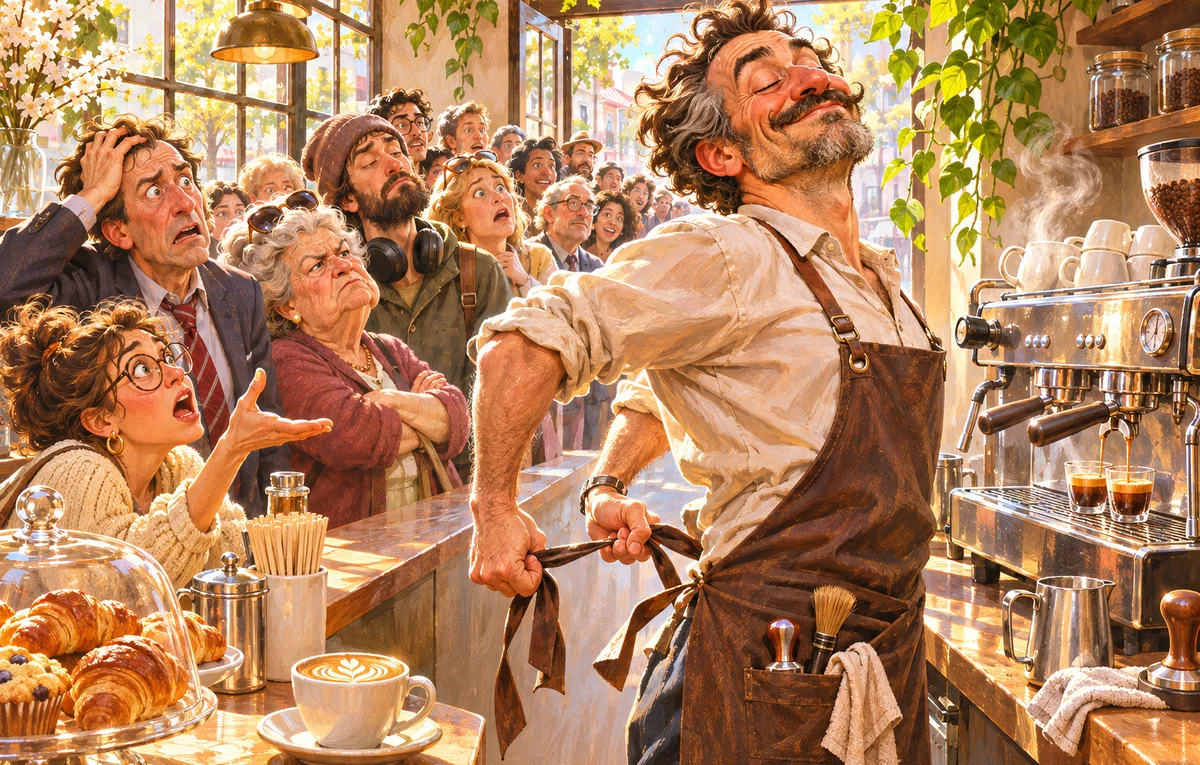
He is handing over the busiest shift of the year, and nobody is standing where he stood. As 24/7 Wall St reports, Flipkart's Kalyan Krishnamurthy is stepping down after more than eleven years, with the company's IPO in preparation and no successor named. Eleven years is a long time to hold a counter. An IPO is the single most scrutinised morning a company ever faces. And the person who ran the machine the longest is untying his apron with the queue already forming and the stool behind the counter empty.
The timing is what turns an ordinary departure into something worth studying. Leaders leave all the time; that is healthy, and an eleven-year run is a full and honourable one. But leaving as the IPO is being prepared, before a successor is named, is leaving at the exact moment continuity is worth most. Public markets are not buying only the business. They are buying their confidence that the business will keep running the way it has, and an unfilled seat at the top is a visible question mark stapled to the prospectus right where investors are looking hardest.
Picture the head barista who has run the morning rush for over a decade - knows the machine's temper, the regulars' orders, the precise moment to pull each shot. He has announced he is leaving, and the day he has chosen is the grand reopening, the one with the press outside and the longest line the shop has ever seen. There is no deputy trained up, no name on the rota for tomorrow. The machine still works perfectly. But the hand that knew it best is reaching for the door, and everyone in the queue can see the space where that hand used to be.
The insight here is that a handover is a design problem, and the empty seat is the flaw, not the exit. Succession done well is nearly invisible - the new hand is at the machine before the old one leaves, the regulars barely notice the change, the rhythm carries. Succession done as an announcement with a blank where the name should be transfers all the uncertainty to exactly the audience you least want uncertain. The departure is not the risk. The vacancy is. A shift change only works when the next person is already tying their apron as you loosen yours.
That said, read the move with both eyes, because the absence of a named successor is information in two directions. It can mean a plan not finished, a scramble the market will price in nervously. It can also mean a board taking its time to get the most consequential hire in the company's history right rather than rushing a name out to soothe a headline. Which reading is correct depends on what fills the gap and how fast, and that is the only part that will actually matter in a year. The queue does not care about the announcement. It cares who is pulling the next shot.
For any builder watching, the usable lesson is to treat your own replaceability as a deliverable, not an afterthought you will get to once the important work is done. The important work is the replaceability. An operation that collapses into a question mark the moment you step away was never as strong as it looked while you were there holding it together - it was just well-staffed by one irreplaceable person, which is a single point of failure wearing a nice apron.
Eleven years at the machine, an IPO at the door, and nobody yet named to pull the next shot. The coffee is still good this morning. The real test is who makes it tomorrow, with the whole queue watching the empty space behind the counter.