An Empty Chair and a Raised Hand
Two stories ran side by side this week, and between them they asked the only question power ever asks - who sits here now.
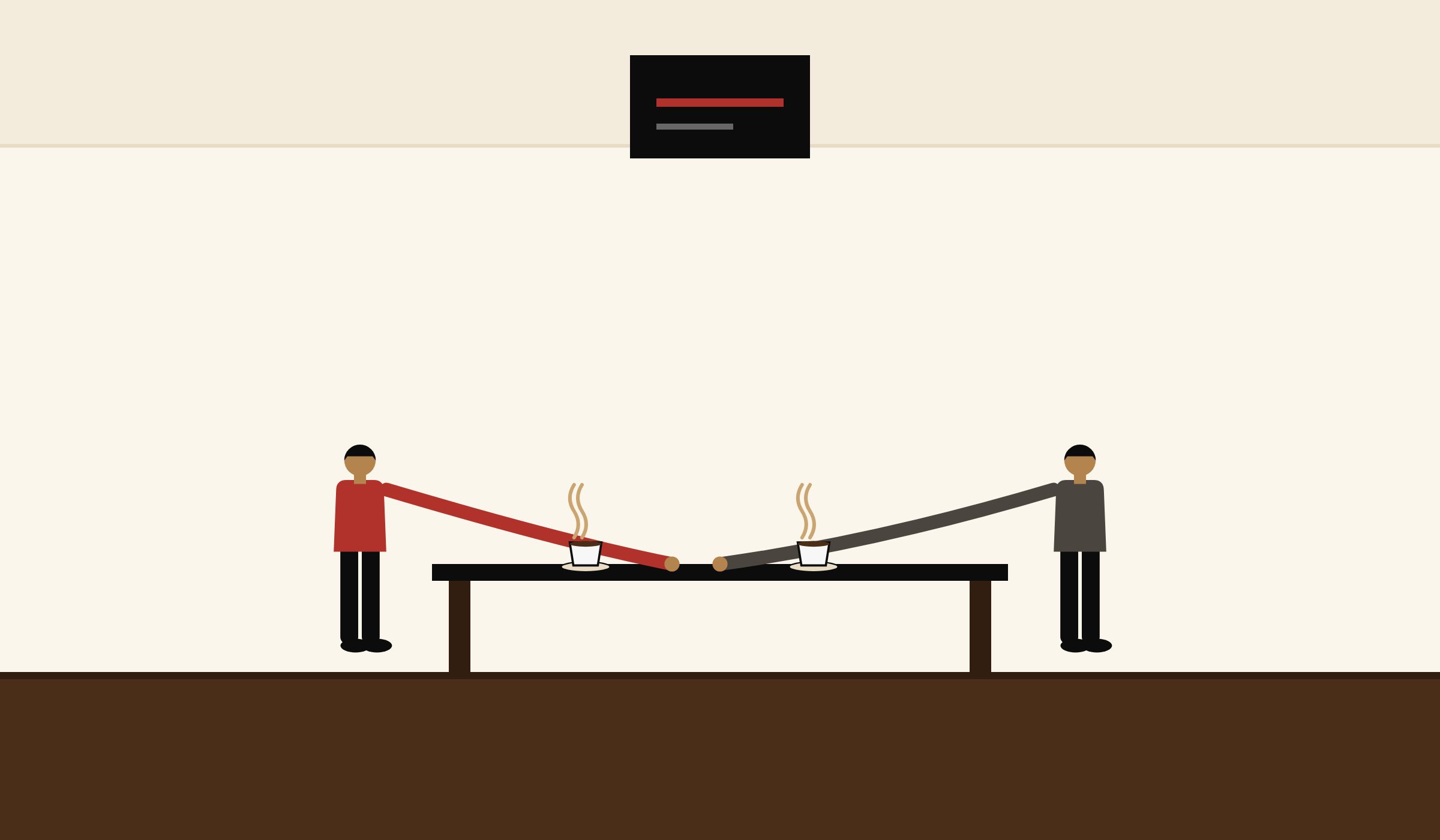
The morning's headlines set Nvidia's leadership vacuum beside Senator Chris Van Hollen's declared run for Senate majority leader, as NPR Up First reported. Placed together, they form a study in opposites. In one institution a chair has just emptied and everyone is scrambling to work out who fills it. In the other, a chair is contested and someone has simply raised a hand to claim it. Same fundamental event - a seat of power in play - approached from the two directions it can ever be approached from.
The coffee lens makes the contrast clean. There are two kinds of operator at any busy counter. One waits for the head barista to leave before anyone will admit the station needs running, and then the whole shop freezes, staring at the machine, waiting for permission that is not coming. The other sees the station open and steps to it before being asked, apron already on, because they decided some time ago that the station would eventually be theirs and saw no reason to pretend otherwise. A vacuum and a candidacy are the same gap in the rota, met by two entirely different temperaments.
Van Hollen's move is the raised hand, and it is worth studying regardless of politics, because the declaration itself is the lesson. He did not wait to be anointed. He named the job he wanted and announced he was coming for it, which is how contested seats are almost always actually won - not by the most deserving quietly hoping to be noticed, but by the one willing to say the ambition out loud and absorb the awkwardness of having said it. Ambition spoken is a strategy. Ambition merely felt is a diary entry.
Nvidia's vacuum is the other posture, and it is the more common one by far. A great operator leaves, and the surprising thing is how rarely anyone has rehearsed who steps forward. The chair empties and the room looks around, because for years the chair was so thoroughly occupied that imagining it empty felt disloyal. That is the quiet cost of a dominant figure - they do such a complete job of filling the station that nobody around them ever practises reaching for it, and the vacuum, when it comes, finds a bench full of people who were never allowed to want the job.
For a builder, the pairing hands you a mirror and a question. When the station in front of you opens - and stations always, eventually, open - which operator are you? The one frozen at the counter waiting for someone to confirm it is your turn, or the one who already decided, apron on, hand up, that the turn was yours to take? The institutions that thrive are not the ones with the most talent on the bench. They are the ones whose talent was allowed to rehearse reaching.
An empty chair and a raised hand are the same moment, read from opposite ends. The difference is entirely in who decided, before the chair was even empty, that they were willing to sit.